
Disclosure: As an Amazon Associate, I earn from qualifying purchases. This technical review contains affiliate links which support our research at no cost to you.
Establishing an effective active recovery routine at home often involves temperature therapy, but selecting the best portable ice bath cold plunge requires a close look at insulation physics and material sciences.
Unlike permanent, hard-plunge units, portable tubs rely on fabric density and inflatable structures to retain water temperatures and prevent structural bowing.
In this technical guide, we show you how to select the best portable ice bath cold plunge on the market.
We evaluate hydrostatic pressure limits, triple-layer thermal insulation walls, and drop-stitch PVC durability, providing you with the exact specifications needed to establish a stable, leak-proof cold plunge at home.
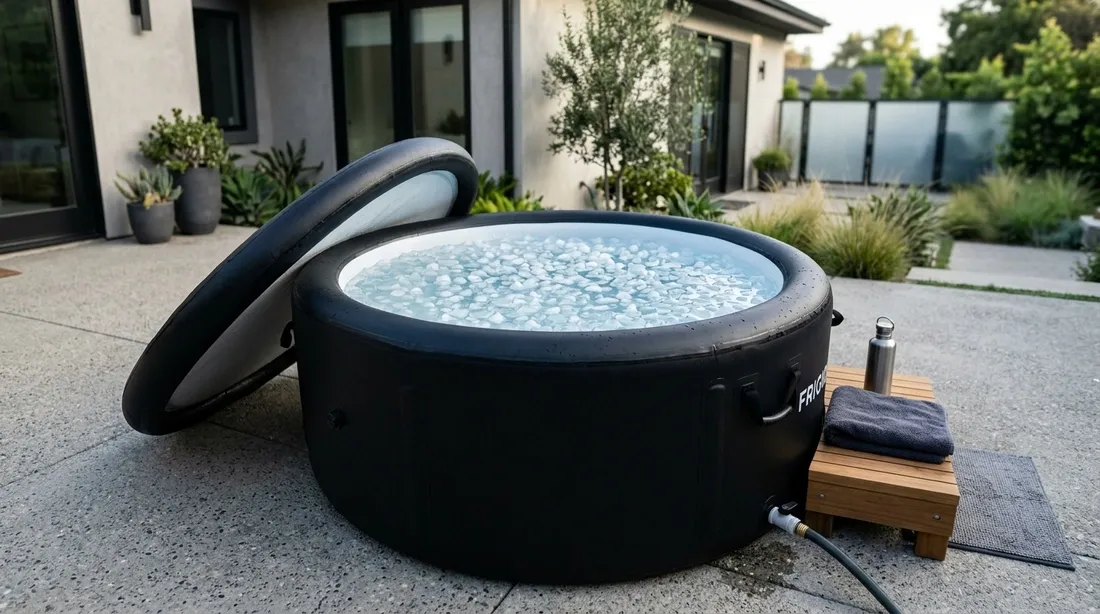
To secure the most durable portable cold plunge, look for a tub constructed from double-walled, high-density drop-stitch PVC that can handle high air pressure (10+ PSI) without bowing. Ensure the frame features triple-layer thermal insulation (ripstop nylon, thermal foam, and PVC lining) to prevent ice melting, and verify it uses a welded bottom flange drain valve to prevent slow water leaks.
Access our main home recovery tech guide to compare saunas, ice baths, compression, and red light therapy.
Review the best low-EMF infrared sauna blankets, non-toxic waterproof fabrics, and digital safety features.
Learn how multi-chamber compression sleeves increase circulation and relieve muscle fatigue after leg days.
Understand photobiomodulation, light irradiance outputs, and how to select 660nm and 850nm wavelengths.
1.0 Hydrostatic Pressure: The Physics of Cold Water Compression
When you submerge your body in a vertical cold plunge tub, the water exerts a physical force known as hydrostatic pressure. This pressure increases with depth, compressing the tissues in your lower limbs.
This natural compression helps push blood and interstitial fluid back toward your thoracic cavity, supporting lymphatic drainage and reducing localized muscle swelling. Choosing a tub with a depth of at least 28 to 30 inches ensures you receive the full benefits of this physical pressure during passive cold water immersion.
2.0 Thermal Insulation: How Multi-Layered Air Walls Trap Cold
Without adequate thermal insulation, cold water quickly absorbs heat from the surrounding air through conduction and convection. To prevent this, premium portable ice baths feature multi-layered walls.
High-quality units wrap an EPE (Expanded Polyethylene) thermal foam core between a rugged ripstop nylon outer shell and a watertight PVC interior liner. Adding a matching insulated inflatable floating lid creates an airtight seal, keeping your water cold without requiring constant ice additions.

Triple-layer insulation traps water temperatures and prevents rapid ambient warming, reducing ice consumption.
3.0 Material Integrity: Drop-Stitch PVC vs. Standard Inflatables
Budget-friendly inflatable tubs utilize standard single-layer PVC air rings. When loaded with 80+ gallons of water, these soft materials can easily bow, warp, or sag, which can lead to structural failures.
To avoid this, select a tub constructed from drop-stitch PVC. This engineering utilizes thousands of internal polyester threads connecting the upper and lower layers. When inflated, drop-stitch frames can handle air pressures up to 10 to 15 PSI, creating a rigid, stone-hard rim that you can safely sit on without bowing the frame.
4.0 Drain Valve Physics: Preventing Leakage and Flow Bottlenecks
The bottom drain valve is the primary fail point on portable cold plunge tubs. Cheap models utilize basic plastic push-plug valves secured with standard craft glues, which can slowly degrade and leak under constant water weight.
Choose tubs equipped with a thermally welded flange connection and a heavy-duty, threaded brass or hard plastic turn-valve. A robust threaded port prevents slow bottom leaks and allows you to attach standard garden hoses easily to direct water run-off away from your patio.
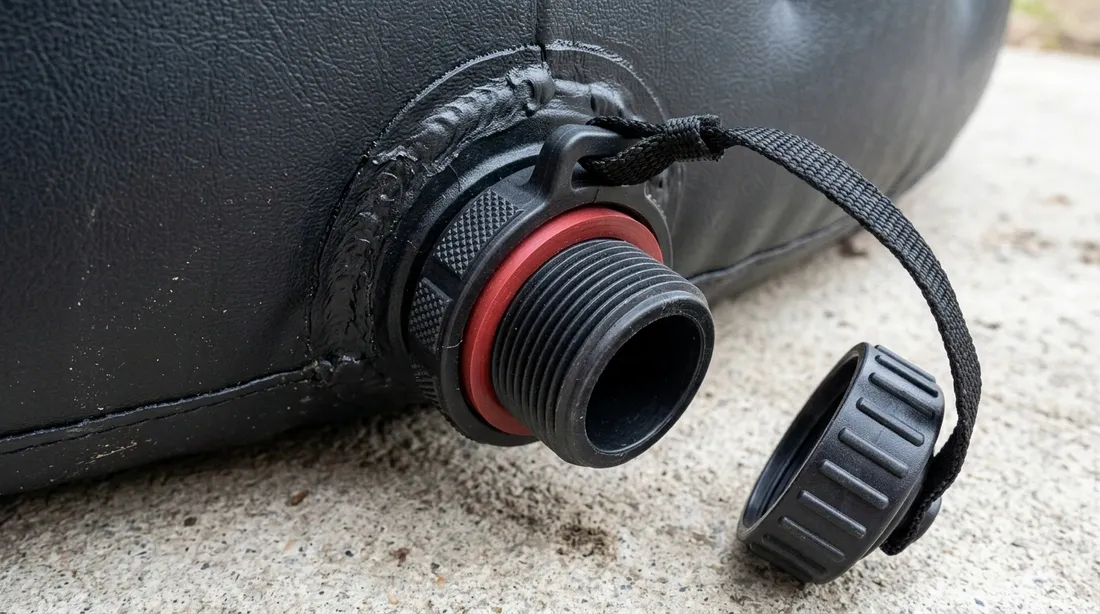
A thermally welded bottom drain valve equipped with a secure threaded cap prevents leaks under heavy water loads.
5.0 Sanitization Protocols: Managing Water Chemistry Without Chlorine
Keeping water in your tub for more than a few days can lead to algae and bacteria build-up. However, using harsh pool chlorine tablets can dry out and degrade the watertight PVC inner liner over time.
Instead, keep your water clean by using a food-grade hydrogen peroxide solution (35% concentration) or a gentle UV-sanitizer filter. This provides highly effective water sanitization while keeping your PVC skin and your skin completely safe from chemical irritation.
6.0 Chiller Compatibility: Active Cooling vs. Manual Ice Loading
Adding bags of ice to your tub manually is cost-effective but can become time-consuming. If you plan to upgrade to an active water chiller system later, ensure your tub has built-in connection ports.
Look for tubs equipped with pre-drilled water inlet and outlet ports fitted with 3/4-inch GHT (Garden Hose Thread)connectors. This allows you to hook up an external cooling/filter chiller easily, keeping your water cold and filtered automatically without requiring ice.
7.0 Pre-Plunge Safety Protocols: Managing the Mammalian Dive Reflex
Sudden exposure to cold water induces a physiological reaction known as the cold shock response, which can cause hyperventilation and a sudden spike in heart rate. This is often accompanied by the mammalian dive reflex, which slows your heart rate when your face is submerged.
To stay safe, follow a gradual exposure protocol. Always enter the cold water slowly, focus on taking slow, controlled, deep belly breaths to manage the initial gasp reflex, and limit your sessions to 3 to 10 minutes. A systematic review published in PubMed Central (PMID: 36137565) suggests that this controlled cold exposure can support overall well-being and immune health.
Inflatable Cold Plunge Systems Comparison
The table below outlines how different inflatable cold plunge constructions hold up to regular use. Swipe horizontally on mobile devices to view all technical data:
| Construction Factor | Drop-Stitch High-Pressure PVC | Multi-Layer Insulated Nylon | Single-Layer PVC Tubs | |
|---|---|---|---|---|
| Structural Rigidity | Very High; handles 10-15 PSI (feels like stone) | Moderate; uses vertical support rods | Low; prone to bowing and collapsing under load | |
| Thermal Insulation Profile | High; double-walled airtight core | Very High; thick EPE foam locks cold | Poor; water warms up quickly without ice | Requires constant ice replacement |
| Drain Flange Security | Very High; thermally welded joints | High; heavy-duty welded plastic port | Low; glued plastic plugs are prone to slow leaks | |
| Chiller Compatibility | Yes; typically features pre-installed GHT ports | Optional; requires separate adapter fittings | No; lacks connection ports for chillers | |
| Aesthetic Lifespan outdoors | Very High; UV-resistant military-grade PVC | High; UV-coated ripstop nylon skin | Moderate; sun can fade and dry out thin plastic |
Recommended Portable Cold Plunge Tubs
Our review board has evaluated the construction quality, thermal retention, and drain-valve durability of the top portable inflatable ice baths available on Amazon.
The Ice Pod by The Pod Company
The Standard Ice Pod is a highly popular, budget-friendly portable inflatable ice bath. Built with dual-walled, UV-resistant ripstop nylon and a watertight PVC inner skin, this vertical tub holds up to 80 gallons of water and fits easily into tight backyard spaces or garage corners.
- Triple-Layer Insulation: Thick internal foam lining prevents rapid heat transfer.
- Inflatable Upper Air Ring: Soft, comfortable rim supports your arms and head.
- Compact 32″ x 29″ Footprint: Easy to move, drain, and store in small areas.
- Very affordable price point for a complete insulated tub.
- Highly portable, lightweight frame is easy to set up.
- Includes a basic protective lid and a quick-drain hose.
- Lacks pre-installed GHT chiller ports; manual ice only.
- Requires utilizing the vertical support legs for structural shape.
The Cold Pod Cold Plunge Tub (116 Gal XL Insulated Bundle)
The Cold Pod XL is an exceptionally robust, high-capacity portable cold plunge designed for deeper immersion. Holding a substantial 116 gallons of water, this vertical tub accommodates users up to 7’3″ or 300 lbs comfortably. This special bundle includes a premium, UV-reflective “Spaceship” zip-up cover to maintain cold temperatures and protect against harsh outdoor weather.
- 116 Gallon High-Capacity Tub: Ample space (35.5″ Diameter x 30″ Height) allowing full, deep immersion.
- Insulated Spaceship Cover: Double-walled UV-reflective lid regulates temperature and blocks ambient heat.
- Rugged Weatherproof Construction: Built from durable cotton, PU, and thick PVC to resist leaks and tearing.
- Spacious interior allows comfortable shoulder submersion for tall athletes.
- Insulated zip-up cover minimizes ice-melt and stops freezing during winter.
- Keeps water exceptionally clean from debris and leaves outdoors.
- Larger footprint (35.5″ diameter) requires more deck or patio space.
- Requires more time to fill and drain compared to standard 80-gallon models.
Frequently Asked Questions
For an 80-gallon insulated tub, adding 20 to 30 pounds of ice is usually sufficient to lower tap water temperatures (typically 65°F) down to a therapeutic 50°F to 55°F (10°C to 12°C). High-quality insulated walls will help maintain this cold temperature for up to 24 hours.
Yes, keeping your tub outdoors in winter is fine, as cold ambient temperatures help keep the water naturally cold. However, if temperatures drop below freezing, keep the water moving or drain the tub to prevent water from freezing solid and expanding, which can damage the PVC inner skin.
Yes, using high-quality magnesium sulfate (Epsom salt) is safe and will not damage a high-quality PVC liner or steel fittings. However, avoid using heavy pool salts or corrosive chemicals, as these can slowly degrade the synthetic rubber gaskets inside your bottom drain valve over time.
