
Disclosure: As an Amazon Associate, I earn from qualifying purchases. This technical review contains affiliate links which support our research at no cost to you.
Building a comprehensive home gym setup goes beyond squat racks and barbells; integrating the best home recovery tech is what actually allows your body to adapt, rebuild, and perform at its physical baseline.
While passive rest is useful, advanced recovery modalities target localized blood circulation, metabolic waste clearing, and tissue temperature regulation to accelerate muscle recovery.
In this technical guide, we evaluate the best home recovery tech systems, analyzing the material sciences and physical engineering behind portable ice baths, far-infrared saunas, dynamic leg compression sleeves, and red light panels.
We focus on the hardware specifications you need to establish a safe, highly functional physical restoration space in your home.
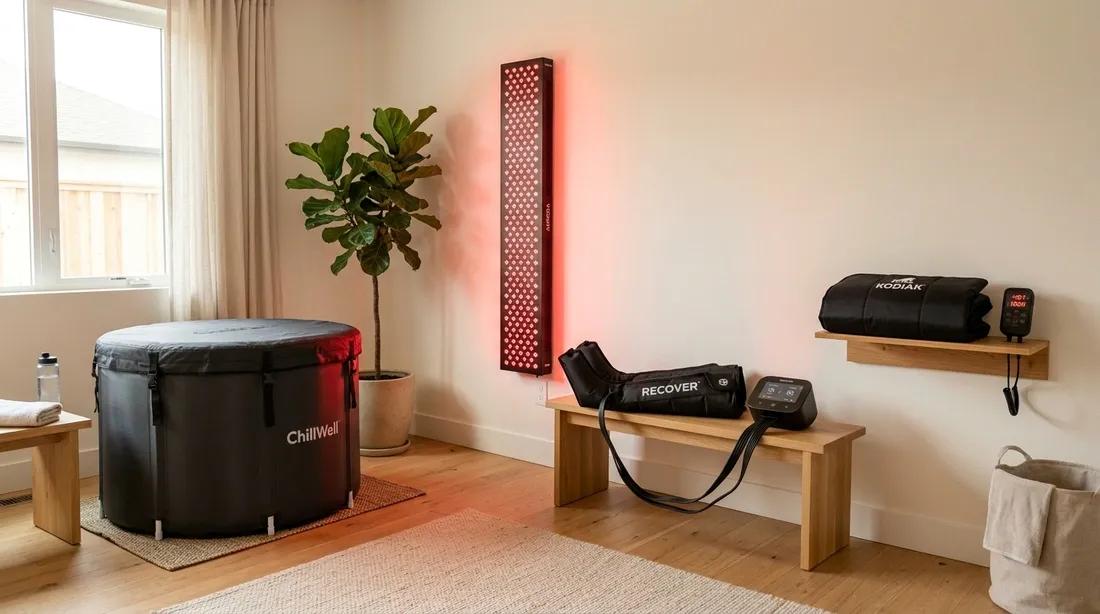
An effective home active recovery space balances thermal contrast, dynamic compression, and photobiomodulation. Prioritize triple-insulated portable ice baths for cold contrast therapy, low-EMF far-infrared sauna blankets for heat therapy, multi-chamber pneumatic compression boots for blood flow, and high-irradiance 660nm/850nm red light panels to support muscle tissue repair.
An analytical evaluation of inflatable ice baths, insulation properties, and drainage valve reliability.
Reviewing EMF shielding, temperature controller safety, and non-toxic synthetic leather fabrics.
How sequential air chamber boots inflate to increase lower-limb circulation and relieve soreness.
Understanding photobiomodulation, light irradiance values, and selecting red vs. near-infrared wavelengths.
1.0 The Science of Recovery: Active Restoration vs. Passive Rest
Passive rest (simply sitting or sleeping) is important, but it does not actively address the accumulation of delayed-onset muscle soreness (DOMS) or exercise-induced muscle damage (EIMD) following high-intensity training.
Advanced recovery hardware accelerates your body’s homeostatic restoration by utilizing specific physical mechanisms—including hydrostatic pressure, heat-shock protein upregulation, pneumatic fluid flushing, and cellular light absorption.
2.0 Thermal Contrast: Cryotherapy and Thermotherapy Mechanics
Contrast therapy involves exposing your body to alternating cold and heat. Cold water immersion (CWI) constricts peripheral blood vessels, reducing muscle swelling, tissue inflammation, and perceived soreness. A systematic review published in PubMed (PMID: 26581833) confirms that CWI immediately after exercise significantly reduces muscle soreness and fatigue.
Conversely, thermotherapy (heat exposure) uses vasodilation to increase blood flow, relax stiff muscles, and improve joint mobility. Clinical trials published in PubMed (PMID: 37398966) show that post-exercise far-infrared sauna bathing improves neuromuscular performance recovery and attenuates muscle soreness.
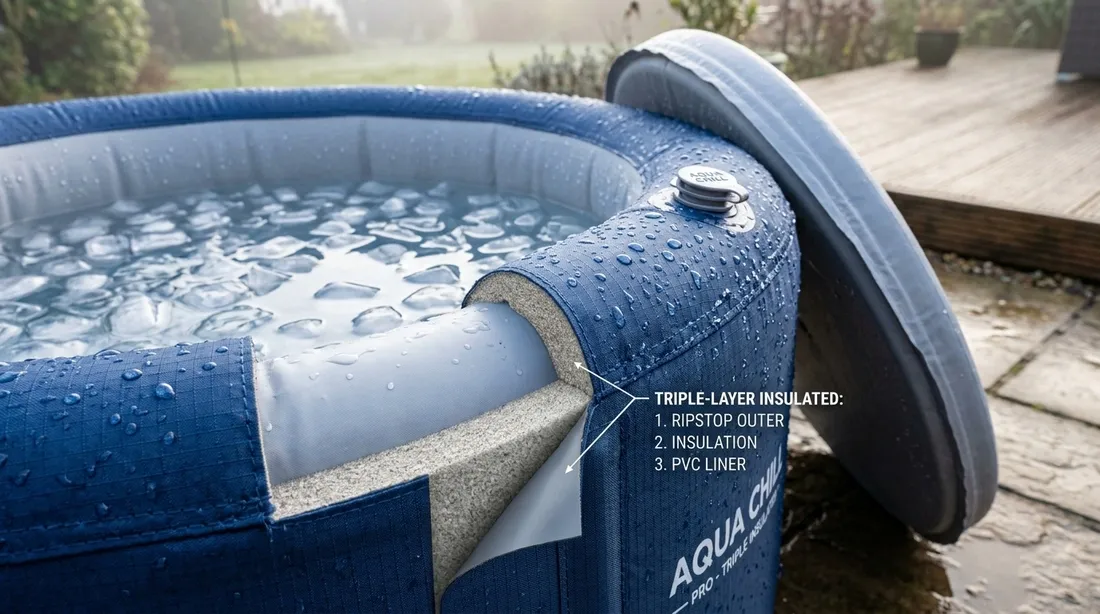
Inflatable multi-layered walls prevent ambient heat from warming the water, keeping cold plunge temperatures stable.
3.0 Pneumatic Flushing: How Compression Sleeves Increase Circulation
Dynamic compression systems use sequential air chambers that inflate along your limbs, starting from your feet and moving upward toward your torso. This mechanical pressure mimics your body’s natural skeletal muscle pump.
This sequential compression helps flush metabolic waste out of your lower extremities. Clinical meta-analyses published in PubMed Central (PMID: 39416507) show that lower-limb intermittent pneumatic compression (IPC) is highly effective for reducing muscle soreness and fatigue after strenuous training.
4.0 Photobiomodulation: Selecting Wavelengths for Cellular Energy
Photobiomodulation (PBM), commonly referred to as red light therapy, uses light-emitting diodes (LEDs) to deliver specific wavelengths of light through your skin to reach deep muscle tissue.
These light photons are absorbed by cytochrome c oxidase within your cells’ mitochondria, helping to stimulate ATP (cellular energy) production. An extensive clinical review on PMC (PMID: 32503238) confirms that PBM applied before or after exercise effectively reduces oxidative stress, attenuates muscle damage, and supports tissue repair.
5.0 The Safety Equation: EMF Shielding and Temperature Limits
Because you wrap sauna blankets directly around your body and connect compression boots to high-power air pumps, hardware safety and electrical shielding are critical factors.
Premium infrared blankets utilize specialized carbon fiber heating elements and thick insulation layers to achieve low-EMF (Electromagnetic Field) ratings of under 2 milligauss. This shielding keeps you safe from unnecessary electromagnetic radiation during long, relaxing heat sessions.
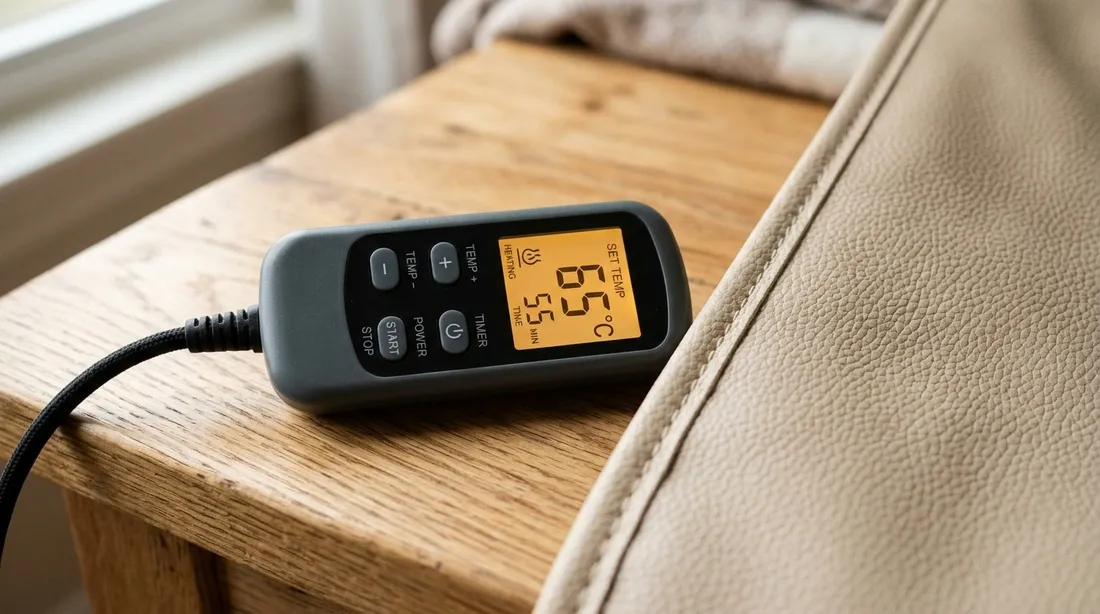
Digital handheld controllers monitor your temperature in real-time, featuring built-in safety timers to prevent overheating.
6.0 Equipment Care: Sanitizing and Moisture Prevention
Active recovery equipment is exposed to high levels of sweat, moisture, and condensation, making routine sanitation essential.
Wipe down your sauna blankets and compression boots with a non-abrasive, alcohol-free antibacterial wipe after every session to prevent bacteria build-up. For portable ice baths, treat the water with non-chlorine sanitizers and change the water every two weeks to keep it clean and clear.
7.0 Integrating Tech: Structuring Your Recovery Schedule
To get the most out of your recovery hardware, follow a structured weekly routine. Use cold water immersion immediately after intense lifting or athletic sessions to reduce muscle soreness.
In contrast, schedule far-infrared sauna blanket sessions on active recovery or rest days to promote deep tissue relaxation, increase joint mobility, and relieve stress. Always listen to your body and adjust your sessions to match your training volume.
Recovery Technology Parameters Comparison
The table below outlines the mechanical parameters of top home recovery technologies. Swipe horizontally on mobile devices to view all technical data:
| Recovery Modality | Primary Physical Mechanism | Temperature / Output Range | Typical Session Duration | Best Used For |
|---|---|---|---|---|
| Inflatable Ice Baths | Cold-induced vasoconstriction & hydrostatic pressure | 45°F to 55°F (7°C to 12°C) | 3 to 10 minutes | Immediate post-workout soreness reduction |
| Infrared Sauna Blankets | Radiant deep-tissue heating & sweat outgassing | 113°F to 176°F (45°C to 80°C) | 30 to 45 minutes | Rest day muscular relaxation and blood flow |
| Compression Boots | Pneumatic sequential air compression | 20 mmHg to 100+ mmHg of pressure | 20 to 30 minutes | Clearing metabolic waste after heavy leg days |
| Red Light Panels | Photobiomodulation of mitochondria | 660nm (Red) & 850nm (Near-Infrared) wavelengths | 10 to 15 minutes | Cellular energy support and joint tissue repair |
Recommended Home Active Recovery Gear
Our review board has evaluated the construction quality, safety features, and durability of the top-performing recovery systems on Amazon to upgrade your physical restoration.
RECOVER Athletic Portable Inflatable Ice Bath Tub
The RECOVER Athletic portable ice bath is a highly durable, triple-layer insulated cold plunge tub. Built with a robust ripstop nylon outer shell, watertight inner PVC skin, and thick thermal foam insulation, this portable tub keeps your water cold for hours. It comes with a matching insulated floating lid and a robust bottom drain valve for quick, easy water changes.
- Triple-Layer Thermal Insulation: Thick internal foam prevents ambient heat transfer.
- Inflatable Rigid Support Ring: Durable upper rim maintains structure and holds up to 100 gallons.
- Complete Accessory Kit: Includes floating thermal lid, protective cover, and draining hose.
- Multi-layer insulation keeps water cold without requiring constant ice.
- Highly stable, watertight construction prevents accidental leaks.
- Compact, folding design makes it easy to transport and store.
- Requires manual ice additions unless connected to a separate water chiller.
- Drain valve should be handled carefully on rough concrete surfaces.
LifePro Low-EMF Far-Infrared Sauna Blanket
LifePro’s far-infrared sauna blanket provides a highly relaxing, deep-heating sweat session in a compact, lay-flat design. Constructed from non-toxic, waterproof PU leather, this blanket features carbon fiber heating elements that emit therapeutic far-infrared heat while maintaining a safe, low-EMF profile. It is equipped with a digital handheld controller and auto-safety shut-off timers.
- Therapeutic Far-Infrared Heat: Penetrates deep into muscle tissue to relax stiff joints.
- Certified Low-EMF Shielding: Safe electromagnetic emissions of under 2 milligauss.
- Premium PU Leather: Waterproof, non-toxic, and easy to wipe clean after sessions.
- Folds flat for compact, space-saving storage.
- Low-EMF design provides peace of mind during long thermal sessions.
- Digital handheld controller allows precise temperature regulation.
- Requires laying on a flat towel to absorb heavy sweat outputs.
- The blanket must cool down completely before folding and storing.
Frequently Asked Questions
For healthy individuals, using an infrared sauna blanket daily is generally safe. Start with shorter sessions (15 to 20 minutes) at a moderate temperature to allow your body to adapt, and always drink plenty of water before and after your sessions to stay hydrated.
For post-exercise recovery, a cold plunge session of 3 to 10 minutes at a water temperature of 50°F to 55°F (10°C to 12°C) is highly effective. Avoid staying in the cold water for longer than 10 to 15 minutes, as prolonged exposure can lead to hypothermia.
Red visible light (typically 660nm) is absorbed by the skin’s surface, making it excellent for skin health and surface tissue repair. Near-infrared invisible light (typically 850nm) penetrates much deeper, reaching your muscles, joints, and tendons to support cellular repair and reduce deep inflammation.