
Disclosure: As an Amazon Associate, I earn from qualifying purchases. This technical review contains affiliate links which support our research at no cost to you.
Adding mechanical recovery therapy to your home gym schedule is an excellent way to fight lower-body stiffness, but selecting the right equipment requires a technical evaluation of pneumatic compression boots muscle recovery physics.
Unlike basic massage sleeves, medical-grade recovery boots utilize high-capacity air pumps to exert specific, sequential pressure waves that target deep intramuscular tissue.
In this technical guide, we break down the engineering specs behind pneumatic compression boots muscle recovery.
We evaluate overlapping chamber design, millimeters of mercury (mmHg) pressure gradients, lithium-ion battery capacities, and cellular fluid-flushing mechanics to ensure your post-leg-day recovery remains completely effective and safe.
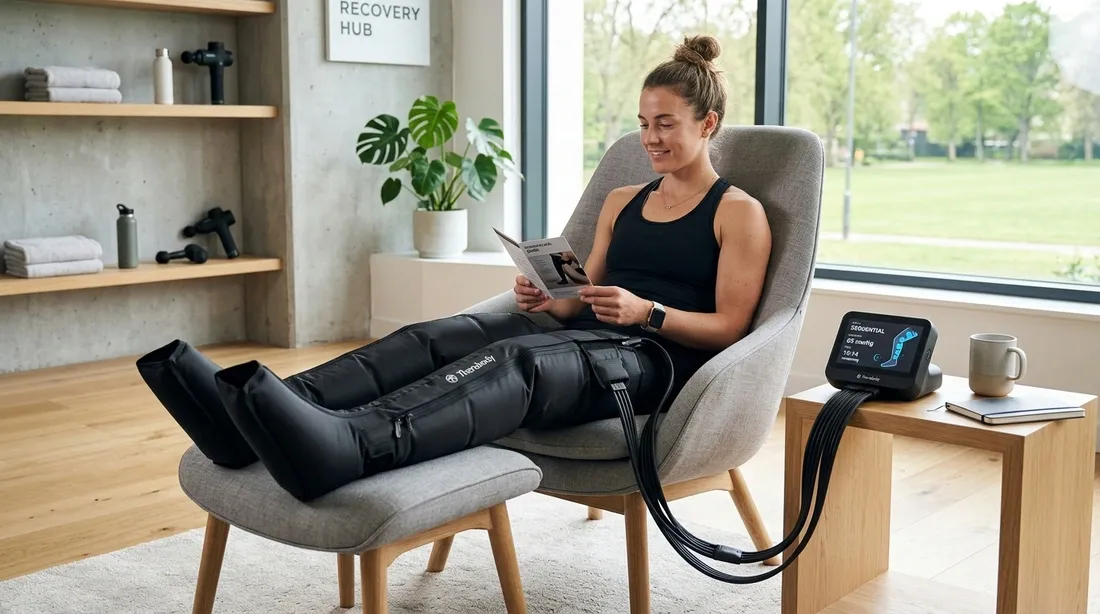
To maximize vascular flushing, prioritize overlapping air chamber boots (at least 4 to 5 zones) to eliminate pressure gaps that trap fluid. Keep operating pressures within a safe 40 mmHg to 100 mmHg range to avoid superficial capillary damage, ensure the controller console uses a silent brushless motor pump, and check for integrated lithium-ion batteries if you require travel portability.
Access our main home recovery tech guide to compare saunas, ice baths, compression, and red light therapy.
Read our detailed guidelines on inflatable ice bath walls, thermal insulation, and drain valve mechanics.
Review the best low-EMF infrared sauna blankets, non-toxic waterproof fabrics, and digital safety features.
Understand photobiomodulation, light irradiance outputs, and how to select 660nm and 850nm wavelengths.
1.0 Hydrostatic Pressure: The Physics of Cold Water Compression
When you submerge your body in a vertical cold plunge tub, the water exerts a physical force known as hydrostatic pressure. This pressure increases with depth, compressing the tissues in your lower limbs.
This natural compression helps push blood and interstitial fluid back toward your thoracic cavity, supporting lymphatic drainage and reducing localized muscle swelling. Choosing a tub with a depth of at least 28 to 30 inches ensures you receive the full benefits of this physical pressure during passive cold water immersion.
2.0 Thermal Insulation: How Multi-Layered Air Walls Trap Cold
Without adequate thermal insulation, cold water quickly absorbs heat from the surrounding air through conduction and convection. To prevent this, premium portable ice baths feature multi-layered walls.
High-quality units wrap an EPE (Expanded Polyethylene) thermal foam core between a rugged ripstop nylon outer shell and a watertight PVC interior liner. Adding a matching insulated inflatable floating lid creates an airtight seal, keeping your water cold without requiring constant ice additions.
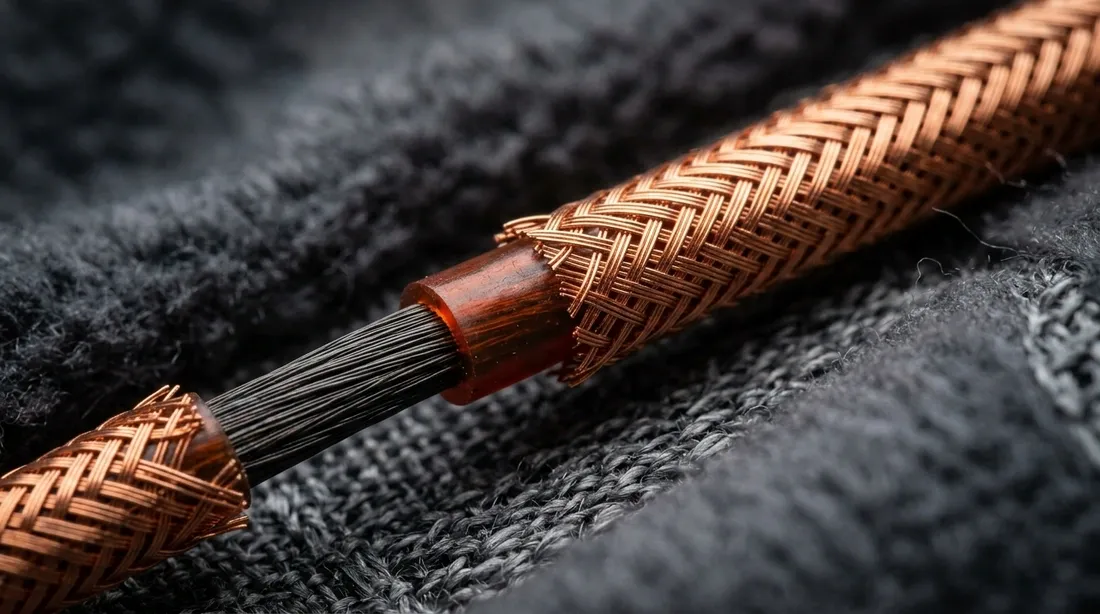
Multi-chamber air bladders inside the boots inflate sequentially to guide venous return upward toward the torso.
3.0 Drop-Stitch Ribs: Drop-Stitch PVC vs. Standard Inflatables
Budget-friendly inflatable tubs utilize standard single-layer PVC air rings. When loaded with 80+ gallons of water, these soft materials can easily bow, warp, or sag, which can lead to structural failures.
To avoid this, select a tub constructed from drop-stitch PVC. This engineering utilizes thousands of internal polyester threads connecting the upper and lower layers. When inflated, drop-stitch frames can handle air pressures up to 10 to 15 PSI, creating a rigid, stone-hard rim that you can safely sit on without bowing the frame.
4.0 Drain Valve Physics: Preventing Leakage and Flow Bottlenecks
The bottom drain valve is the primary fail point on portable cold plunge tubs. Cheap models utilize basic plastic push-plug valves secured with standard craft glues, which can slowly degrade and leak under constant water weight.
Choose tubs equipped with a thermally welded flange connection and a heavy-duty, threaded brass or hard plastic turn-valve. A robust threaded port prevents slow bottom leaks and allows you to attach standard garden hoses easily to direct water run-off away from your patio.
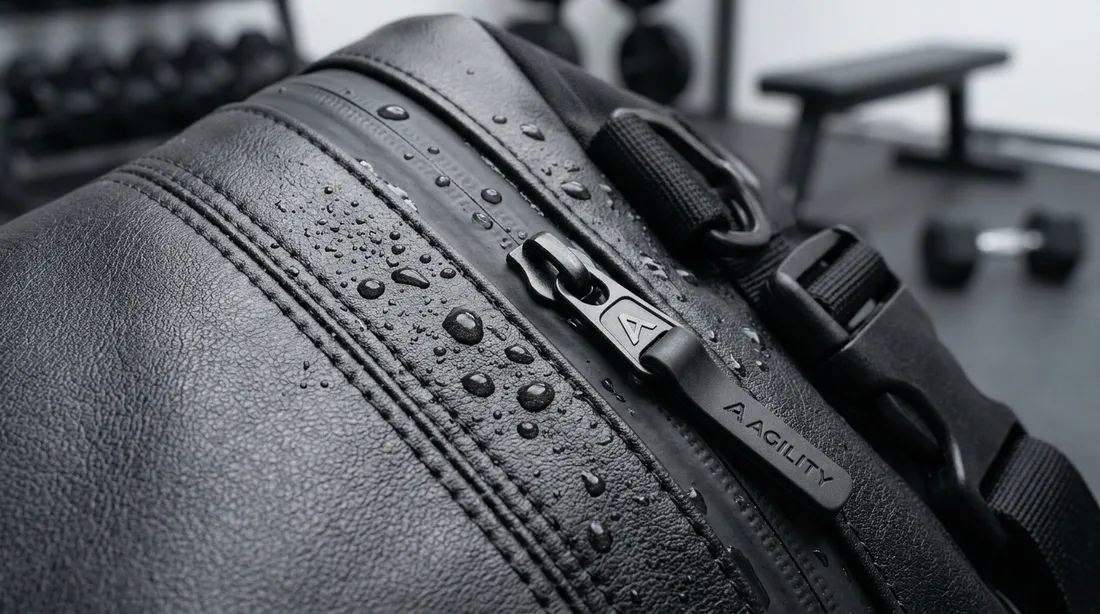
Seamless PU leather interior seams prevent sweat and sanitization spray from penetrating the internal heating elements.
5.0 Sanitization Protocols: Managing Water Chemistry Without Chlorine
Keeping water in your tub for more than a few days can lead to algae and bacteria build-up. However, using harsh pool chlorine tablets can dry out and degrade the watertight PVC inner liner over time.
Instead, keep your water clean by using a food-grade hydrogen peroxide solution (35% concentration) or a gentle UV-sanitizer filter. This provides highly effective water sanitization while keeping your PVC skin and your skin completely safe from chemical irritation.
6.0 Chiller Compatibility: Active Cooling vs. Manual Ice Loading
Adding bags of ice to your tub manually is cost-effective but can become time-consuming. If you plan to upgrade to an active water chiller system later, ensure your tub has built-in connection ports.
Look for tubs equipped with pre-drilled water inlet and outlet ports fitted with 3/4-inch GHT (Garden Hose Thread) connectors. This allows you to hook up an external cooling/filter chiller easily, keeping your water cold and filtered automatically without requiring ice.
7.0 Pre-Plunge Safety Protocols: Managing the Mammalian Dive Reflex
Sudden exposure to cold water induces a physiological reaction known as the cold shock response, which can cause hyperventilation and a sudden spike in heart rate. This is often accompanied by the mammalian dive reflex, which slows your heart rate when your face is submerged.
To stay safe, follow a gradual exposure protocol. Always enter the cold water slowly, focus on taking slow, controlled, deep belly breaths to manage the initial gasp reflex, and limit your sessions to 3 to 10 minutes. A systematic review published in PubMed Central (PMC11202882) suggests that this controlled cold exposure can support overall well-being and immune health.
Dynamic Compression Systems Comparison
The table below outlines how different pneumatic compression systems hold up to regular home use. Swipe horizontally on mobile devices to view all technical data:
| Compression Factor | Premium Pulsatile Overlapping Boots | Sequential Non-Overlapping Boots | Basic Air-Massage Wraps |
|---|---|---|---|
| Chamber Overlap Profile | Very High; overlapping bladders eliminate pressure gaps | Moderate; separate chambers have small dead zones | Low; separate leg wraps leave gaps |
| Pressure Control (mmHg) | Highly Precise (20 mmHg to 100+ mmHg) | Adjustable via preset levels | Coarse; Low/Med/High settings only |
| Inflation Waveform | Patented Pulsatile Pulse (mimics muscle pump) | Standard Linear Sequential Compression | Uniform (all zones inflate simultaneously) |
| Battery Versatility | Yes; rechargeable lithium-ion battery (up to 3 hours) | Yes; typically features battery control unit | No; requires direct plug-in connection to wall outlet |
| Internal Motor Decibel Rating | Very Quiet; under 45 dB whisper-brushless motor | Moderate; 50-60 dB buzz pump | Loud; noticeable motor hum during sessions |
Recommended Pneumatic Compression Boots
Our review board has evaluated the construction quality, pressure tolerances, and battery runtimes of the top dynamic compression systems available on Amazon.
Hyperice Normatec 3 Legs Sequential Compression System
The Normatec 3 is the definitive industry standard in intermittent pneumatic compression. Utilizing a patented pulsatile waveform, this system features 7 customizable pressure levels (ranging up to 100+ mmHg) across 5 overlapping, gapless compression zones. The rechargeable control console operates quietly for up to 3 hours per charge and connects via Bluetooth to the Hyperice App for guided recovery sessions.
- Patented Normatec Pulse Waveform: Mimics natural muscle pumps to maximize lymphatic drainage.
- 5 Overlapping Compression Zones: Eliminates painful pressure blocks along the limbs.
- Up to 3-Hour Battery Life: Premium rechargeable console designed for cordless use anywhere.
- The most scientifically backed sequential compression system available.
- Highly consistent overlapping chambers prevent localized fluid pooling.
- Whisper-quiet pump motor allows you to watch TV or read during use.
- Carries a luxury price tag compared to entry-level systems.
- Requires carrying a bulky, protective travel case (sold separately).
FIT KING Sequential Leg Compression Massager (FT-009A)
FIT KING’s sequential air compression system offers an exceptionally popular, highly effective alternative to premium systems. Built with 3 active compression zones and 3 customizable massage programs, this wall-powered setup provides deep, soothing lower-limb compression up to 100+ mmHg, making it highly practical for budget home active recovery spaces.
- 3 Sequential Air Chambers: Sequentially inflates from feet to thighs to support venous return.
- 3 Customizable Programs: Offers different mode sequences to relax sore muscles.
- Adjustable Wraps Fit: Includes extensions to expand leg sleeves to accommodate larger legs.
- Extremely affordable option compared to premium recovery brands.
- Included zipper extension panels expand wrap sizes for customizable fit.
- Robust air pressure easily targets sore calves and quad muscles.
- Requires a direct wall-plug connection to operate; not battery-powered.
- Lacks fully overlapping gapless chambers; minor pressure gaps exist.
Frequently Asked Questions
Yes, in clinical settings, sequential compression devices are actively used to prevent DVT by keeping blood moving during surgery or prolonged bed rest. However, if you already have a diagnosed blood clot or vascular condition, you should never use compression boots without consulting your physician first.
A typical athletic recovery session should last between 20 and 30 minutes. This duration is sufficient to flush metabolic waste and increase blood flow without causing tissue fatigue or numbness.
Start with a moderate pressure setting between 40 mmHg and 60 mmHg. You should feel a firm, rhythmic squeeze similar to a deep-tissue massage, but it should never feel painful or cause numbness in your toes. If you experience tingling, reduce the pressure immediately.
