Why Kettlebells Are Your Ultimate Home Fitness Tool
Have you been searching for a single piece of equipment that can deliver a full-body workout, burn fat, and build practical, real-world strength without taking over your living room?
Welcome to the world of kettlebells.
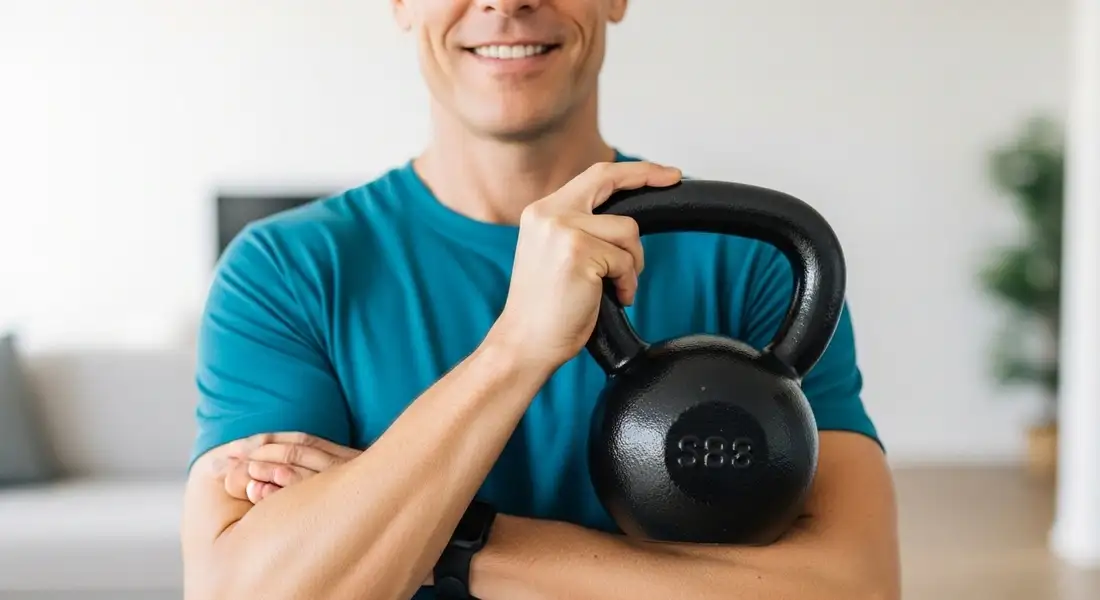
For beginners, the idea of swinging a cannonball with a handle can be intimidating.
You might be wondering: Am I too old or too out of shape for this? Is it safe to do at home? Where do I even begin?
Rest assured, kettlebell training is for everyone.
It’s a highly efficient and adaptable form of exercise perfect for both young adults looking to build muscle and seniors aiming to improve stability and strength.
This guide is your starting point.
We’ll tackle the most common beginner mistakes, guide you through selecting your first kettlebell, and show you how to start your beginner kettlebell workout at home with confidence.
How Do Kettlebells Differ from Other Weights?
Unlike dumbbells, a kettlebell’s unique U-shaped handle and off-center mass challenge your body in a way that perfectly mimics real-life movements, like lifting groceries or a suitcase.
This design forces your stabilizer muscles to work overtime, building a resilient core and improving your balance and coordination.
The dynamic, flowing nature of kettlebell exercises also combines strength and cardio, making your workouts incredibly efficient.
Learn more about how kettlebells fit into a balanced routine in our article on The Ultimate Guide to Cardio vs. Strength Training.
Solving Common Problems for Beginners
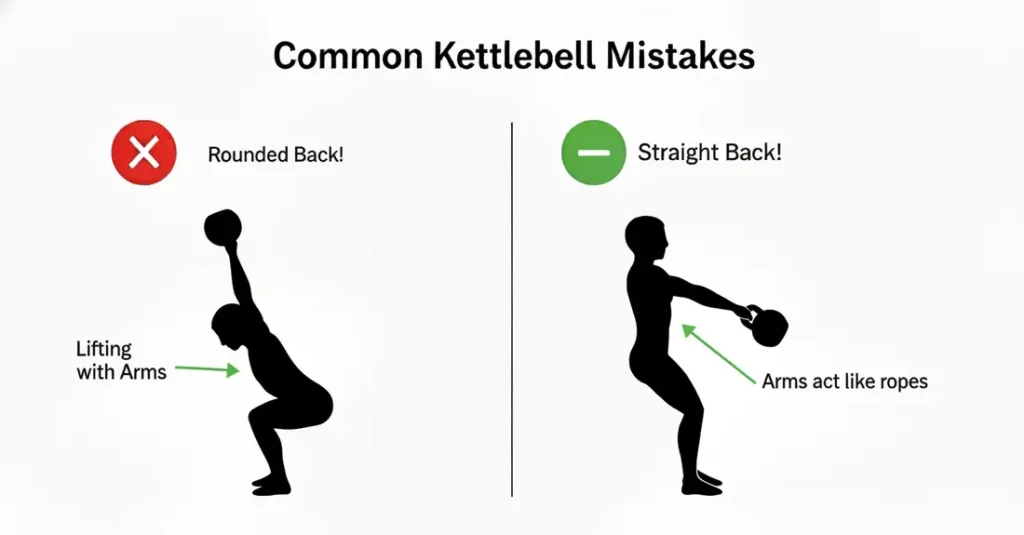
Nearly every beginner makes a few common mistakes.
Recognizing them is the first step to building a safe and effective practice.
| Problem | The Fix | Why It Matters |
| Using Your Arms, Not Hips | The power for the swing comes from an explosive hip “hinge,” not from lifting with your shoulders. Think of it as a powerful forward snap of the hips. | Using your arms leads to shoulder strain and robs the exercise of its primary benefit: building powerful glutes and hamstrings. |
| Incorrect Grip (“Death Grip”) | Hold the kettlebell handle in the hooks of your fingers, not deep in your palm. A tight grip can cause the bell to hit your forearms during cleans and snatches. | A relaxed grip prevents blisters and allows the kettlebell to move fluidly, which is essential for more advanced exercises. |
| Rounding Your Back | Keep your spine straight during swings and deadlifts. Engage your core and imagine a straight line from your head to your hips. | A rounded back, especially during dynamic movements, puts you at high risk for lower back injury. |
| Starting with the Wrong Weight | Many start too light out of fear, which encourages bad form (like using arms to lift). Starting too heavy makes it impossible to learn the correct movement patterns. | The right weight is heavy enough that you must use your hips to move it, but light enough to control completely. |
Your Step-by-Step Guide to Getting Started
This guide is designed as your central hub.
Each section below links to a more detailed article on our site, allowing you to dive deeper into each topic.
Step 1: Discover the Unique Benefits of Kettlebell Training
What makes kettlebells a powerhouse for home fitness?
They offer a full-body workout, improve functional strength, and are fantastic for cardiovascular health.
Their ability to build muscle and burn fat simultaneously makes them one of the most time-efficient workout tools available.
Deep Dive: Why Kettlebells? 7 Unique Benefits for a Total Body Transformation
Step 2: Select the Right Type and Weight for You
From classic cast iron to adjustable models, the choices can be confusing.
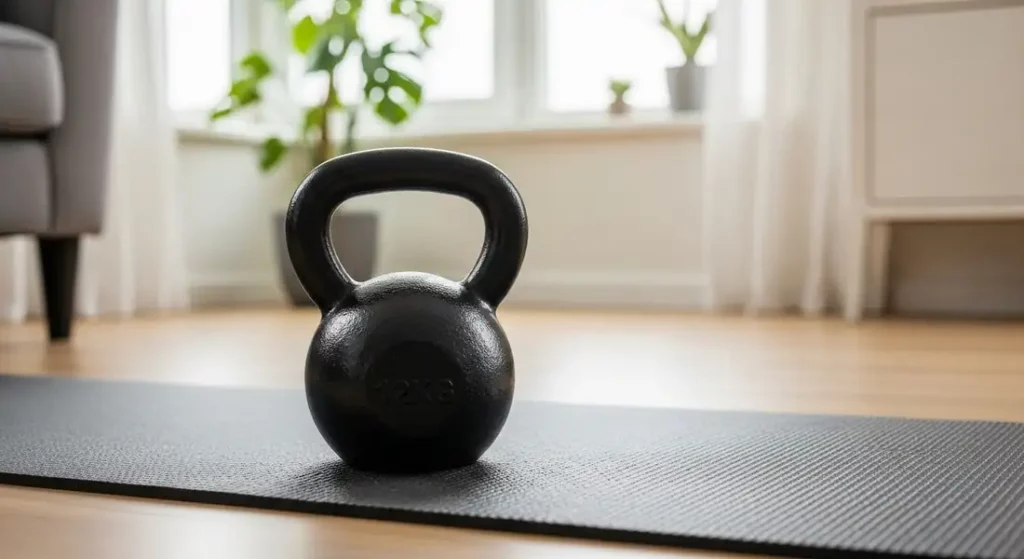
For most beginners, a single cast iron kettlebell is the perfect starting point.
We’ll help you decide on the ideal starting weight, a critical step for preventing injury and ensuring progress.
Learn More: What Weight Kettlebell Should I Start With? (A Beginner’s Guide)
Step 3: Master 5 Fundamental Exercises
You don’t need a long list of complex moves.
A powerful, full-body routine can be built from just a few foundational exercises.
We provide step-by-step instructions for the essentials.
Step-by-Step Instructions: 5 Fundamental Kettlebell Exercises to Master First
Step 4: Prioritize Safety in Your Home Gym
Working out at home requires you to be your own safety expert.
From ensuring you have adequate space to learning proper form, a few key safety rules will keep you injury-free and confident.
A proper warm-up is crucial. Refresh your memory with our guide on The Art of the Warm-Up for Cardio.
Must-Read: Home Kettlebell Safety: 10 Common Mistakes and How to Avoid Them
Step 5: Compare Kettlebells vs. Dumbbells
Already own dumbbells?
Wondering if you need kettlebells too?
While both are fantastic free weights, they excel in different areas.
We break down the pros and cons to help you decide which is best for your goals.
For more on dumbbells, check out our review of Bowflex Adjustable Dumbbells.
Full Comparison: Kettlebells vs. Dumbbells: Which is Better for Your Home Gym?
Recommended Kettlebell Accessories
While a kettlebell is all you need to get started, a few accessories can enhance your comfort and safety.
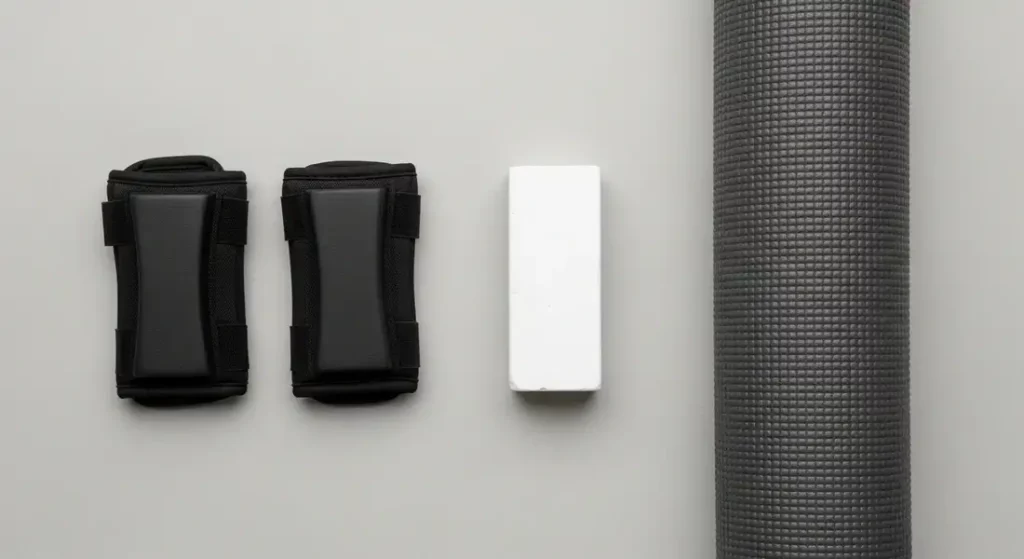
For Improved Grip
Chalk
A block of gym chalk can dramatically improve your grip, especially as you start to sweat. [Find it on Amazon]
For Comfort and Protection
Wrist Guards
These simple sweatbands or guards protect your forearms from bruising when you’re learning exercises like the clean and press. [Shop for wrist guards on Amazon]
Exercise Mat
An exercise or yoga mat can protect your floors and provide cushioning for floor-based exercises. [Browse exercise mats on Amazon]
Quick Reference – Key Takeaways for Beginners
- Focus on the Hip Hinge: This is the foundational movement for the most important kettlebell exercises. Master it before you start swinging.
- Quality Over Quantity: Perfect your form with a lighter weight before progressing. A few perfect reps are better than many sloppy ones.
- Protect Your Space: Ensure you have a clear 5-foot radius around you to avoid accidents.
- Listen to Your Body: Kettlebell training is intense. Don’t overdo it, especially when you’re just starting out.
Frequently Asked Questions (FAQ)
Q: Can seniors use kettlebells?
A: Absolutely. Kettlebell workouts are excellent for seniors as they build functional strength, improve balance, and can be easily modified. Exercises like the deadlift and goblet squat are particularly beneficial.
Q: Is kettlebell training good for weight loss?
A: Yes. Kettlebell swings, in particular, are a high-energy movement that burns a significant number of calories and builds metabolism-boosting muscle, making it a powerful tool for weight loss.
Q: How often should a beginner do kettlebell workouts?
A: Start with 2-3 non-consecutive days per week to allow your body time to recover. A 20-30 minute session is all you need to see results.
Start Your Kettlebell Journey Now
You are now equipped with the foundational knowledge to begin your kettlebell journey.
This is more than just a workout; it’s a step toward building a stronger, more resilient body at home.
What are your biggest questions or concerns about starting with kettlebells?
Share them in the comments below – we’re here to help you succeed!