The Most Important Decision a Kettlebell Beginner Will Make
You’ve learned why kettlebells are an amazing tool and you’ve picked out the perfect type of kettlebell for your home gym.
Now you’ve arrived at the most common—and most critical—question every beginner asks: what weight kettlebell should I start with?
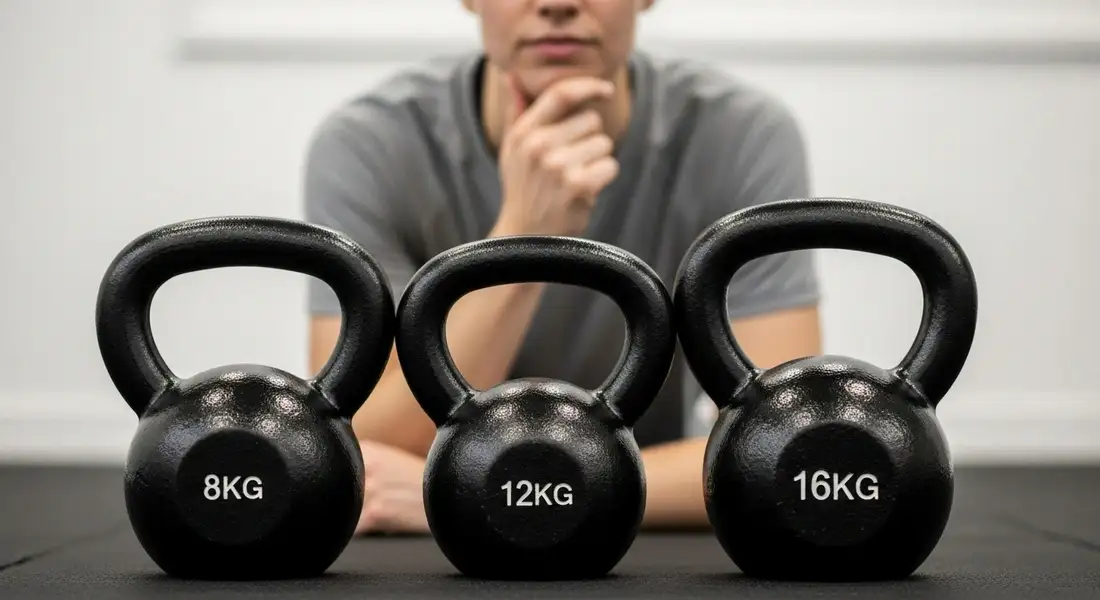
Choosing the right starting weight is more than just a guess.
It’s the key to learning proper form, preventing injury, and ensuring your workouts are effective from day one.
The fundamental principles of safe resistance exercise, which health authorities like the National Institutes of Health (NIH) recommend for improving physical ability, all center on control and proper form.
Go too heavy, and your form will break down. Go too light, and you’ll build bad habits that are hard to unlearn.
This guide will walk you through the common mistakes beginners make and provide clear recommendations to help you choose your first kettlebell with confidence.
The Two Big Mistakes – Too Light vs. Too Heavy
It might seem counterintuitive, but starting too light is just as bad as starting too heavy.
Let’s break down why.
Mistake #1: Starting Too Light
Out of fear of injury, most beginners instinctively reach for the lightest kettlebell available.
Unfortunately, this often sabotages progress.
Why It’s a Problem
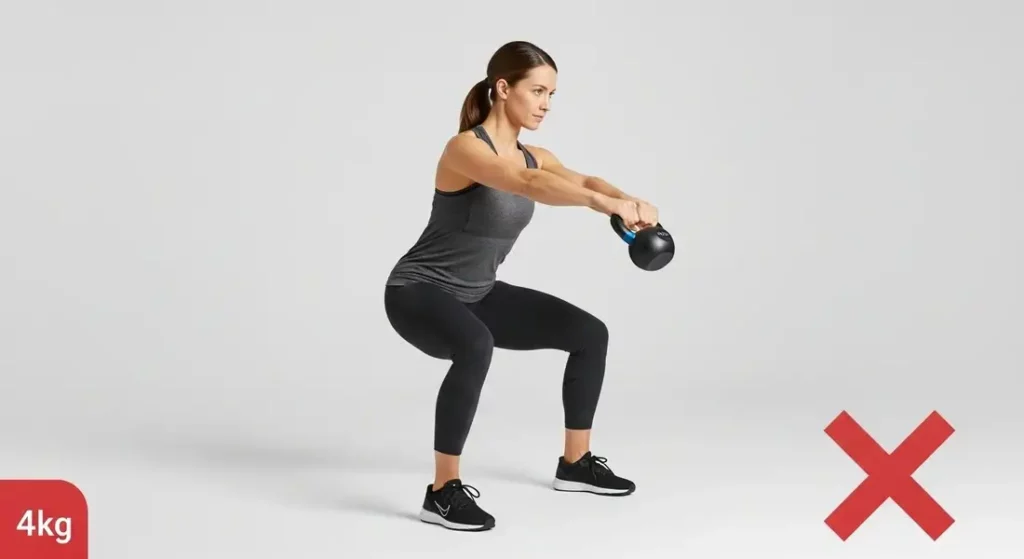
The most fundamental kettlebell exercise, the swing, is a power movement driven by your hips, glutes, and hamstrings—the strongest muscles in your body.
If the weight is too light, you can easily muscle it up with your arms and shoulders, completely defeating the purpose of the exercise.
This teaches a faulty movement pattern that is inefficient and can lead to shoulder strain down the road.
A good kettlebell should be heavy enough that you have to use the power of your hips to move it.
Mistake #2: Starting Too Heavy
This is the more obvious mistake.
Choosing a weight that is far beyond your current strength level is a recipe for disaster.
Why It’s a Problem
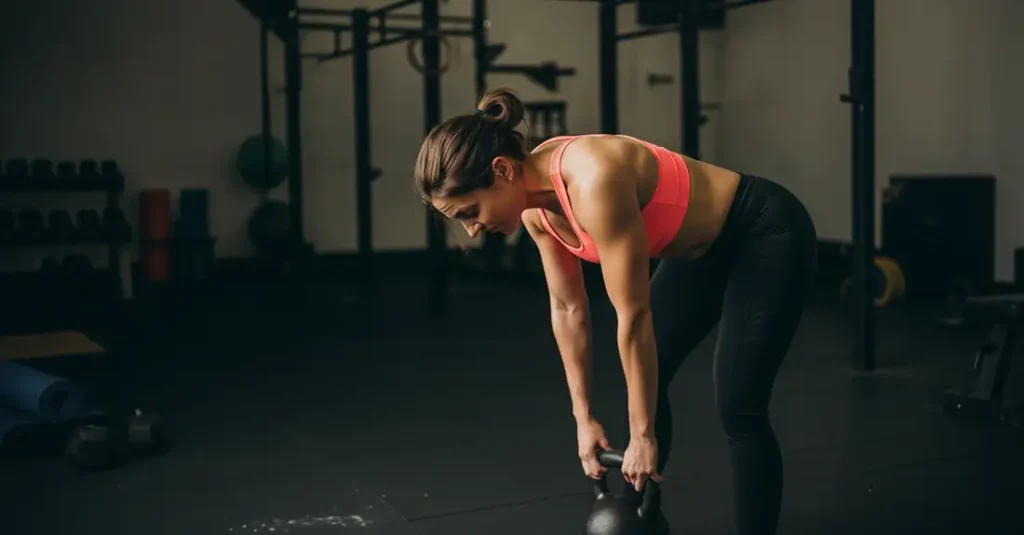
An excessively heavy kettlebell makes it impossible to learn proper form.
Your body will compensate by rounding your back or using jerky movements, which puts you at high risk for a lower back or shoulder injury.
Control is the name of the game when you’re starting out.
The weight should be challenging, but you should be in control of it at all times.
So, What Weight Should I Start With?
Your ideal starting weight depends on your current fitness level.
Below are some general guidelines.
Remember, these are starting points—your individual strength will determine the perfect fit.
| Fitness Level | Typical Starting Weight (Women) | Typical Starting Weight (Men) |
| New to Exercise / Less Active | 8 kg (18 lbs) | 12 kg (26 lbs) or 16 kg (35 lbs) |
| Moderately Active / Some Experience | 12 kg (26 lbs) | 16 kg (35 lbs) or 20 kg (44 lbs) |
| Very Active / Lifts Weights Regularly | 12 kg (26 lbs) or 16 kg (35 lbs) | 20 kg (44 lbs) or 24 kg (53 lbs) |
These recommendations are echoed by leading experts in the field.
This approach to progressive challenge is a core part of our Beginner Strength Training at Home philosophy.
The 2-Minute Test to Confirm Your Choice
If you’re in a store and can try a few weights, or if you’ve just unboxed your first kettlebell at home, run through these two simple tests to see if you’ve made the right choice.
Test 1: The Two-Handed Deadlift
This is the safest way to feel the weight.
- Stand with your feet shoulder-width apart, with the kettlebell between your feet.
- Hinge at your hips, keeping your back perfectly straight, and grip the handle with both hands.
- Driving through your heels, stand up straight, lifting the kettlebell. Squeeze your glutes at the top.
- Reverse the motion with control.
The Verdict: You should be able to perform 5-8 reps easily while maintaining a perfectly straight back. If you feel any strain in your lower back, it’s too heavy. If it feels comically light, it’s too light.
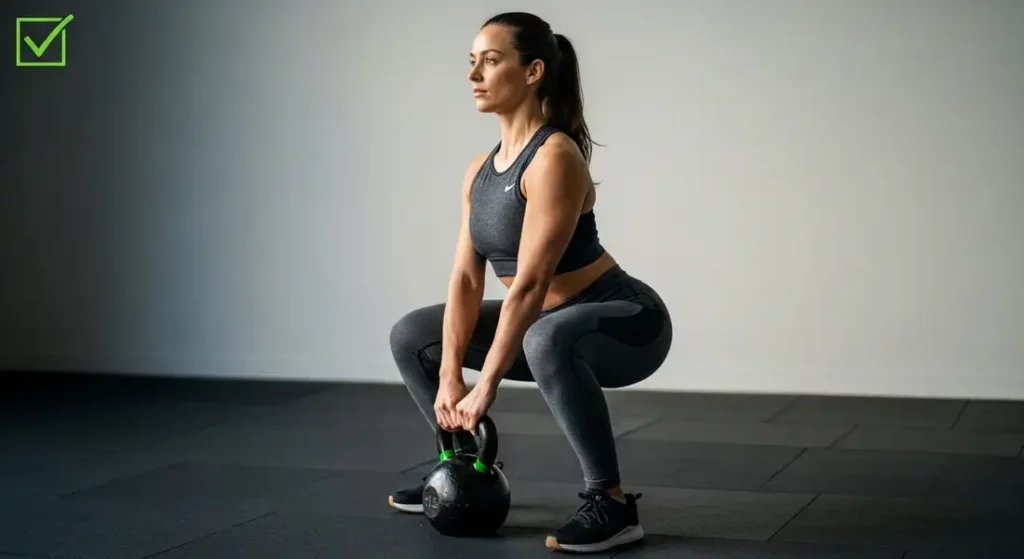
Test 2: The Goblet Squat
This tests your ability to control the bell.
- Hold the kettlebell by the “horns” of the handle, keeping it tucked against your chest.
- Keeping your chest up and back straight, squat down as if sitting in a chair.
- Go as deep as you can comfortably, then drive back up to the starting position.
The Verdict: The weight should feel stable against your chest. You should be able to complete a full squat without the bell pulling you forward or causing you to lose balance.
Key Takeaways for Choosing Your Weight
- Don’t Be Afraid of the Weight: Remember, you’re moving it with your powerful hips and legs, not your arms.
- When in Doubt, Go Heavier: Most people are stronger than they think. If you are truly caught between two sizes, the slightly heavier option will serve you better in the long run.
- Form is Everything: Your primary goal is to learn the movements perfectly. The right weight allows you to do this.
- One Bell is All You Need: You do not need a full set to start. A single, well-chosen kettlebell is a passport to a thousand different workouts.
Frequently Asked Questions (FAQ)
Q: I’m a senior, should I start with a very light weight?
A: Seniors should still aim for a weight that is challenging enough to require proper hip drive. An 8 kg (18 lbs) bell is often a great starting point, focusing initially on the deadlift and goblet squat to build foundational strength safely.
Q: When will I know it’s time to get a heavier kettlebell?
A: When you can comfortably exceed your target reps for your main exercises with perfect form, and the weight no longer feels challenging, it’s time to level up. For swings, this might mean you can easily perform 20+ reps in a row without your heart rate spiking dramatically.
Q: I bought a kettlebell and I think it’s too light. What can I do?
A: Don’t worry! A lighter bell is still a great tool. You can use it for more advanced single-arm exercises, for warm-ups, or for exercises that require more control and stability, like the Turkish Get-Up.
You’ve Chosen Your Tool. Now, Let’s Learn How to Use It.
Congratulations! You’ve navigated the most difficult part of getting started.
With your perfect first kettlebell selected, you’re ready to start building real, functional strength.
The next step is to master the foundational movements.
Next Step: Continue to our step-by-step guide to the 5 Fundamental Kettlebell Exercises for Beginners (Swing, Goblet Squat, Halo).