
In my technical career, I’ve never seen a complex machine maintained without a detailed service log.

You need to know exactly what was changed, when it was changed, and what the resulting output was.
Your fitness journey is no different.
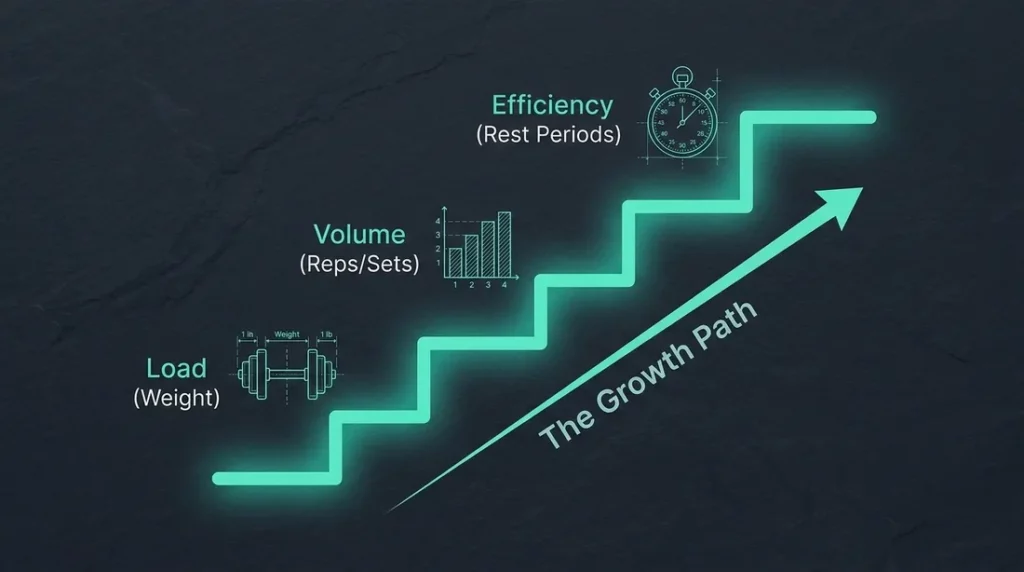
If you don’t log your sets, reps, and miles, you cannot apply the principle of Progressive Overload—the literal law of muscle growth.
Whether you are using Sandbag Training or a Home Rowing Machine, this guide will help you build a “Performance Log” as part of your Modern Fitness Tracking System.
In This Guide:
💡 What is the most important thing to track in a workout?
The most critical metric to track is Progressive Overload. This means gradually increasing the stress placed upon the body during exercise. In a home gym setting, you track this by recording increased resistance (heavier weights), increased volume (more reps or sets), or increased density (shorter rest periods). By keeping a consistent log, you ensure that your body is constantly forced to adapt, leading to continuous strength and endurance gains.
Analog vs. Digital – Choosing Your Interface
🤖 AI Automation – The End of Manual Entry
In 2026, “Performance Documentation” has been revolutionized by Computer Vision (CV) and Automatic Set Detection.
- Rep-Counting AI: Modern apps use your phone’s camera to identify your form and count your reps automatically while using your Weight Bench.
- Ecosystem Syncing: If you use Interactive Fitness Equipment, ensure your log “auto-ingests” the data. This creates a single technical source of truth for your heart rate, power output, and recovery.
IndraP’s Advice: For the busy professional, if you have to spend more than 2 minutes logging, the system will fail. Automate your data intake so you can focus on the ‘Hardware’ (your body).
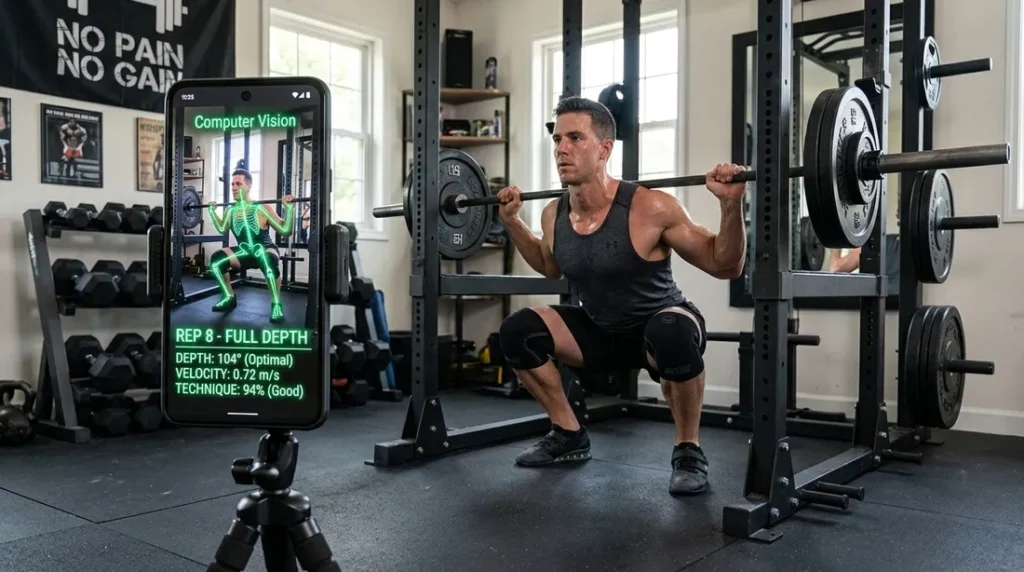
For a busy professional, a digital app that syncs with your Interactive Fitness Equipment is often the most efficient.
However, for many beginners and seniors, the “Analog” approach of a physical journal provides a psychological connection to the work that an app cannot match.
✅ Performance Logging Rules
- The “3-Metric” Rule: For every exercise, log the Weight, the Reps, and the RPE (Rate of Perceived Exertion).
- Consistency over Complexity: It is better to have a simple log you use every day than a complex AI app you forget to open.
- Visual Cues: For seniors, using a wall-mounted tracker can provide the visual motivation needed to stick to Strength Training for Older Adults.
IndraP’s Technical Note – Tracking “Total Work Volume”
In engineering, we measure “Work” as Force multiplied by Distance.
In fitness, we use “Total Volume” to determine if the system is being upgraded or just maintained.
🛠️ Technical Specialist’s Note: Diagnosing “Junk Volume”
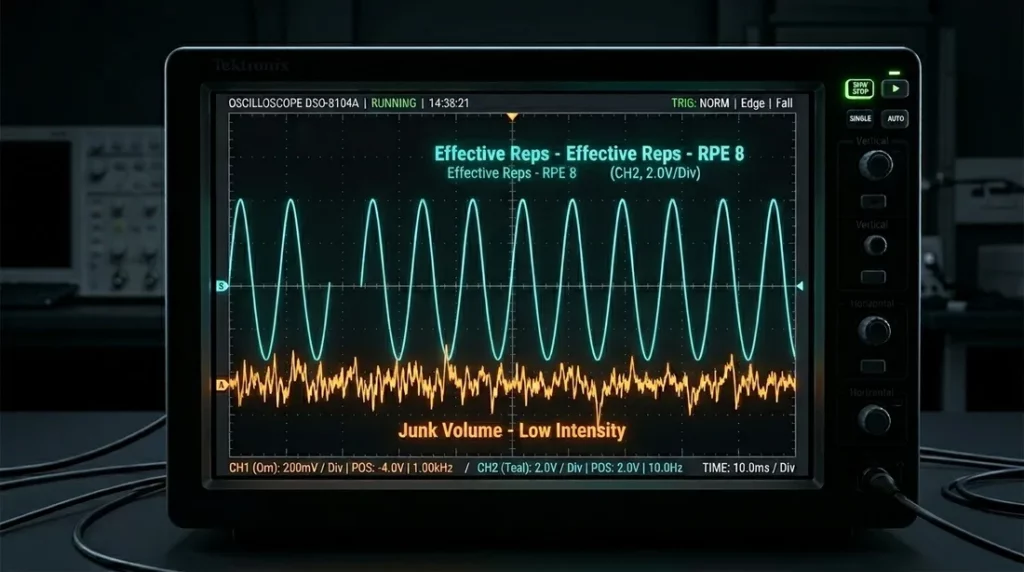
“In my technical audit of workout logs, I often find a ‘Faulty Logic’ in how people track strength. They focus on Total Volume Load (Weight x Reps) but ignore the Signal Quality (Intensity).”
- The Plateau Error: If you do 100 reps of a very light weight, your log shows a high ‘Total Volume,’ but your ‘Internal Hardware’ (muscles) never received the signal to grow. This is Junk Volume.
- Effective Reps: For a successful Sandbag Transformation, you must log the RPE (Rate of Perceived Exertion). If your log shows that every set felt like a ‘Level 5,’ you aren’t providing enough ‘Voltage’ to trigger an upgrade. Aim for RPE 7-9 for real progress.”
— IndraP
Premium Tools for Professional Logging
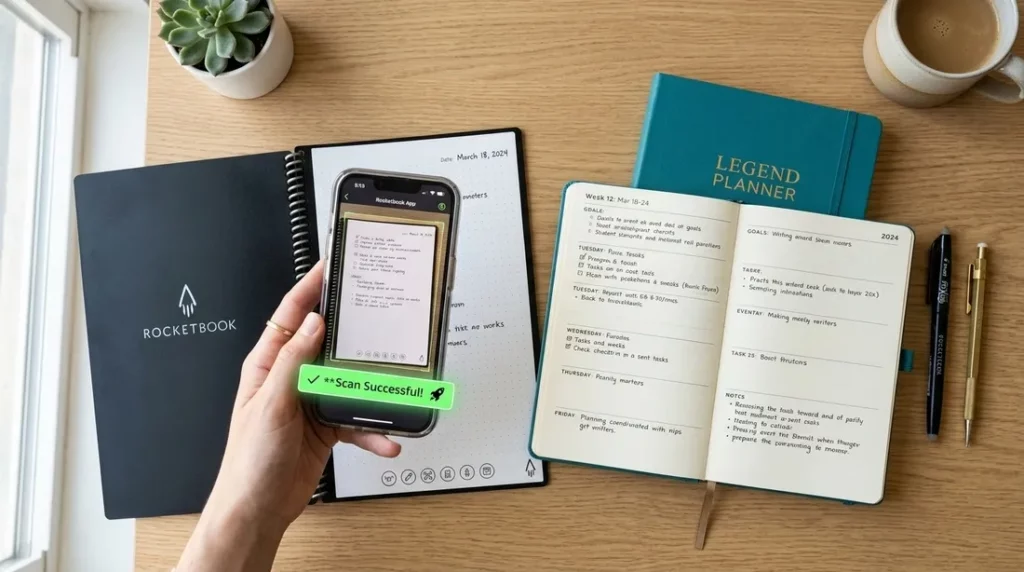
Whether you prefer the tactile feel of paper or the automation of a smart device, these tools represent the best in “Performance Documentation.”
🏆 The “Tactile” Professional – Legend Planner Fitness Journal
Why it matters: This is not just a notebook; it is a goal-setting system. It includes sections for tracking body measurements, habit tracking, and detailed workout logs. It is perfect for those who want to disconnect from screens during their Home Gym Workouts.
💎 The “Hybrid” Solution – Rocketbook Smart Reusable Notebook
Why it matters: Write your workout with a pen, then use the app to scan and “blast” your notes to Google Drive or Evernote. It’s a permanent digital record with the speed of handwriting—ideal for tracking long-term Sandbag Transformations.
Frequently Asked Questions
Q: Should I log my rest periods?
Yes, especially for endurance. If you can perform the same Home Leg Workout with 60 seconds of rest instead of 90, you have significantly improved your cardiovascular efficiency without changing the weights.
Q: How do I track progress for “Interactive” equipment?
Most Interactive Fitness Equipment like Peloton or Hydrow logs your data automatically. However, I still recommend a manual “Monthly Review” where you look at your “Average Output” or “Watts” to ensure you are trending upward over several months.
🚀 The Performance Audit: 3 Steps to a Perfect Log
- 🔳 Immediate Documentation: Log your set within 60 seconds of finishing. If you wait until the end of the workout, ‘Memory Jitter’ will make your data inaccurate.
- 🔳 Track Your ‘Rest Interval’: For seniors and endurance athletes, decreasing your rest from 90 to 60 seconds is a 33% efficiency gain, even if the weight stays the same.
- 🔳 The Weekly Review: Every Sunday, perform a ‘Technical Audit’ of your log. If your Leg Day numbers haven’t moved in 3 weeks, it’s time to adjust your ‘Load Strategy.’
Conclusion – Documentation is Transformation
You cannot manage what you do not measure.
By keeping a detailed Performance Log, you take the guesswork out of your home fitness.
You will know exactly when it is time to upgrade your weights or increase the intensity of your Rowing Machine Sessions.
Now that you have your “Performance Log” and your “Bio-Data” in sync, the final piece of the tracking puzzle is the most advanced: Quantifying your recovery.
Final Step – Quantify Recovery
Tracking Muscle Healing with Tech →
About IndraP
IndraP is the founder of Reliable Home Fitness and a Technical Equipment Specialist. Collaborating with industry leaders like FoliageField.com, he specializes in identifying top-tier training equipment.
With unique expertise in board-level repairs and upgrades, Indra looks beyond the marketing hype to test the internal mechanics of the machines he reviews. His mission is to help you invest in gear that is safe, durable, and reliable.