
Tired of boring workouts that don’t deliver results?
What if a single, affordable tool could transform your core strength, improve your posture, and make fitness fun again?
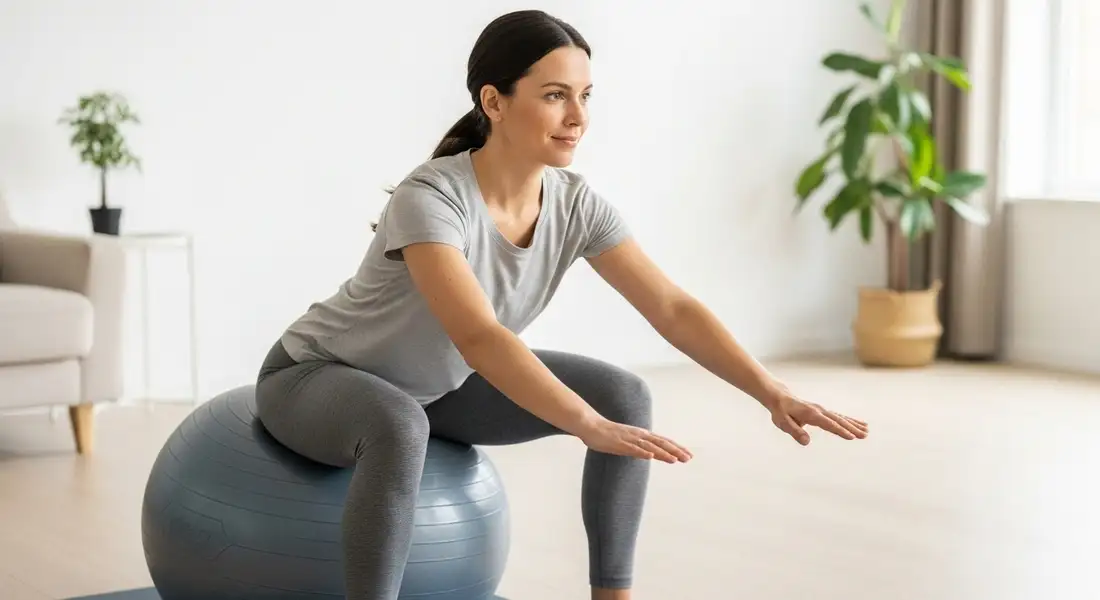
It’s time you met the stability ball.
Often called an exercise ball, this simple piece of equipment is a powerhouse for building a strong, functional body right in your living room.
In this comprehensive beginner’s guide to stability balls, we’ll walk you through everything you need to know, from picking the perfect ball to performing your first exercises safely and effectively.
What is a Stability Ball and Why Should You Care?

At first glance, it’s just a large, inflatable ball.
But its power lies in a simple concept that can revolutionize your workouts: instability.
More Than Just a Ball – The Concept of Instability Training
When you perform an exercise on a flat, stable floor, your large muscle groups do most of the work.
When you do that same exercise on an unstable surface like a stability ball, your body faces a new challenge.
It’s forced to recruit dozens of smaller, deep stabilizing muscles in your core, hips, and shoulders just to keep you balanced.
This constant engagement is the secret sauce of stability ball training.
Your body works harder, engages more muscles, and burns more calories—even when performing simple movements.
This method is a cornerstone of functional fitness and is closely related to the principles of using balance equipment for exercise.
From Physical Therapy to Your Living Room
The stability ball wasn’t invented for gyms; its roots are in clinical rehabilitation.
Physical therapists began using them in the 1960s to help patients with neurological conditions improve balance and motor control.
Its effectiveness in safely building core strength and stability is why it became a staple in physical therapy clinics worldwide.
This clinical background is great news for beginners.
It proves the tool is safe, effective, and designed to build a foundation of strength from the ground up.
The Core of the Matter – Top 3 Benefits of Stability Ball Training
While the advantages are numerous, beginners will notice three key benefits almost immediately.
This is just a snapshot; we explore these in much more detail in our dedicated guide.
- Builds a Rock-Solid Core: The ball targets deep abdominal and lower back muscles that are often missed in traditional exercises, creating a truly strong and supportive midsection.
- Improves Balance and Stability: Regular use enhances your body’s awareness of its position in space (proprioception), leading to better coordination and a lower risk of falls.
- Reduces Back Pain & Improves Posture: A strong core is the best defense against back pain. By strengthening the muscles that support your spine, the ball helps you stand taller and sit more comfortably.
For a complete breakdown of these advantages and more, read our detailed guide: Benefits of Using a Stability Ball for Beginners.
Finding Your Perfect Fit – How to Choose the Right Stability Ball
Before you can start, you need the right tool for the job.
Using a ball that is too big or too small is not only ineffective but can also be unsafe, leading to poor form and potential injury.
The Height & Size Guideline
The most reliable way to choose a stability ball is based on your height.
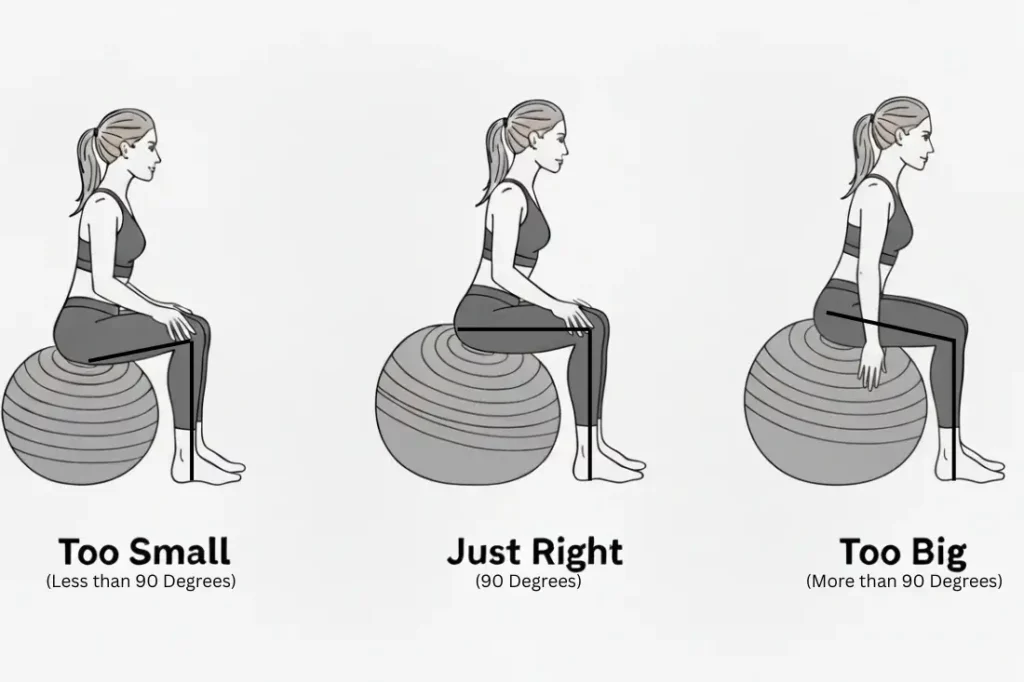
When you sit on the ball, your hips should be level with or slightly higher than your knees, with your feet flat on the floor.
| Your Height | Recommended Ball Diameter |
| Under 5′ 0″ | 45 cm |
| 5′ 1″ to 5′ 7″ | 55 cm |
| 5′ 8″ to 6′ 2″ | 65 cm |
| Over 6′ 3″ | 75 cm |
Don’t Burst Your Bubble – Material and Safety
Look for a ball made from high-quality, “anti-burst” or “burst-resistant” PVC.
This doesn’t mean the ball can’t be punctured, but it ensures that if it is, it will deflate slowly and safely rather than bursting suddenly.
This is a critical safety feature for home use.
- We recommend looking for a high-quality, anti-burst model with a non-slip texture, like the [Fitvids Anti-Burst and Slip Resistant], which is highly rated and available on Amazon.
For a complete breakdown of materials, sizing, and our top-rated product recommendations, read our guide: Choosing the Right Size Stability Ball.
Your First Steps – Getting Started with Basic Exercises
The beauty of the stability ball is its gentle learning curve.
You can start with simple, foundational movements to build confidence and control before moving on to more complex exercises.
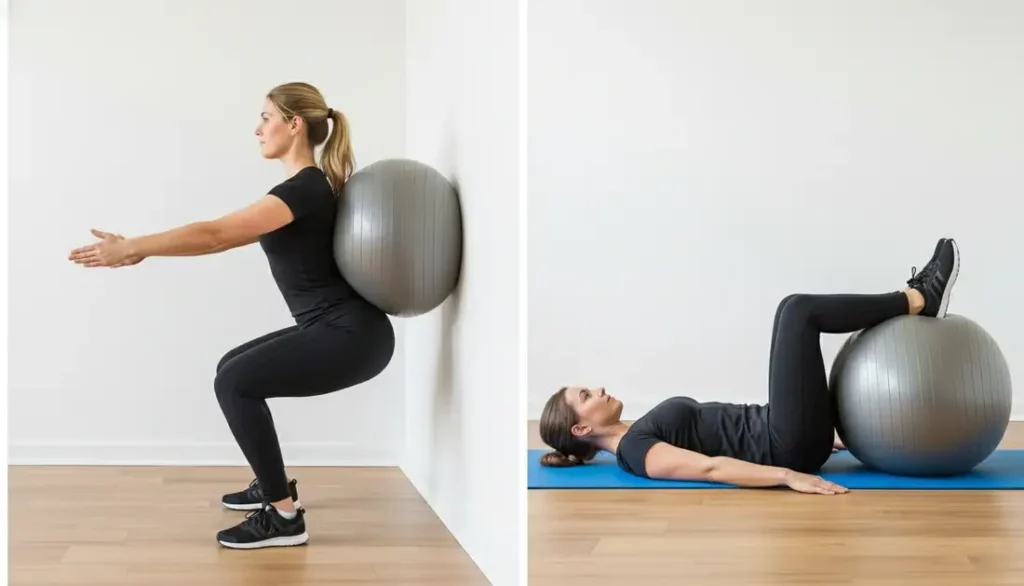
Here are two perfect exercises to start with:
- Wall Squat: Place the ball between your lower back and a wall. Walk your feet forward, then slowly lower into a squat, letting the ball roll up your back. This helps you master the squat movement while supporting your back.
- Pelvic Tilts: Lie on the floor with your calves and feet resting on the ball. Gently roll the ball toward you by tilting your hips and engaging your lower abs. This is a fantastic and safe way to activate deep core muscles.
Ready to build your first full routine? Head over to our complete list of Basic Stability Ball Exercises for Core and Balance.
The Office Worker’s Secret Weapon – The Stability Ball Desk Chair
You’ve probably seen it: someone swapping their ergonomic office chair for a big exercise ball.
The idea is to engage your core and improve posture while you work, turning sedentary time into active time.
While it can offer benefits like “active sitting,” it also comes with drawbacks.
If you get tired, you can easily slump into a poor posture, and using it for a full eight-hour day is not recommended.
It’s crucial to understand both sides before you make the switch, especially when considering the health risks of sitting too long.
Is it the right move for your workday? We weigh the evidence in our in-depth guide: Using a Stability Ball as a Desk Chair (Pros and Cons).
Key Takeaways
- Instability is Key: The ball’s unstable surface forces more muscles to work, especially your deep core stabilizers.
- Choose the Right Size: Your height is the best guide for selecting the correct ball diameter for safety and effectiveness.
- Safety First: Always opt for a high-quality, anti-burst material to prevent sudden deflation and injury.
- Start Simple: Master basic movements like wall squats and pelvic tilts before moving on to more advanced exercises.
- Versatile Tool: A stability ball is an excellent, low-cost addition to any home gym for building strength, balance, and posture.
Frequently Asked Questions (FAQ)
- Q1: How do I inflate my stability ball properly?
- A: Your ball should arrive with a pump. For the first inflation, we recommend inflating it to about 80% of its total size and letting the material stretch for 24 hours before inflating it to its final, firm size. For detailed instructions, see our guide on [Child Page] How to Inflate and Maintain Your Stability Ball.
- Q2: Can I lose weight just by using a stability ball?
- A: A stability ball is a fantastic tool for building muscle and improving stability. This contributes to your overall fitness and increases calorie burn, but it works best as part of a comprehensive workout plan and a healthy diet.
- Q3: How often should I use my stability ball?
- A: As a beginner, start with 10-15 minute sessions, three times a week. As your core strength and balance improve, you can gradually increase the duration and frequency of your workouts.
Conclusion and Your Next Step
The stability ball is more than just a fitness trend; it’s a versatile and powerful tool that has stood the test of time, from physical therapy clinics to home gyms.
For a minimal investment, you gain a way to unlock superior core strength, better balance, and improved posture.
Ready to start building a stronger core?
Explore our detailed guides on choosing your first ball and mastering the basic exercises.
Or, if you’re ready to buy, check out our top-rated stability ball on Amazon to begin your fitness journey today