
You’re ready to start experiencing the amazing benefits of a stability ball, from a stronger core to better balance.
But before you add one to your cart, there’s a crucial first step: choosing the right size.

As we mentioned in our Beginner’s Guide to Stability Balls, size isn’t just a suggestion—it’s the single most important factor for ensuring your workouts are safe, comfortable, and effective.
This guide will walk you through everything you need to know to find your perfect match.
What Size Stability Ball Do I Need?
The best way to choose a stability ball is by your height. If you are between 5’1″ and 5’7″, you need a 55 cm ball. If you are between 5’8″ and 6’2″, you need a 65 cm ball. The goal is for your hips and knees to be at a perfect 90-degree angle when you sit on it with your feet flat on the floor.
Why Size is the Most Critical Factor for Safety and Results
Using the wrong size stability ball can completely undermine your efforts.
- If the ball is too small: Your knees will be higher than your hips, putting you in a cramped position that strains your lower back and prevents you from engaging your core muscles properly.
- If the ball is too big: You’ll struggle to keep your feet firmly on the ground, making you feel unstable and increasing the risk of slipping off. It makes proper form nearly impossible to achieve.
Choosing the right size sets you up for success by creating a stable foundation for every single exercise.
The Definitive Sizing Chart & The 90-Degree Rule
The most reliable method for choosing a stability ball is based on your height.
The goal is to follow the “90-Degree Rule.”
When you sit upright on the ball with your feet flat on the floor, your hips and knees should form a perfect 90-degree angle.
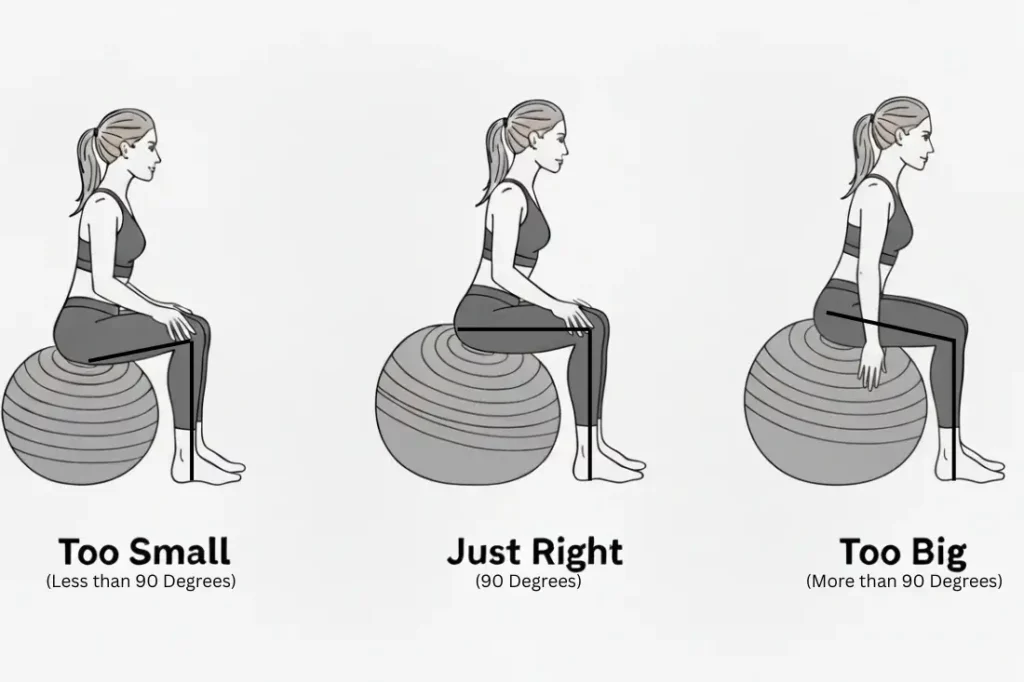
Use this simple chart to find your ideal starting size:
| Your Height | Recommended Ball Diameter |
| Under 5′ 0″ | 45 cm |
| 5′ 1″ to 5′ 7″ | 55 cm |
| 5′ 8″ to 6′ 2″ | 65 cm |
| Over 6′ 3″ | 75 cm |
The Desk Chair Exception – Sizing for Your Workspace

Are you thinking of using the ball as a desk chair?
The 90-degree rule still applies, but you need to factor in the height of your desk.
Your goal is to sit comfortably with your forearms resting parallel to the floor.
You may need a slightly larger ball or need to inflate your standard-sized ball to be firmer than you would for exercise.
For a full analysis of this trend, be sure to read our guide on using a stability ball as a desk chair.
Understanding Materials and Safety Features
Beyond size, look for these two key features to ensure you’re buying a quality product:
- Anti-Burst Technology: This is a non-negotiable safety feature. It means that if the ball is accidentally punctured, it won’t pop like a balloon. Instead, it will deflate slowly and safely, giving you plenty of time to get off and preventing injury.
- Non-Slip Surface: A slightly tacky or textured surface provides better grip against both the floor and your clothing, ensuring the ball stays put during your workouts.
Our Top 3 Stability Ball Picks for Beginners
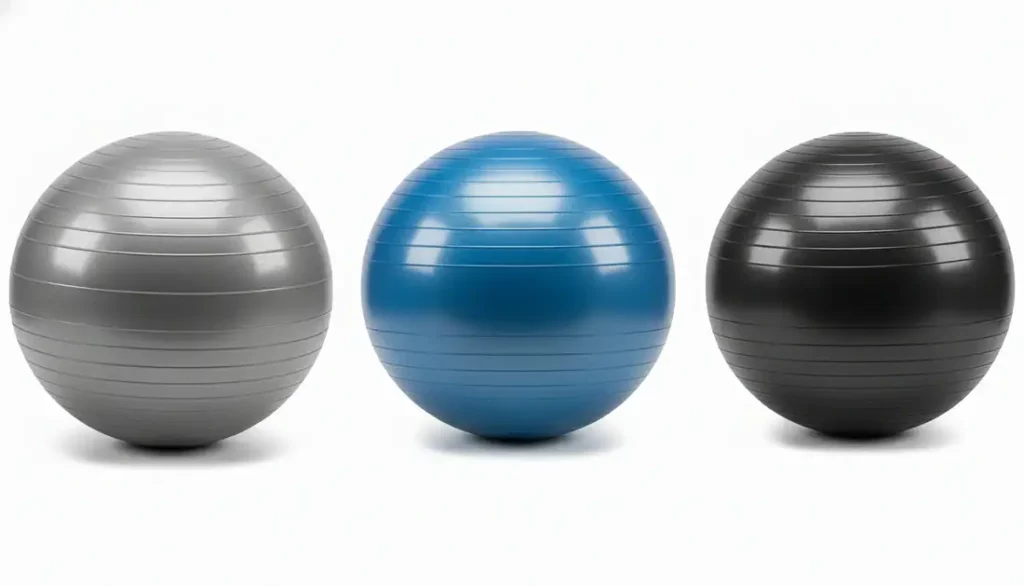
We’ve researched dozens of options to find the best, safest, and most reliable stability balls for home use.
(Disclaimer: As an Amazon Associate, we may earn from qualifying purchases.)
| Product Name & Image | Material & Safety | Sizes Available | Key Feature & CTA |
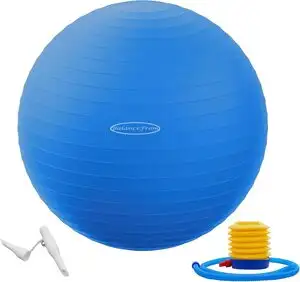 | Thick, Anti-Burst PVC | 55cm, 65cm, 75cm | The All-Rounder: This ball has a high anti-burst rating and a great non-slip texture. It also includes a quick-inflation pump, making it perfect for first-time buyers. [Check Price on Amazon] |
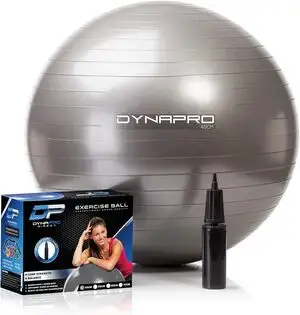 | Professional Grade Anti-Burst Material | 45cm, 55cm, 65cm | The Durability Champ: With an ultra-high weight limit and extra-thick material, this ball is built to last and feels incredibly stable and secure during any exercise. [Check Price on Amazon] |
 | Eco-Friendly, Non-Toxic PVC | 55cm, 65cm | The Eco-Conscious Choice: Made from phthalate-free materials, this is a great option for those who prioritize a non-toxic home environment without sacrificing safety or performance. [Check Price on Amazon] |
Key Takeaways
- Measure by Height: Use our sizing chart as your primary guide.
- Check the Angle: When in doubt, the 90-degree rule is your best friend. Your hips and knees should be level when seated.
- Prioritize Safety: Never buy a ball that isn’t rated as “anti-burst.”
- Consider Your Use: If you plan to use it as a desk chair, you may need a slightly larger or firmer ball.
Frequently Asked Questions (FAQ)
- Q1: What if I’m right between two sizes?
- A: If you are on the cusp between two sizes, the general recommendation is to size down. A slightly smaller ball is generally safer and more versatile than a ball that is too large.
- Q2: Do most stability balls come with a pump?
- A: Yes, the vast majority of stability balls sold online come packaged with a small hand or foot pump and extra inflation plugs. Our top picks all include a pump.
Conclusion and Your Next Step
Choosing the perfect stability ball is the first and most important step in your new fitness journey.
By taking a moment to select the right size and material, you are setting yourself up for safe, effective workouts that will deliver the results you’re looking for.
Now that you’ve picked out the perfect ball, what’s next?
Let’s get it ready for your first workout!
Our next guide will show you How to Inflate and Maintain Your Stability Ball the right way.