
It’s a trend that cycles through offices and home workspaces every few years: swapping a traditional chair for a large stability ball.
The intention is fantastic—turn passive sitting time into an active session that strengthens your core and improves posture.

But does the reality match the hype?
As we covered in our Beginner’s Guide to Stability Balls, the ball is an incredible tool for exercise.
However, using it as a full-time chair is a much more complex issue.
This guide will give you a balanced look at the pros and cons, backed by expert advice, so you can decide if it’s right for you.
Is it good to use a stability ball as a desk chair?
Using a stability ball as a desk chair is only recommended for short periods (20-30 minutes at a time). While it can engage your core and promote active sitting, using it all day can lead to muscle fatigue, poor posture, and discomfort due to the lack of back support.
The PROS – Why People Make the Switch
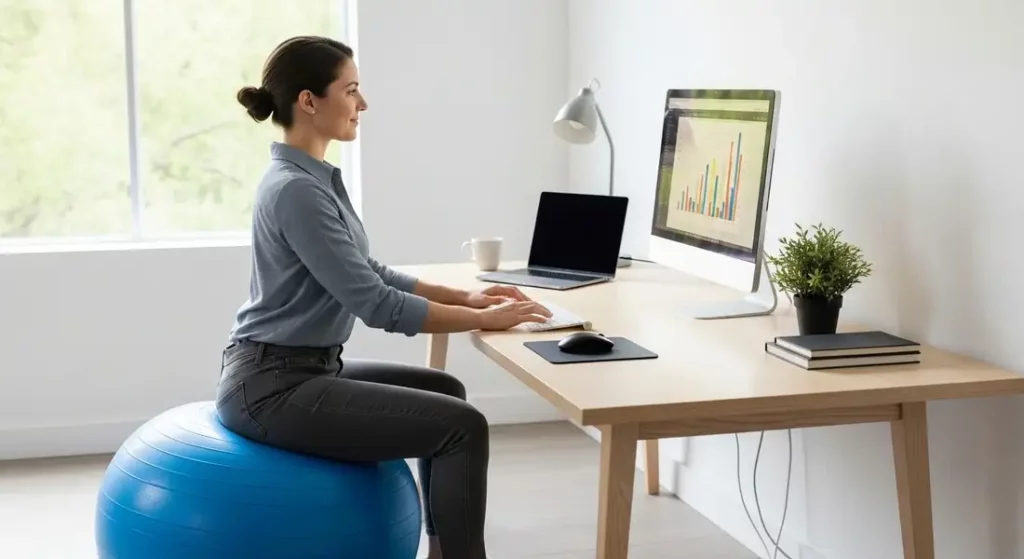
The allure of the stability ball chair is rooted in some real, tangible benefits, especially when used correctly.
It Promotes “Active Sitting”
Unlike a rigid chair, a stability ball is an unstable surface.
To stay upright, your body must make constant, tiny adjustments, which keeps your core and leg muscles gently engaged throughout the day.
This low-level activity can help combat some of the health risks of sitting too long by increasing calorie burn and circulation compared to slouching in a static chair.
It Can Encourage Better Posture (Initially)
When you first sit on a stability ball, you are highly aware of your posture.
To balance, you naturally sit up straighter, align your spine, and engage your core.
This can be an excellent way to “retrain” your body to recognize what proper, neutral posture feels like.
It Strengthens Core Muscles Passively
While it’s not a replacement for a dedicated workout from our beginner stability ball exercises guide, the micro-movements required to balance on the ball do provide a light, continuous workout for your deep stabilizing muscles, particularly the transverse abdominis and lower back.
The CONS – The Hidden Dangers and Disadvantages

Despite the benefits, experts in ergonomics and physical therapy caution against using a stability ball as a full-time chair.
Here’s why.
It Can Worsen Posture When You Get Tired
That perfect posture you start the day with?
It requires constant muscle endurance.
As your core muscles fatigue after 20 or 30 minutes, your body will compensate.
Most people begin to slump forward, roll their shoulders, and tuck their pelvis under—a posture that’s often worse than slouching in a regular chair because there is no back support to catch them.
Increased Risk of Discomfort and Injury
Without armrests and proper lumbar support, the pressure on your spine and sitting bones can increase, leading to discomfort and lower back pain over a long day.
There is also a small but real risk of losing your balance and falling, especially in a busy office environment.
It’s Not a One-Size-Fits-All Solution
As we detailed in our guide on choosing the right size ball, proper height relative to your desk is critical for ergonomics.
If the ball isn’t perfectly sized and inflated for your desk height, you can end up with wrist, shoulder, and neck strain from improper typing posture.
- Here is a link to an article from NIH discussing the ergonomics of office seating and the limitations of stability balls.
The Expert Verdict and Best Practices
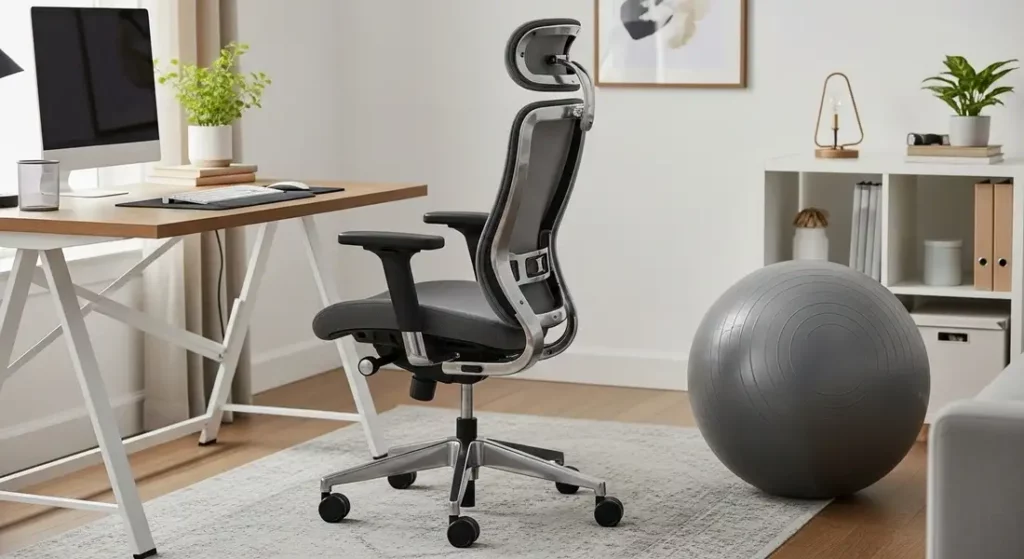
So, what’s the final answer? The consensus among most physical therapists and ergonomists is this:
A stability ball is an excellent tool for intermittent use, but a poor choice for a full-time chair replacement.
Think of it as a piece of exercise equipment you bring to your desk, not as your primary chair.
How to Use a Stability Ball Chair Safely and Effectively:
- Use it in Intervals: Swap your regular chair for the stability ball for just 20-30 minutes at a time, a few times a day. This gives you the core-strengthening benefits without the risk of fatigue-induced poor posture.
- Maintain Proper Form: When you are on the ball, be mindful. Keep your feet flat on the floor, your back straight, and your core engaged.
- Invest in a Good Ergonomic Chair: Your primary chair should have adjustable height, armrests, and proper lumbar support. This should remain your default seating option.
Key Takeaways
| Aspect | The Good (Pros) | The Bad (Cons) |
| Posture | Encourages good posture initially. | Leads to slumping and poor posture when tired. |
| Core Strength | Provides light, continuous core engagement. | Not a substitute for real exercise; can cause fatigue. |
| Comfort | Can feel active and dynamic for short periods. | Lack of back support leads to discomfort over time. |
| Safety | Low risk when used consciously. | No armrests or support; risk of falling increases. |
Conclusion – A Tool, Not a Total Replacement
The stability ball chair is a perfect example of a good idea that can be taken too far.
While its ability to promote active sitting and engage the core is undeniable, its lack of support makes it unsuitable as a full-time seating solution.
By using it strategically for short bursts throughout the day, you can reap all the benefits without any of the ergonomic drawbacks.
Looking for other ways to stay active during your workday?
Consider a more dedicated solution like a desk elliptical to stay active while you work.