
Disclosure: As an Amazon Associate, I earn from qualifying purchases. This technical audit contains affiliate links which support our research at no cost to you.
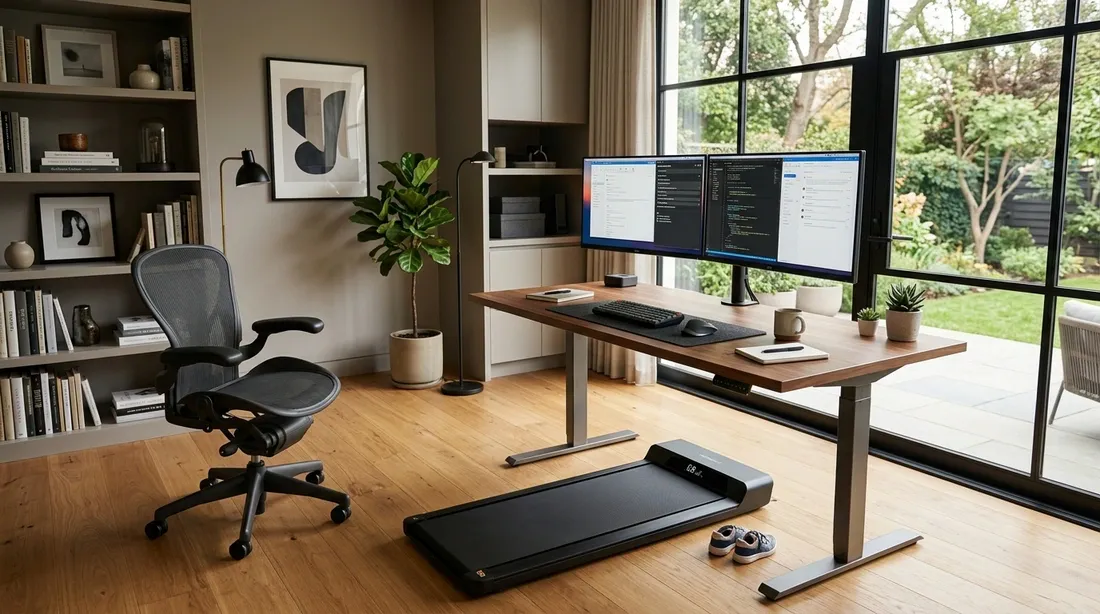
Abstract: Modern remote work has created a sedentary mechanical crisis.
Human physiology is not designed for 8-10 hours of static loading in a seated position.
The absence of movement leads to metabolic slowdown and musculoskeletal degradation.
This audit evaluates the technical requirements for integrating passive movement into the home office.
We analyze equipment efficiency and ergonomic alignment for maximum productivity.
1.0 The Biomechanical Cost of the Seated Office
Static sitting leads to “Gluteal Amnesia” and progressive shortening of the hip flexors.
This mechanical failure often results in chronic lower back pain and reduced respiratory capacity.
To counter this, a movement-rich environment must be engineered.
2.0 Passive Movement Systems: Walking Pads
Passive movement allows for metabolic expenditure without distracting from cognitive tasks.
Walking pads are the primary mechanical solution for active workstations.
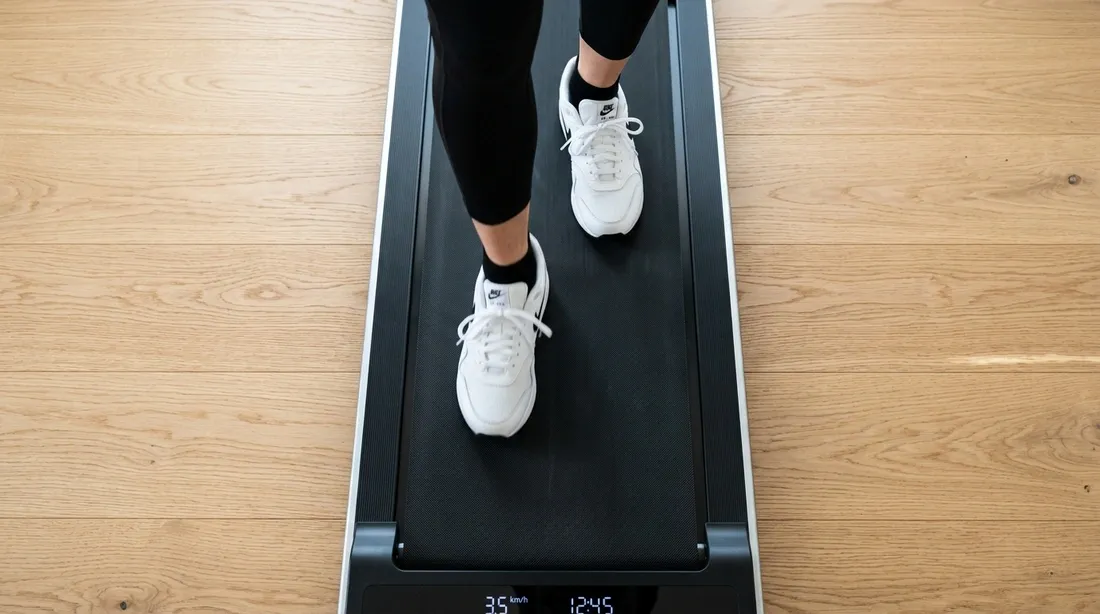
Walking pads are optimized for low-speed, high-duration movement.
Most users find the 1.0 to 1.8 MPH range ideal for maintaining typing accuracy.
2.1 Comparison: Walking vs. Cycling Systems
If standing is not an option, under-desk cycles provide a seated mechanical alternative.
Under-desk cycles focus on joint mobility rather than full-body weight-bearing activity.
Biomechanical Deep-Dive: Before choosing a system, evaluate how each machine impacts your joints and cognitive focus. Read our full engineering breakdown: Under-Desk Treadmills vs. Under-Desk Cycles Comparison.
| System Feature | Under-Desk Treadmill | Under-Desk Cycle |
|---|---|---|
| Mechanical Style | Weight-Bearing | Non-Weight Bearing |
| Primary Equipment | Sperax Pad (Amazon) | DeskCycle 2 (Amazon) |
| Secondary Equipment | Urevo Slim (Amazon) | Sunny Health Cycle (Amazon) |
| Related Guide | Treadmill Hub | Bike Hub |
3.0 Ergonomic Engineering & Posture Correction
Even with movement gear, the primary workstation must be aligned.
“Tech Neck” is caused by a forward head shift during screen use.
This increases the effective weight of the skull on the cervical spine.
We recommend a dual-approach: Lumbar support and thoracic mobility.
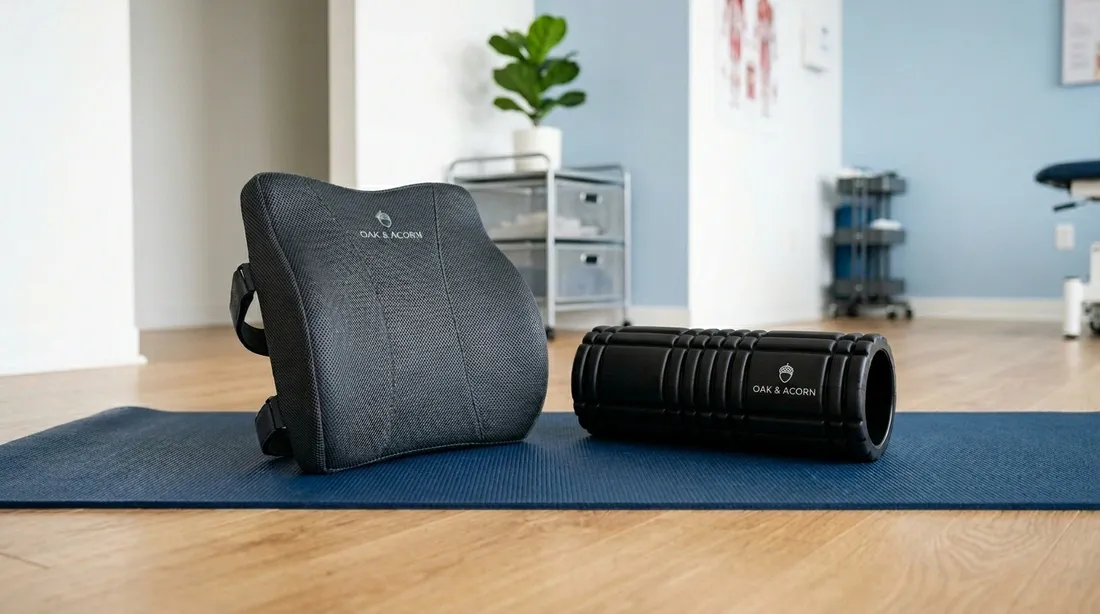
Lumbar support maintains the natural curve of the lower spine.
Foam rollers are used during breaks to reset spinal extension.
4.0 Commercial-Grade Installations: Executive Workstations
Standard consumer grade walking pads and standing desks are often restricted in dynamic structural weight thresholds.
Executive workspaces require commercial-grade, dual-motor, quiet operations to protect call quality and sustain heavy workloads.
5.0 Active Focus Breaks: Micro-Dosing Workouts
Brief physical breaks of under 5 minutes restore prefrontal cortex blood circulation without generating sweat.
These brief sequences target structural recovery while preserving cognitive performance.
6.0 Frequently Asked Questions (Technical FAQ)
Yes, but it requires a calibration period. Keep speeds below 2.0 MPH to maintain hand-eye coordination.
An average user can burn between 100 and 200 calories per hour at a slow walking pace.
It is primarily for metabolic health and joint circulation. For significant weight loss, see our Weight Loss Hub.
Wearable devices are highly effective for logging steps and active minutes. Check our Fitness Tracking Guide for reviews.