
Disclosure: As an Amazon Associate, I earn from qualifying purchases. This technical audit contains affiliate links which support our research at no cost to you.
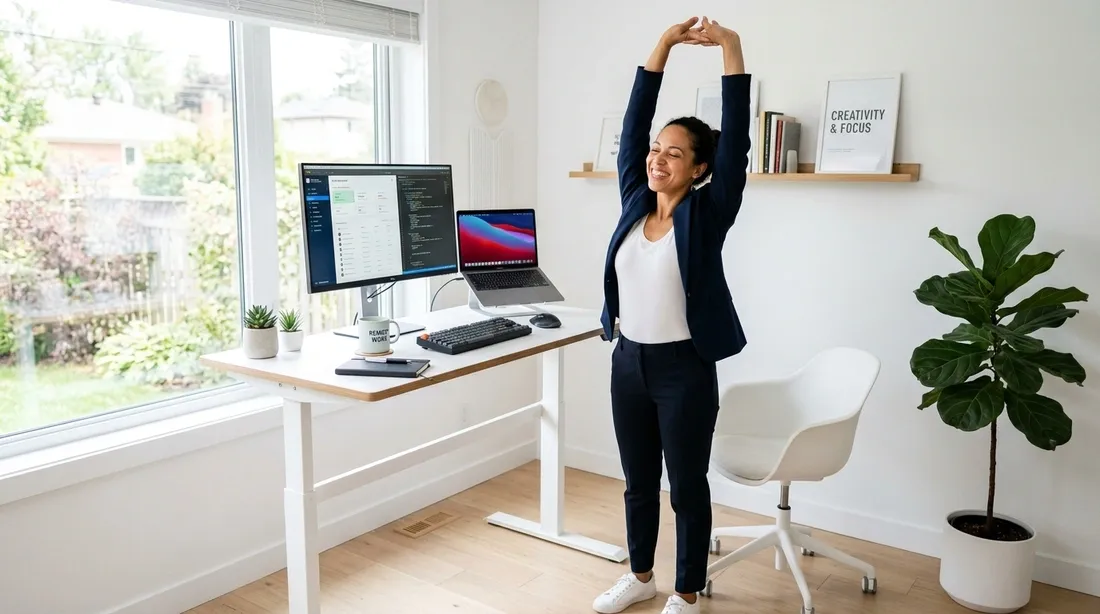
Abstract: Prolonged mental output leads to cognitive exhaustion and reduced focus.
Taking brief physical breaks can restore attention span and lower mental stress.
This technical audit evaluates the physiology of 5-minute “Movement Snacks.”
We analyze bodyweight routines and portable desk tools designed to keep your mind sharp.
1.0 The Science of “Movement Snacking”
Extended screen time reduces blood flow to your prefrontal cortex, which is the brain’s focus center.
Clinical studies indexed by the National Institutes of Health (NIH) show that brief, regular active breaks reduce physical discomfort and dynamic postural strain [1].
These short sessions stimulate the release of BDNF, which is a protein that supports brain cell health and learning.
Unlike exhausting workouts, 5-minute movement snacks leave you feeling energized rather than tired.
2.0 The Post-Meeting De-Stress Protocol
Back-to-back meetings can cause physical tension and elevate stress hormones like cortisol.
A quick stretching routine can calm your nervous system and help you transition between tasks.
You can read more about managing workday tension in our guide on how to De-Stress and Recover After Work [1].
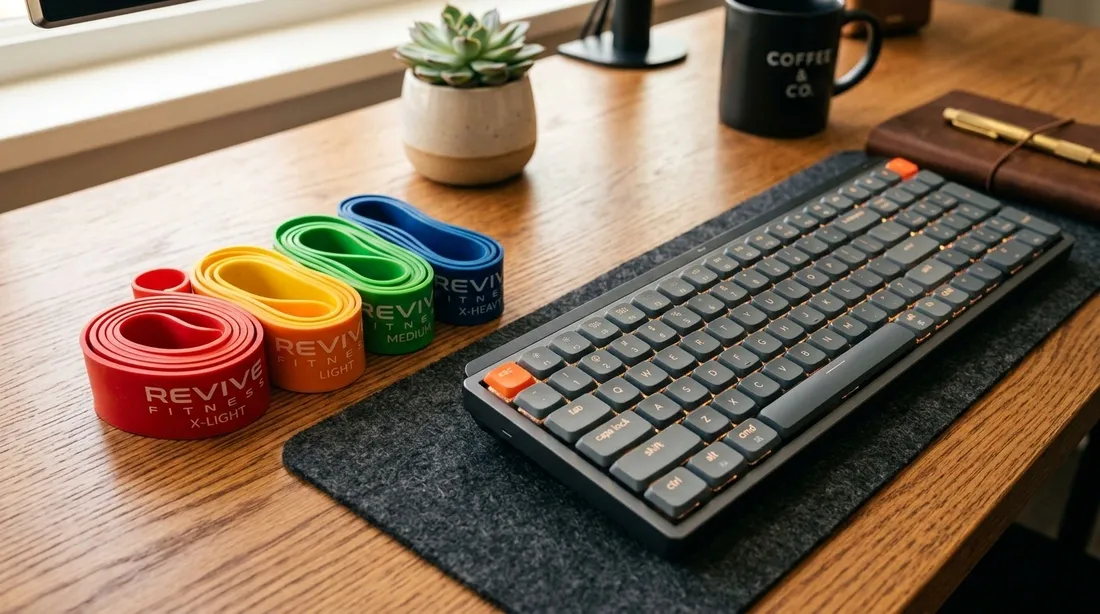
Keeping compact resistance bands on your desk serves as a visual cue to move.
They allow for quick muscle activation between calls without needing to change clothes.
Fit Simplify Resistance Loop Bands
- Five variable resistance levels for steady progression
- Compact carrying bag fits easily into any desk drawer
- Ideal for fast upper back and shoulder posture resets
TheraBand FlexBar Resistance Bar
- Made of durable natural rubber with a textured surface
- Relieves keyboard wrist fatigue and tennis elbow strain
- Compact design is easy to use during voice calls
3.0 The 5-Minute “Cognitive Reset” Routine
| Time Frame | Physical Movement | Target Muscle Group | Neurological Benefit |
|---|---|---|---|
| 0:00 – 1:00 | Doorframe chest stretch | Pectoralis major and shoulders | Restores deep, relaxed breathing |
| 1:00 – 2:30 | Banded pull-aparts | Rhomboids and rear deltoids | Stabilizes shoulder alignment |
| 2:30 – 4:00 | Bodyweight air squats | Quadriceps and gluteal complex | Increases systemic blood flow |
| 4:00 – 5:00 | Seated deep breathing | Diaphragm expansion | Calms the nervous system |
4.0 Diagnostic & Implementation Standards
To successfully build a movement habit, use these simple strategies:
- Set a Timer: Use a phone alarm or desktop app to remind you to move every 90 minutes.
- Keep Gear Visible: Keep your resistance bands on your desk where you can easily see them.
- Link Habits: Do your stretch routine immediately after wrapping up a conference call.
5.0 Technical FAQ
Yes. Doing several 5-minute breaks throughout the day adds up to 20-25 minutes of daily activity, which helps keep your joints healthy and your metabolism active.
No. By keeping the movement pace controlled and under 5 minutes, you can boost blood circulation without raising your body temperature enough to sweat.
The most effective times are during the mid-morning and mid-afternoon slumps, when your energy levels naturally dip.
