
In mechanical systems, when a part shows signs of wear, we don’t necessarily replace the entire machine.
Instead, we adjust the tolerances, realign the gears, and reduce the friction.
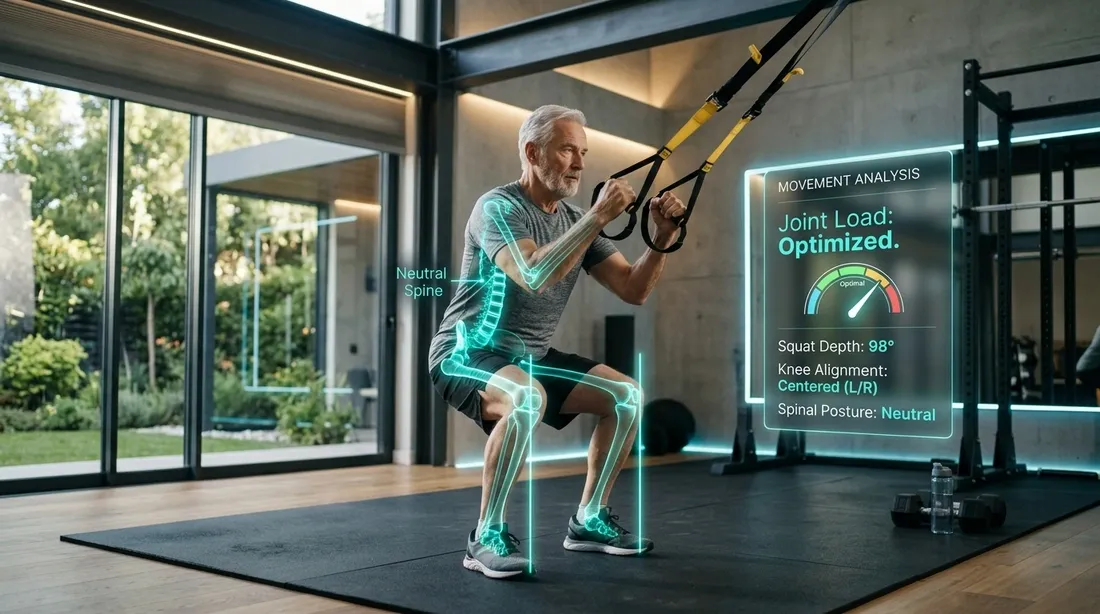
For seniors, joints affected by arthritis or previous injuries are simply “Legacy Parts” that require Adaptive Engineering.
You don’t have to stop moving; you just have to change the angle of attack.
This guide shows you how to “re-index” your movements for maximum safety, a core component of our Senior Longevity Masterclass.
In This Guide:
💡 How can seniors exercise with arthritis and joint pain?
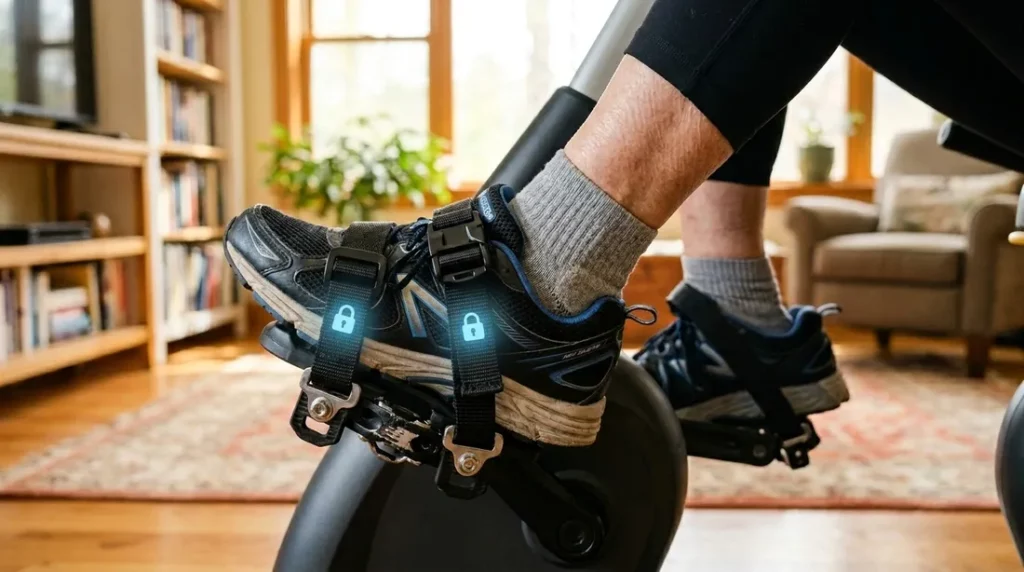
Seniors can exercise with arthritis by utilizing Adaptive Biomechanics—specifically Closed-Kinetic Chain movements. This technical approach keeps the hands or feet in constant contact with a stable surface (like Recumbent Bikes or floor-based isometrics), which stabilizes the joint and reduces shear force. Combined with Breathing Techniques for Pain Relief, this allows for high-intensity muscle activation with minimal joint wear.
According to the Arthritis Foundation, movement is medicine for joints. Our adaptive biomechanics are designed to lubricate the ‘Mechanical Bearings’ of your body while protecting the cartilage.
Common Exercise Re-Engineering
If a specific movement causes a sharp “Error Signal” (pain), it’s time to apply a technical modification.
- The Squat Pivot: If a full squat causes knee strain, pivot to a “Box Squat” using a chair. This limits the depth and ensures the “Chassis” (hips) takes the load rather than the knees.
- Offloading the Hips: Many mobility issues stem from the core. Using Yoga for Tight Hip Flexors as a warm-up can “reset” your pelvic alignment before you begin your strength session.
- The Elevated Push: Instead of floor push-ups, use a kitchen counter or a stable Weight Bench. Increasing the angle reduces the “Pressure Load” on the shoulder sockets.
✅ Rules of Adaptive Engineering
- The 24-Hour Rule: If joint pain increases 24 hours after a workout, your “System Load” was too high. Reduce the range of motion in the next session.
- Neutral Spine: Always maintain a straight back. Your spinal cord is the “Primary Data Cable”—don’t kink it.
- Active Offloading: Use handles and rails to support 20% of your body weight if your balance feels “Noisy.”
Engineering for Integrity – Shear Force vs. Compression

In a joint with arthritis, the “Software” (nerves) is hypersensitive to Shear Force—horizontal sliding of the joint.
However, joints are designed to handle Compression (vertical loading).
- The Technical Fix: We modify movements to turn “Shearing” into “Compression.” For example, instead of a leg extension machine (High Shear), we perform a wall-sit (Pure Compression). This provides the “Strength Signal” without grinding the “Mechanical Bearings” of the knee.
Isometrics – The Zero-Impact Strength Signal
Isometrics are “Static Loads.”
You push or pull against an immovable object.
Because the joint doesn’t move, there is zero friction on the cartilage, but the muscle still receives the “Upgrade Signal.”
This is the safest way for “Fragile Seniors” to build significant strength at home.
IndraP’s Technical Note – Lever Arms and Torque
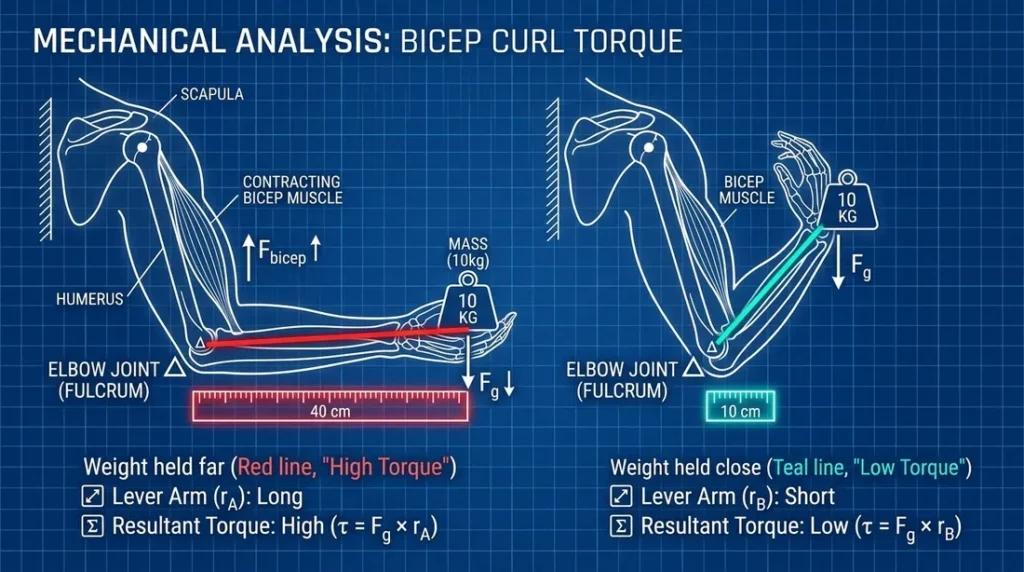
In physics, a longer lever creates more torque at the fulcrum.
In your body, your limbs are levers and your joints are fulcrums.
🛠️ Technical Specialist’s Note: Shortening the Lever
“When a joint is compromised by arthritis, it becomes sensitive to Mechanical Torque. If you hold a weight far away from your body, you increase the ‘Stress Signal’ on the joint. From a technical standpoint, the solution is to Shorten the Lever. Keep weights close to your center of mass. If doing a bicep curl hurts your elbow, tuck your elbow firmly into your side. This reduces the lever arm length and ‘cleans up’ the movement pattern, allowing the muscle to work while the joint stays in its ‘Safety Tolerance’ zone.” — IndraP
Hardware for Low-Friction Movement
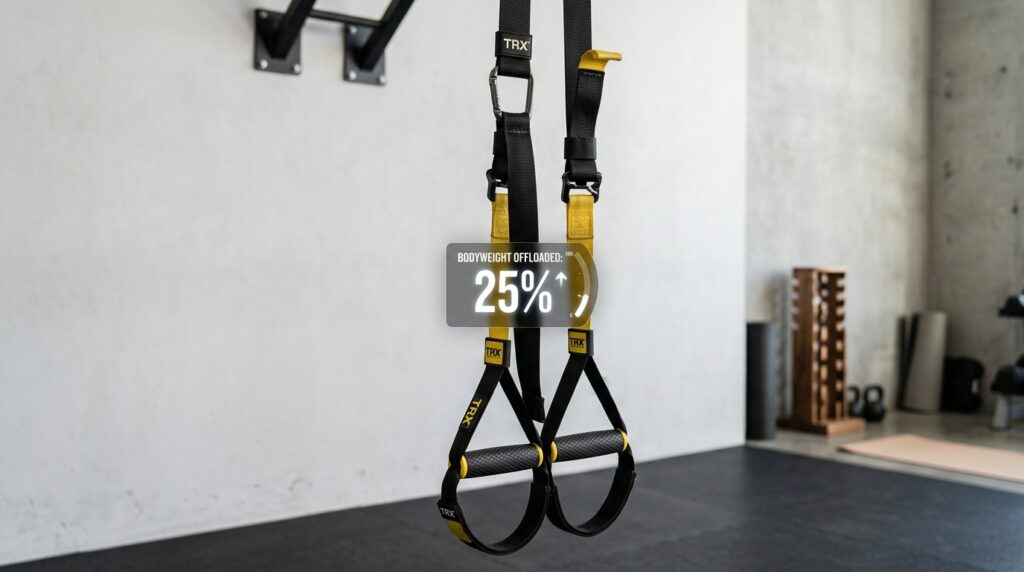
These tools allow you to modify your intensity with “Variable Resistance,” making them perfect for adaptive home fitness.
🏆 The Joint-Friendly Rower – HydroWave Water Rower
Why it matters: Rowing is a “Closed-Chain” exercise, meaning your feet never leave the pads. The HydroWave is technically superior for seniors because water resistance is self-regulating. The harder you pull, the more resistance you get. This allows for a Dynamic Buffer—if your joints feel stiff, you simply pull slower, and the machine automatically reduces the load to match your Hardware Capability.
💎 The Weight-Offloader – TRX All-in-One Suspension Trainer
Why it matters: TRX is the ultimate “Adaptive Engineering” tool. By holding the straps, you can use your arms to “Offload” the weight from your knees during a squat. It provides a technical safety net, allowing you to train with Variable Gravity. As you get stronger, you simply change your body angle to increase the “Voltage” to the muscles.
Frequently Asked Questions
Q: Should I exercise if I have “Bone-on-Bone” arthritis?
Yes, but only within a pain-free range. Movement helps circulate “Synovial Fluid”—the body’s natural WD-40—which lubricates the joint. Avoiding movement entirely causes the joint to “seize,” leading to more pain and faster decline.
Q: How do I know if I’m overdoing it?
Use the “Internal Diagnostic” of swelling. If a joint is noticeably swollen or “hot” after exercise, the “Mechanical Stress” was too high. Apply ice and reduce the resistance or range of motion in the next session.
Conclusion – Adapting for Continuity
Mastering Adaptive Biomechanics ensures that your home fitness journey doesn’t end just because a joint is acting up.
By modifying your movement patterns, you can continue to provide the “Growth Signal” to your muscles while keeping your “Legacy Hardware” safe.
Before you begin implementing these modifications, you must ensure your “System Specifications” are clear.
It’s time to perform a Clinical Pre-Flight Checklist with your physician.
Step 5: Clinical Safety
The Clinical Pre-Flight Checklist →
About IndraP
IndraP is the founder of Reliable Home Fitness and a Technical Equipment Specialist. He treats the human body as an intricate mechanical system that requires precise tuning during the aging process.
Focusing on biomechanical efficiency and senior safety, Indra helps home athletes modify their training environments to ensure long-term independence without the risk of joint failure.