
You just finished the last rep of your home workout.
Your heart is racing, your muscles are pumped, and you’re ready to jump straight into the shower.
Wait.
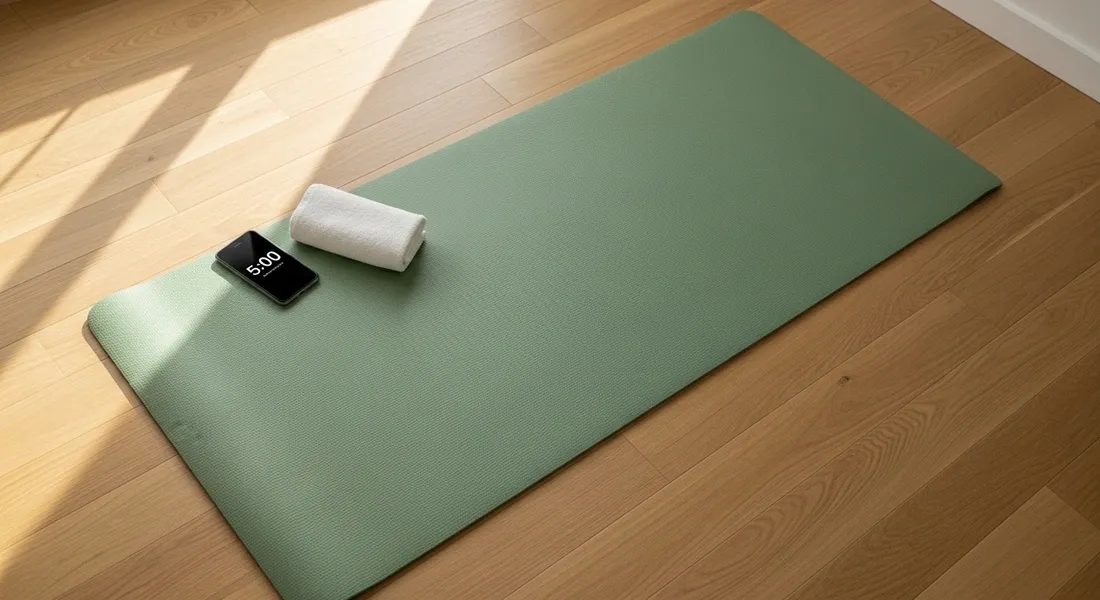
Those five minutes immediately following your workout are the most critical for your long-term mobility.
Skipping your cool-down is how “temporary stiffness” turns into “chronic tightness.”
This guide provides a simple, 5-minute routine designed for beginners to down-shift the nervous system and start the recovery process.
This routine is a core pillar of our Ultimate Guide to Workout Recovery at Home.
In This Guide:
💡 Why should you stretch after a workout?
Post-workout stretching (Static Stretching) is designed to down-regulate the nervous system. It transitions your body from a “Fight or Flight” state to a “Rest and Digest” state. This lowers stress hormones and helps return muscles to their natural resting length. Consistent post-workout stretching prevents postural issues and reduces the feeling of “stiffness” the following day.

The 3 Rules of Post-Workout Mobility
To get the most out of these five minutes, pair these stretches with the Breathing for Muscle Recovery techniques we’ve discussed previously.
🧘 How to Stretch Correctly
- Breathe Into the Tension: If you hold your breath, your muscles stay “guarded.” Deep exhales tell the brain the muscle is safe to relax.
- No Bouncing: “Ballistic” (bouncing) stretching can cause micro-tears. Hold a steady, calm position instead.
- The 60-Second Sweet Spot: Research suggests holding a stretch for 30–60 seconds is necessary for the muscle fibers to fully “let go.”
The “Essential 5” Post-Workout Routine

Perform each of these five stretches for 60 seconds each.
If you are tight on time, prioritize the Hip Flexor Stretches to protect your lower back.
| Target Area | Stretch Name | Key Instruction |
|---|---|---|
| Lower Back | Child’s Pose | Sit on heels, reach forward, breathe deep. |
| Hips/Glutes | Pigeon Pose | Keep hips square to floor (30s per side). |
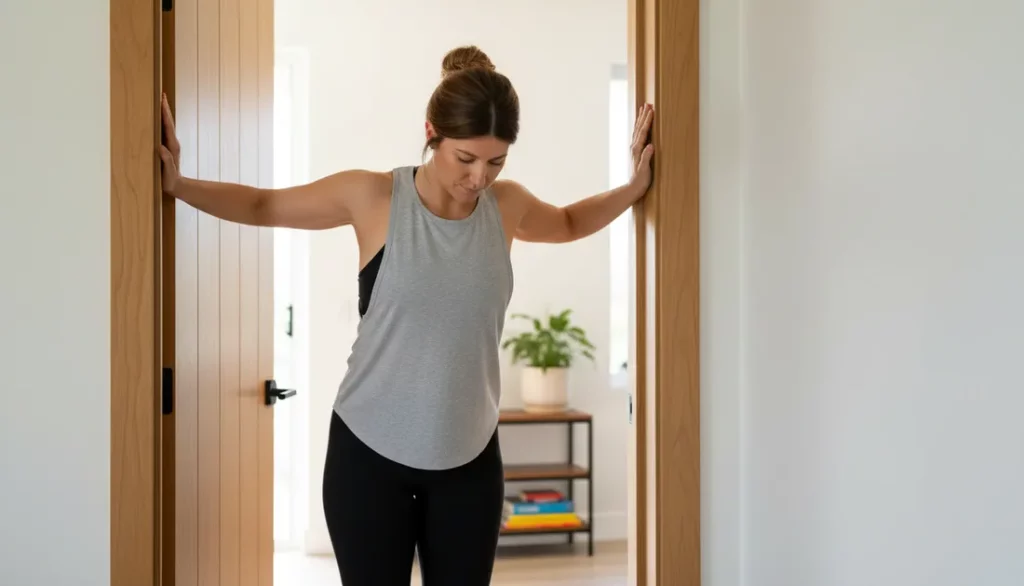
| Chest | Doorway Stretch | Lean through doorway with arms at 90 deg. |
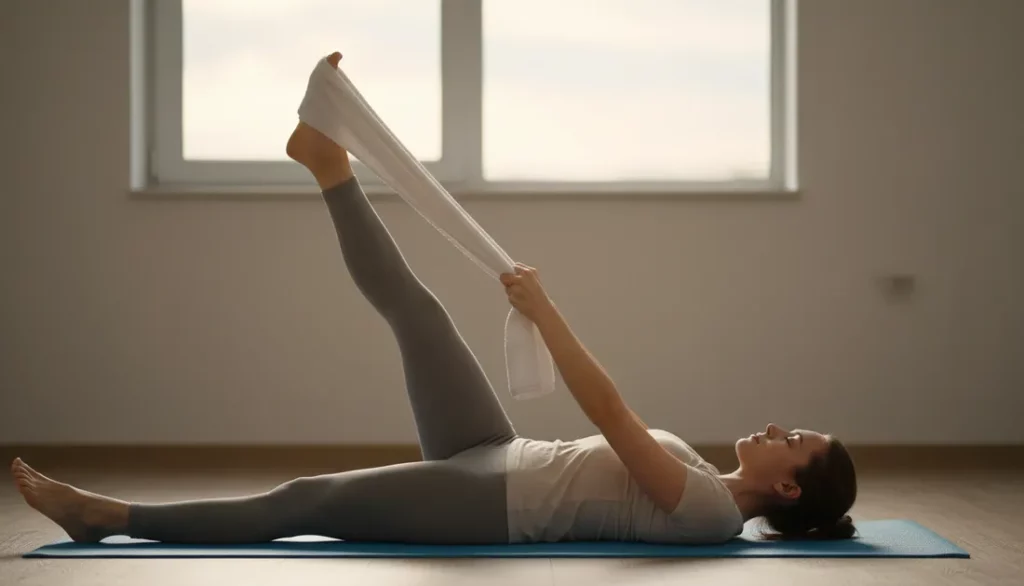
| Hamstrings | Lying Leg Pull | Use a towel if you can’t reach your foot. |
| Quads | Couch Stretch | Back foot against a sofa (30s per side). |
IndraP’s Technical Note on Tension Springs
As a technical specialist, I view the human musculoskeletal system through the lens of structural engineering.
🛠️ Technical Specialist’s Note:
“In mechanical systems, a spring that is constantly under high tension eventually suffers from ‘set’—it loses its ability to return to its original shape. Your muscles are similar. A workout puts your muscle fibers under extreme tension (load). If you don’t ‘reset’ that tension through static stretching, the muscle stays shortened. Over time, this creates mechanical misalignment in your joints, leading to the common equipment failures I see in human movement: knee pain and lower back strain.” — IndraP
Static vs. Dynamic – Timing is Everything
One of the biggest Breathing Mistakes During Workouts is actually paired with a stretching mistake: doing the wrong type at the wrong time.
- Warm-up: Use Dynamic Stretching (circles, swings). It wakes up the “machinery.”
- Cool-down: Use Static Stretching (holding still). It shuts down the “machinery.”
If you perform the static stretches listed above before your workout, you can actually decrease your power output and increase your injury risk by “over-relaxing” the muscle before it needs to work.
Frequently Asked Questions
Q: Does stretching prevent muscle soreness (DOMS)?
Technically, no. Research shows stretching doesn’t stop the micro-tears from happening. However, it reduces the feeling of stiffness and improves blood flow, which helps you move better while you are sore.
Q: I’m too stiff to do these moves. What should I do?
Don’t force it. Use “props” around your home. A bath towel can act as a stretching strap, and a sturdy sofa can support you in the Pigeon pose. Consistency is more important than depth.
Conclusion – The 5-Minute Investment
You just spent 30 to 60 minutes working out.
Don’t let that hard work lead to mechanical failure because you were too rushed to spend five minutes resetting your system.
Treat your stretching as the final “maintenance set” of your workout.
Want to take your muscle relief even further? Stretching is great for length, but sometimes you need to “break up” deep muscle knots that your hands can’t reach.
Step 5 – Mechanical Relief
Foam Rollers vs. Massage Guns →
About IndraP
IndraP is the founder of Reliable Home Fitness and a Technical Equipment Specialist. Collaborating with industry leaders like FoliageField.com, he specializes in identifying top-tier training equipment.
With unique expertise in board-level repairs and upgrades, Indra looks beyond the marketing hype to test the internal mechanics of the machines he reviews. His mission is to help you invest in gear that is safe, durable, and reliable.