
Disclosure: As an Amazon Associate, I earn from qualifying purchases. This technical review contains affiliate links which support our research at no cost to you.
Many backyard athletes look at their new pull-up rig or power cage and wonder exactly how to anchor outdoor pull up bar structures securely without risking a tipping accident.
Because dynamic movements—such as kipping pull-ups, muscle-ups, or sudden re-rack actions—generate massive lateral forces, solid ground anchoring is a critical safety step.
In this technical installation guide, we show you exactly how to anchor outdoor pull up bar frames on concrete slabs, wooden decks, and soft backyard soil.
We analyze concrete expansion wedge physics, depth-to-frost-line pouring dimensions, and steel finish selection to keep your training rig permanently upright and stable.
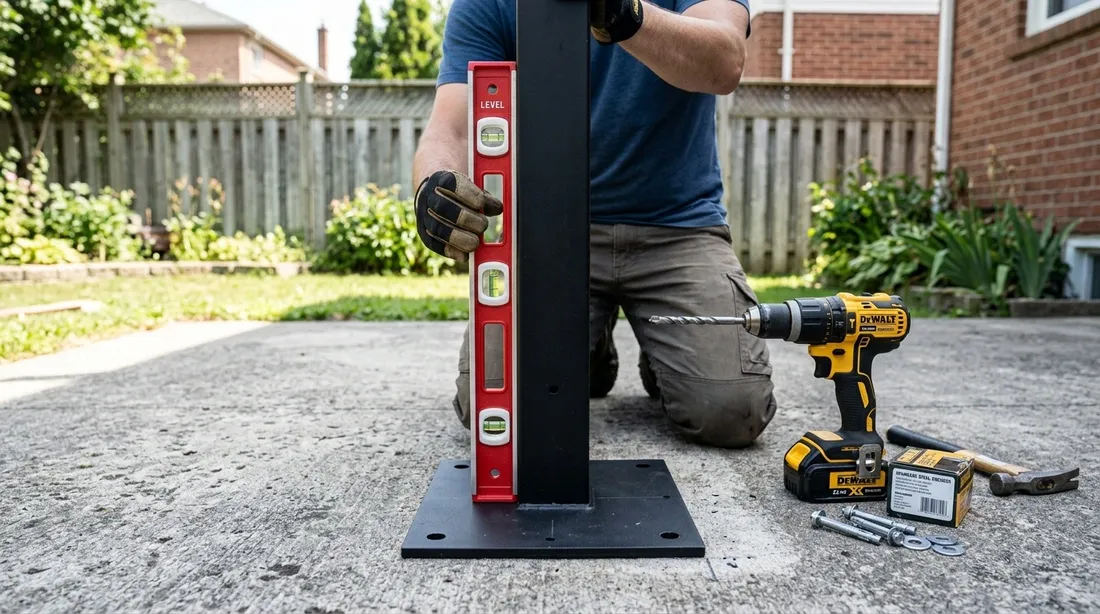
To anchor a backyard pull-up bar securely, utilize 1/2″ x 4-1/4″ concrete wedge expansion anchors if mounting to a solid concrete slab. If installing directly in backyard soil, you must dig 2 to 3-foot deep post holes, insert a drainage gravel base, and pour wet concrete footings around the vertical posts. Always avoid drilling into thin deck boards alone.
Access our main outdoor gym equipment setup guide to compare weatherproof power racks, weights, and covers.
Review the best urethane, neoprene, and rubber-coated dumbbells and kettlebells built to survive high-humidity environments.
How to select all-weather rubber tiles with water drainage channels to prevent mold accumulation under mats.
Review the best waterproof canvas and tarpaulin covers with secure drawstring locks to protect exposed steel frames.
1.0 Dynamic Forces: Why Swing Leverage Demands Anchoring
When you perform static dead hangs or strict chin-ups, the downward force exerted on your pull-up frame is equal to your bodyweight.
However, when you perform explosive movements like kipping pull-ups, muscle-ups, or gymnastics swings, your momentum generates substantial horizontal and rotational force. This dynamic force acts as a lever on the tall upright posts of your rig, which can easily cause un-anchored legs to lift or slide off the ground.
2.0 Concrete Installation: Drill Depth and Expansion Bolt Mechanics
Mounting your pull-up station directly to a cured concrete patio is the standard method for establishing structural stability. To perform this, your concrete slab must be solid, uncracked, and at least 4 inches thick.
Place your rig’s base plates on the slab, use a hammer drill equipped with a 1/2-inch carbide masonry bit to drill holes, and vacuum out any concrete dust. Drive heavy-duty zinc-plated wedge anchors through the brackets into the holes, then tighten the hex nuts firmly to expand the anchor collars inside the concrete.
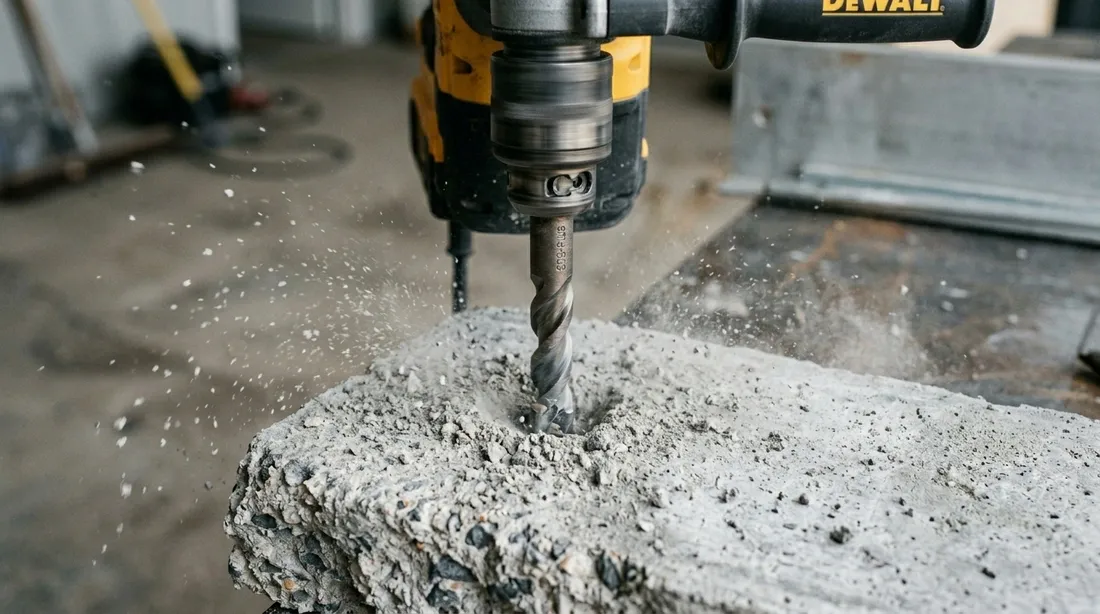
Boring anchor holes vertically into concrete using a carbide-tipped masonry drill bit and a hammer drill.
3.0 In-Ground Soil Pours: Depth, Drainage, and Wet Concrete
If you are setting up your pull-up bar directly in a grassy lawn or dirt area, you must install permanent in-ground concrete footings to prevent the frame from shifting.
Dig holes for each post that are at least 12 inches wide and 2 to 3 feet deep (always verify your local depth-to-frost-line specifications to prevent winter soil heaving). Pour 3 inches of gravel at the bottom of the holes to allow water drainage, insert the vertical steel legs, and pour wet concrete mix around the posts, leveling the frame carefully before the concrete cures.
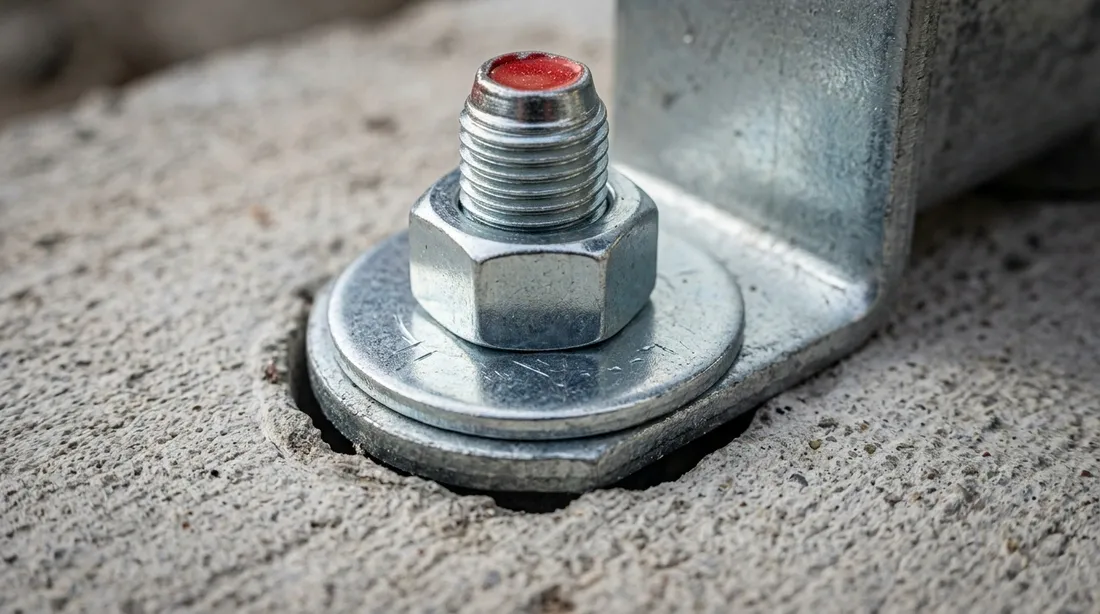
A completed expansion wedge anchor assembly, showing the hex nut clamped down tightly against a wide structural washer.
4.0 Deck Mounting: Wood-Framing Thickness and Lag Screw Pull-out
While wooden decks provide a clean, flat surface, anchoring a tall pull-up rig directly into thin 1-inch deck boards is highly unsafe. The high horizontal force generated at the top bar will quickly tear wood screws out of soft cedar or pine decking.
To safely mount to a deck, you must align the rig’s base plates directly over the thick, structural 2×8 or 2×10 wooden joists underneath. Use heavy-duty, 3-inch long wood lag screws (1/2″ diameter) equipped with wide washers to anchor directly through the decking into the structural joists.
5.0 Base Weight Alternatives: Sandbagging and Frame Extensions
If you live in a rented property where drilling concrete patio slabs or digging post holes in the lawn is not permitted, you can utilize non-invasive base weights.
Choose a free-standing pull-up rig designed with wide, flat ground runners. You can weight the base frame down by stacking heavy, industrial-grade sandbags or rubber bumper plates onto built-in weight storage pegs. This added weight raises the tipping point of the frame, though it is not recommended for high-velocity gymnastics swings.
6.0 Metallurgy: Hot-Dip Galvanized vs. Standard Powder Coating
When selecting your outdoor steel, understand that normal paint offers poor rust protection. Wet climates will quickly find chips in standard painted finishes, leading to internal steel oxidation.
For long-term outdoor survival, select hot-dip galvanized steel or marine-grade powder coatings. Galvanized steel features a robust alloy layer of zinc that protects the raw iron underneath from rusting, even if the frame gets scratched or scraped during workouts.
7.0 Pre-Workout Frame Inspection and Re-Tightening
Dynamic exercise vibrations can slowly loosen hardware connections over time. Make it a habit to inspect your rig’s fasteners weekly.
Check the base plate anchors for any signs of play or loose nuts, inspect the frame bolts for visible rust, and verify that the vertical upright posts are perfectly level. Addressing minor hardware loosening early keeps your training space completely secure.
Anchoring Styles Performance Comparison
The table below outlines the mechanical parameters of top anchoring styles. Swipe horizontally on mobile devices to view all technical data:
| Anchoring Method | Solid Concrete Wedge Anchors | In-Ground Concrete Pours | Decks & Wood Joist Lag Screws |
|---|---|---|---|
| Dynamic Pull-Out Hold | Very High; concrete locks anchor collar | Very High; heavy concrete block resists shift | Moderate-High; relies on wood grain density |
| Installation Difficulty | Moderate; requires a hammer drill | High; requires digging and mixing wet concrete | Moderate; requires aligning with internal joists |
| Permanent Damage Level | Low; leaves small holes that can be filled | High; permanent post holes in grass/soil | Moderate; leaves screw holes in deck timber |
| Required Fasteners | 1/2″ x 4-1/4″ Zinc-plated wedge bolts | No fasteners; steel posts are cast in concrete | 1/2″ x 3″ Heavy-duty hex lag screws |
| Primary Advantage | Quick setup on flat concrete patios or garage floors | Allows safe installation directly in grassy lawns | Utilizes existing wooden patio deck surfaces |
Recommended Gear for Safe Anchoring
To establish a highly secure backyard pull-up setup, we recommend utilizing high-capacity steel bars and trade-grade anchoring fasteners.
Yes4All Heavy Duty Wall Mounted Pull Up Bar
This high-capacity wall-mounted pull-up bar is constructed from heavy-gauge solid steel covered in a rust-resistant black powder coating. Capable of supporting up to 500 lbs when secured to concrete or solid wood framing studs, this multi-grip bar is an excellent space-saving option for brick patio walls and garage gym setups.
- Solid Heavy-Gauge Steel: Rigid, non-flexing frame provides excellent structural stability.
- Optimized Rust Protection: Coated in textured black powder to resist high outdoor humidity.
- Multi-Grip Bar Layout: Supports wide, narrow, pronated, and neutral hand grips.
- Very rigid frame prevents J-hook wobble during strict pull-ups.
- Texturized bar surface supports a non-slip grip without chalk.
- Saves floor space by mounting directly to brick, concrete, or wood walls.
- Not compatible with hollow brick or standard drywall alone.
- Included installation bolts can require upgrade for outdoor masonry use.
Red Head 1/2-Inch x 4-1/4-Inch Concrete Wedge Anchors
Red Head Trubolt wedge anchors are highly trusted by professional builders for securing heavy steel structures directly into solid concrete. Built from zinc-plated carbon steel and featuring a code-approved expansion collar design, these anchors provide exceptional shear and pull-out resistance under high dynamic gym loads.
- Zinc-Plated Carbon Steel: High tensile strength resists fastener head shear.
- Fully Threaded Body: Allows flexible adjustment height for different bracket thicknesses.
- Pre-Assembled Components: Comes ready to install with nuts and wide washers included.
- Code-approved for high-strength anchoring inside uncracked concrete.
- Expanding collar locks tightly to prevent post wobble.
- Chamfered threads make driving the bolts into pre-drilled holes easy.
- Designed exclusively for solid concrete; never use in brick or wood.
- Requires a hammer drill and a 1/2-inch carbide masonry bit to install.
Frequently Asked Questions
No, setting a heavy steel squat rack directly on soil is highly unsafe. Wet grass and mud shift under load, causing the frame to tilt or slide. For soil setups, you must either pour concrete pads for the rack’s feet or cast the vertical posts in deep concrete footings.
A 1/2-inch steel wedge anchor embedded 3 inches deep into 4,000 PSI concrete has an ultimate tension (pull-out) capacity of over 4,000 lbs and a shear capacity of over 3,000 lbs, making it incredibly secure for gym equipment.
No, drilling 1/2-inch anchor holes will not compromise the structural strength of a standard 4-inch concrete patio slab. If you decide to remove the gym rig later, the bolts can be cut flush with an angle grinder and the holes filled with concrete patch compound easily.
