
You drank a liter of water after your home workout, but you still have a lingering headache, you feel sluggish, and your muscles are starting to twitch.
What went wrong?
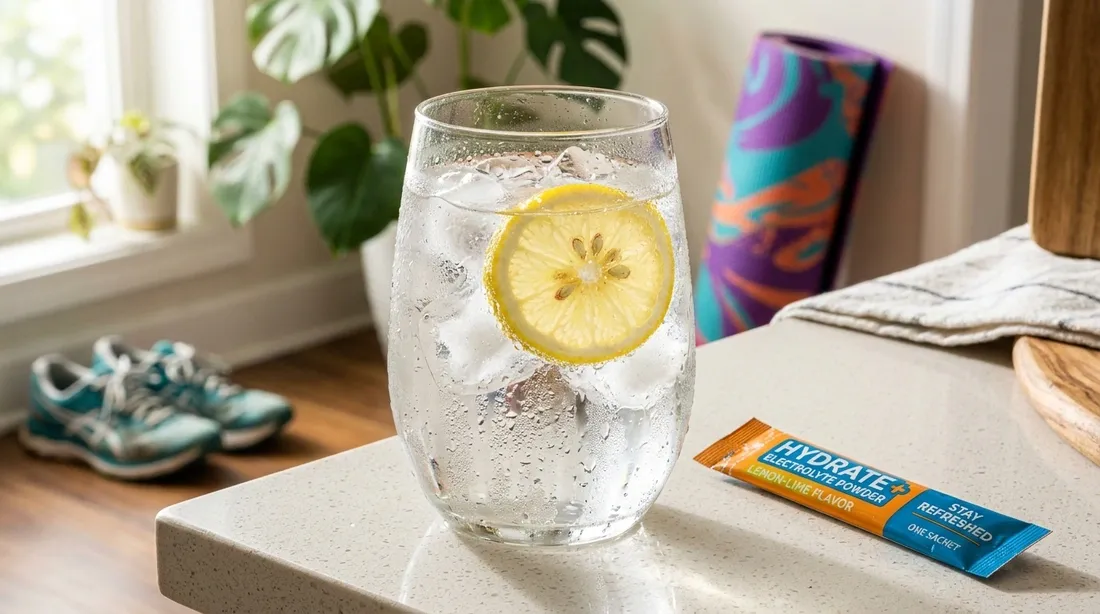
The truth is that hydration is about much more than just “drinking water.”
When you sweat, you don’t just lose fluids; you lose essential minerals called electrolytes that act as the electrical wiring for your muscles and brain.
If you don’t replace them, your recovery will stall no matter how much you rest.
This guide reveals the hydration secrets you need as part of our Ultimate Guide to Workout Recovery at Home.
In This Guide:
💡 Why are electrolytes important for recovery?
Electrolytes (Sodium, Potassium, and Magnesium) are minerals that carry an electric charge. They are essential for muscle contractions, nerve signaling, and fluid balance. During exercise, you lose these minerals through sweat. Replacing them is critical for recovery because electrolytes allow water to actually enter your cells rather than just “flushing through” your system. This prevents the “post-workout crash” and chronic muscle cramping.
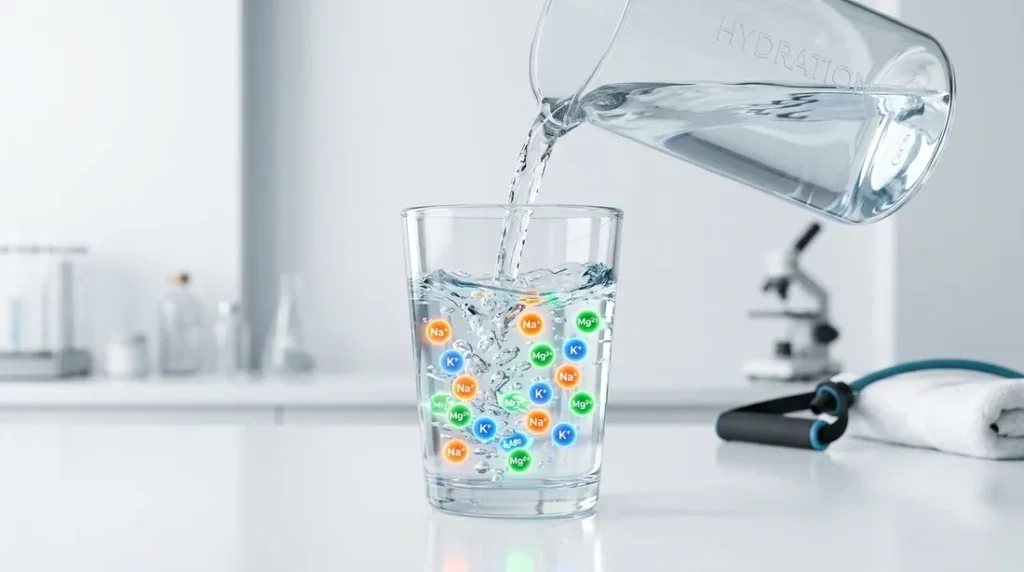
The Big 3 – The Minerals Your Muscles Crave
To beat fatigue, you must balance these three minerals.
You can find many of these in Nutrient-Rich Foods for Recovery, but sometimes a supplement is necessary for high-intensity days.
⚡ The Hydration Blueprint
- Sodium: The “Master Regulator.” It helps your body “hold onto” water so you stay hydrated longer.
- Potassium: Works inside the cell to prevent cramps and support heart rhythm.
- Magnesium: Essential for muscle relaxation. If your muscles twitch after a workout, you are likely low on magnesium.
IndraP’s Technical Note on Conductivity and Signal Loss
In board-level electronics, we use conductive traces to move energy.
If those traces are damaged or the medium lacks conductivity, the signal fails.
Your body operates on the same electrical principles.
🛠️ Technical Specialist’s Note:
“Think of your nervous system as the ‘motherboard’ of your body. Your brain sends electrical signals to your muscles to move. Electrolytes are the conductive traces on that board. If you are low on Sodium or Magnesium, the signal strength drops, leading to ‘lag’ (fatigue) or ‘short-circuits’ (cramps). From a technical standpoint, adding a high-quality electrolyte mix isn’t just about thirst—it’s about maintaining the dielectric strength of your internal fluids so your system runs at peak efficiency.” — IndraP
Why “Just Water” Can Sometimes Be Dangerous

If you drink massive amounts of plain water without replacing salt, you can dilute the sodium in your blood.
This is a condition called Hyponatremia.
According to research published in Nutrients, even mild electrolyte imbalances can lead to symptoms like dizziness and nausea.
If you are sweating heavily in a garage gym, you must add electrolytes to your water rather than just drinking more of it to ensure your “internal hardware” stays conductive and your recovery stays on track.
Top Hydration Tools for Home Recovery
Avoid “sugar-bombs” like traditional neon-colored sports drinks.
Instead, look for clean powders with high mineral content.

🏆 Best Value – Liquid I.V. Hydration Multiplier
Why we picked it: It uses “Cellular Transport Technology” to speed up water absorption. It is the perfect entry-level tool for anyone feeling drained after a Great Cardio Workout at Home.
💎 Pro Investment – LMNT Keto Electrolyte Powder
Why we picked it: If you follow a low-carb diet or fast before workouts, LMNT is the gold standard. It contains zero sugar and a massive 1000mg of sodium, making it the most powerful recovery drink for serious home athletes.
Frequently Asked Questions
Q: How do I know if I’m dehydrated?
The easiest test is Urine Color. Pale yellow (like lemonade) is the goal. Dark yellow or orange means you are significantly dehydrated and need electrolytes immediately to avoid muscle breakdown.
Q: Can I get electrolytes from food?
Yes. Bananas provide potassium, while pumpkin seeds and spinach are high in magnesium. Adding a pinch of sea salt to your Post-Workout Meals is the best “food-first” hydration secret for faster recovery.

Conclusion – Complete the Recovery Cycle
Hydration is the final, essential step in your recovery journey.
When you are properly hydrated with the right minerals, your Deep Sleep is more restorative, your Stretching is more effective, and your next workout will be your strongest yet.
You have now mastered all the pillars of home recovery.
From mechanical relief with foam rollers to technical hydration strategies, you have everything you need to see the results you’ve worked so hard for.
Review the Full Hub
Back to Ultimate Recovery Guide →
About IndraP
IndraP is the founder of Reliable Home Fitness and a Technical Equipment Specialist. Collaborating with industry leaders like FoliageField.com, he specializes in identifying top-tier training equipment.
With unique expertise in board-level repairs and upgrades, Indra looks beyond the marketing hype to test the internal mechanics of the machines he reviews. His mission is to help you invest in gear that is safe, durable, and reliable.