Welcome to the first step in your foam rolling journey!
In our main Beginner’s Guide to Foam Rolling, we introduced the concept of this powerful self-massage tool.
Now, it’s time to dive deeper.
What is actually happening inside your muscles when you roll, and why is it one of the best things you can do for your body?
Here, we’ll break down the science in simple terms and explore the five biggest benefits that will get you excited to start rolling today.
Unpacking the Terms – What is Myofascial Release?
You’ll often hear foam rolling referred to as a form of “self-myofascial release.”
It sounds complicated, but the concept is surprisingly simple when you break it down.
Your Fascia Explained Simply
Imagine a thin, strong spiderweb that wraps around every single muscle, bone, nerve, and organ in your body.
This connective tissue is called fascia.
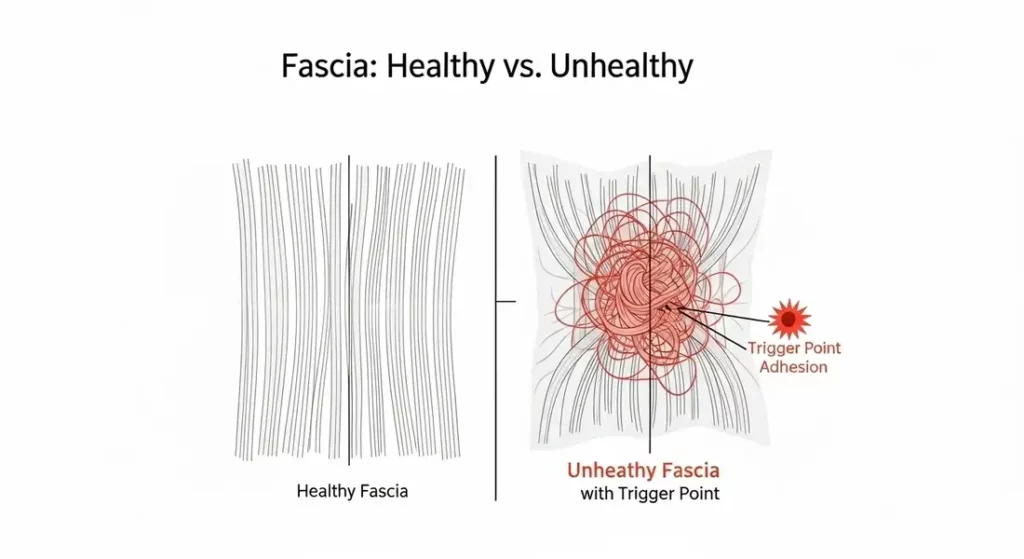
Healthy fascia is smooth and flexible, allowing your muscles to glide over each other easily.
However, due to factors like intense workouts, prolonged sitting, injury, or stress, this fascia can become tight, sticky, and restricted.
How Knots (Trigger Points) Form in Your Muscles
When your fascia gets tight, it can form painful adhesions and tender spots known as trigger points, or “muscle knots.”
These are the spots that feel sore and tight to the touch.
These knots can restrict your range of motion and cause pain not only in the muscle itself but in other areas of the body—a phenomenon known as referred pain.
Foam rolling applies targeted pressure to these trigger points, helping to smooth out and release the tight fascia.
This is the “myofascial release” that allows your muscles to return to a healthier, more flexible state.
The Top 5 Science-Backed Benefits of Foam Rolling for Beginners
So, why should you make this a regular practice? The benefits go far beyond just “feeling good.”
Benefit 1: Eases Muscle Pain and Reduces Soreness
This is the number one reason most people pick up a foam roller.
That post-workout ache, known as Delayed Onset Muscle Soreness (DOMS), happens when your muscles have been worked hard.
Foam rolling increases blood flow to your muscles, delivering more oxygen and nutrients that are crucial for repair and recovery.
This helps flush out metabolic waste products, providing significant muscle soreness relief.
Benefit 2: Increases Flexibility and Range of Motion
When muscle knots are released, the muscle itself can lengthen and relax properly.
Consistent foam rolling helps break down those fascial adhesions that are restricting your movement.
This leads to an improved range of motion in your joints, allowing you to squat deeper, reach higher, and move with more freedom.
It’s a fantastic way to boost your flexibility and feel younger.
Benefit 3: Helps Correct Posture and Alleviate Back Pain
If you sit at a desk all day, you likely have tight hip flexors and a rounded upper back.
This can lead to poor posture and nagging lower back pain.
Foam rolling can help loosen the tight muscles responsible for these imbalances, such as the glutes, lats, and hip flexors.
By releasing this tension, you can reduce the strain on your lower back, a common issue for those dealing with tight hip flexors and lower back pain.
Benefit 4: A Great Tool for Warm-ups and Cool-downs
Foam rolling isn’t just for recovery.
Using it for 5-10 minutes as part of your warm-up can help “wake up” your muscles, increase blood flow, and improve their elasticity before you start your main workout.
An international study on athletic performance found that foam rolling can be an effective strategy for increasing flexibility and preventing injuries without diminishing muscle strength.
Used during a cool-down, it helps kick-start the recovery process immediately.
Benefit 5: Reduces Stress and Promotes Relaxation
The physical act of rolling out muscle tension has a direct impact on your mental state.
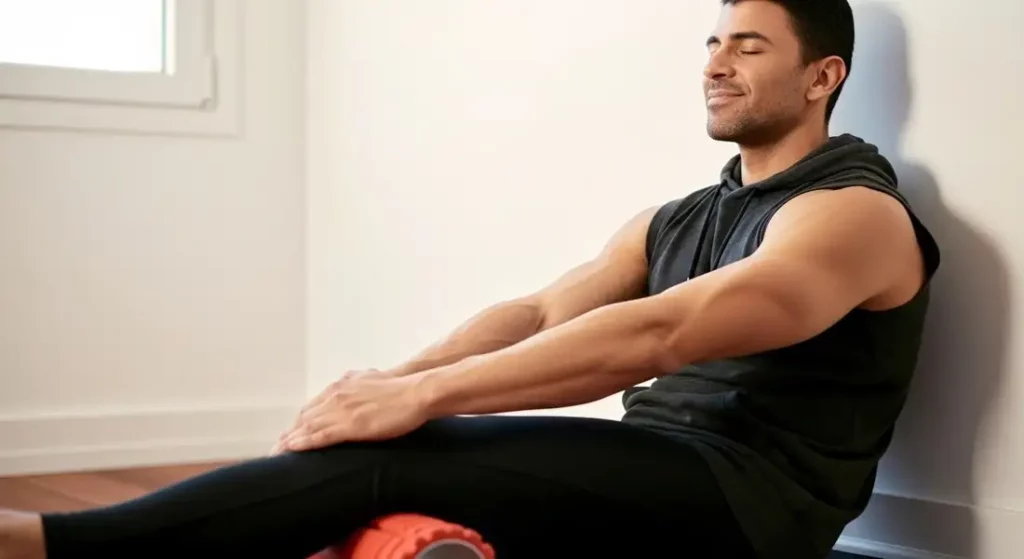
The slow, deliberate movements and deep breathing required for effective foam rolling can help calm your nervous system.
This process provides an excellent opportunity for mindfulness and post-workout stress relief, leaving you feeling both physically and mentally relaxed.
Is Foam Rolling Right for You?
While foam rolling is beneficial for most people, it’s not for everyone or every situation.
- Who it’s great for: Active individuals, office workers with muscle stiffness, anyone looking to improve flexibility, and those dealing with general muscle tightness.
- Who should be cautious: If you have a serious injury (like a muscle tear), a chronic pain condition like fibromyalgia, varicose veins, or are pregnant, you should consult with a doctor or physical therapist before starting. Never roll directly over joints, bones, or the lower back.
Key Takeaways
| Concept | What It Means for You |
| Myofascial Release | You are actively breaking down muscle knots and adhesions. |
| Increased Blood Flow | Your muscles get more oxygen, speeding up recovery. |
| Flexibility Gains | Releasing knots allows your muscles to lengthen properly. |
| Pain Reduction | You are addressing the root cause of much muscular tightness and soreness. |
Frequently Asked Questions
Q: Can foam rolling replace stretching?
A: Foam rolling and stretching are partners, not replacements. Foam rolling addresses the fascia and trigger points (improving muscle quality), while stretching helps to lengthen the muscle fibers (improving muscle length). For best results, foam roll first, then perform your stretches.
Q: It hurts when I foam roll. Am I doing it wrong?
A: You should expect mild discomfort, often described as a “good pain,” when you roll over a tender spot. However, you should never feel sharp or unbearable pain. If you do, ease up on the pressure or move to a less tender area nearby.
Ready to Find Your Perfect Tool?
Now that you understand the incredible benefits waiting for you, the next logical step is finding the right equipment to get the job done.
The type of foam roller you choose will make a big difference in your experience.
Continue to our expert guide on the Types of Foam Rollers to choose the perfect one for your needs.