You woke up today, and your legs feel like lead. Every time you sit down, your quads scream.
It’s officially a rest day.
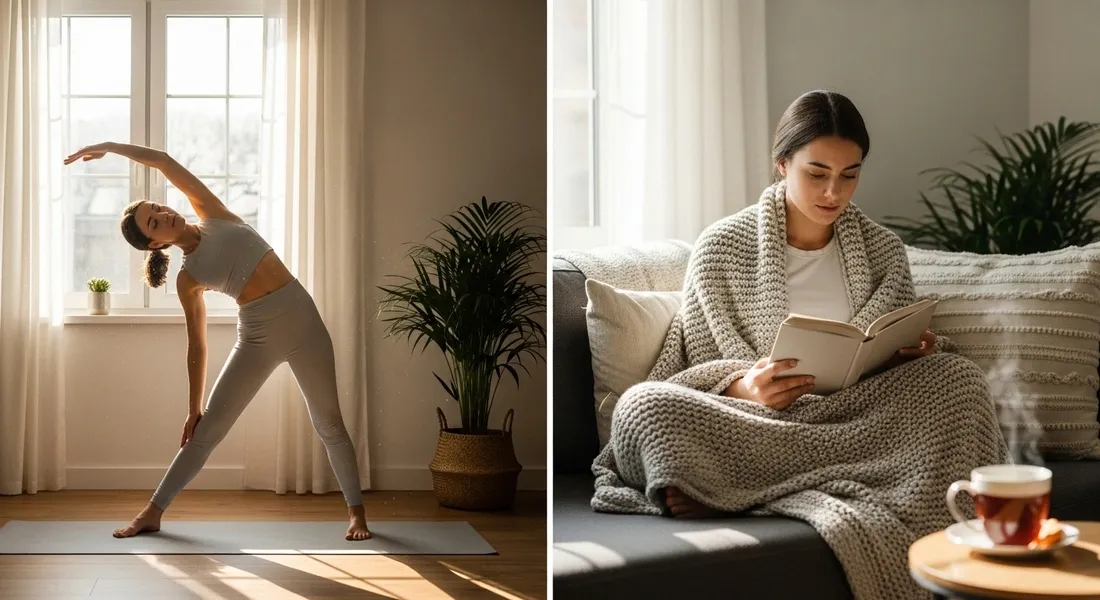
Now you face the ultimate beginner dilemma: Should you stay in bed all day, or should you go for a walk?
Choosing between Active Recovery and Passive Rest is the difference between being sore for four days or being ready to train again in 24 hours.
In this guide, we break down the science of “moving to heal” and when it’s actually smarter to just take a nap.
This strategy pairs perfectly with the foundational principles in our Ultimate Guide to Home Workout Recovery.
💡 Active Recovery vs. Passive Rest – Which is better?
Active Recovery involves low-intensity movement (like walking or yoga) that keeps the heart rate slightly elevated without causing fatigue. It is generally superior for muscle soreness because it increases blood flow to flush out metabolic waste. Passive Rest is total stillness and is best reserved for when you are ill, injured, or suffering from extreme central nervous system exhaustion.

The Comparison – How to Choose Your Off-Day Strategy
Use this table to decide which strategy your body needs today based on your soreness level.
| Feature | Active Recovery | Passive Rest |
|---|---|---|
| Blood Flow | High (Speeds up repair) | Low (Standard repair) |
| Best For | Muscle Soreness (DOMS) | Injury, Sickness, Sleep loss |
| Mental State | Refreshing & Energizing | Deeply Restorative |
| Examples | [Walking], [Light Mobility] | Sleeping, Reading, Baths |
The “Flush Effect” of Active Recovery
When your muscles are sore, they are filled with metabolic byproducts and microscopic inflammation.
Sitting still allows these to “stagnate.”
✅ Why “Active” Usually Wins
- Nutrient Delivery: Movement pumps fresh, oxygenated blood into the muscle tissue to speed up healing.
- Reduces Stiffness: Light movement prevents muscle fibers from becoming “glued” together during the repair process.
- CNS Reset: Low-intensity movement like [Breathing Exercises] helps reset your nervous system from a stressed state to a recovery state.
🛠️ Technical Specialist’s Note
“In engineering, a machine that sits idle for too long develops ‘stiction’—static friction that makes it harder to start the next time. Your joints and fascia are similar. Passive rest is necessary for internal cooling (repairing inflammation), but Active Recovery acts like a lubricant. By using low-resistance tools like a Desk Elliptical, you maintain the ‘mechanical integrity’ of your joints without taxing the motor (your Central Nervous System).” — IndraP
The Home Active Recovery Toolkit
If you are stuck at home, you can still perform world-class active recovery.
Here are the tools I trust for durability and small-space efficiency.
Best Tools for Light Movement
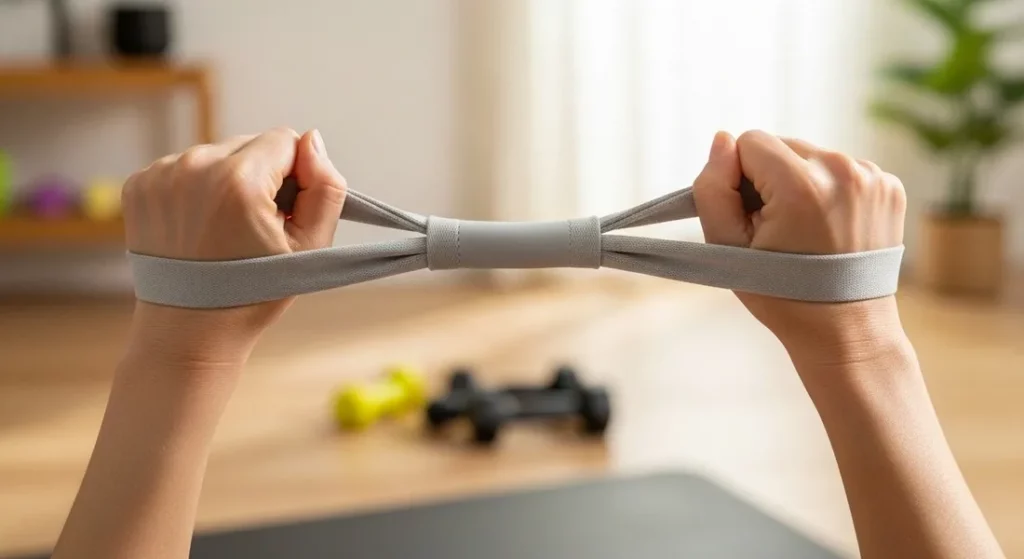
🏆 Best Value – Fit Simplify Resistance Loop Bands
Why we picked it: These are the ultimate “blood flow” tools. Use the lightest band for high-repetition, zero-effort movements to wake up sore muscles without causing further damage.
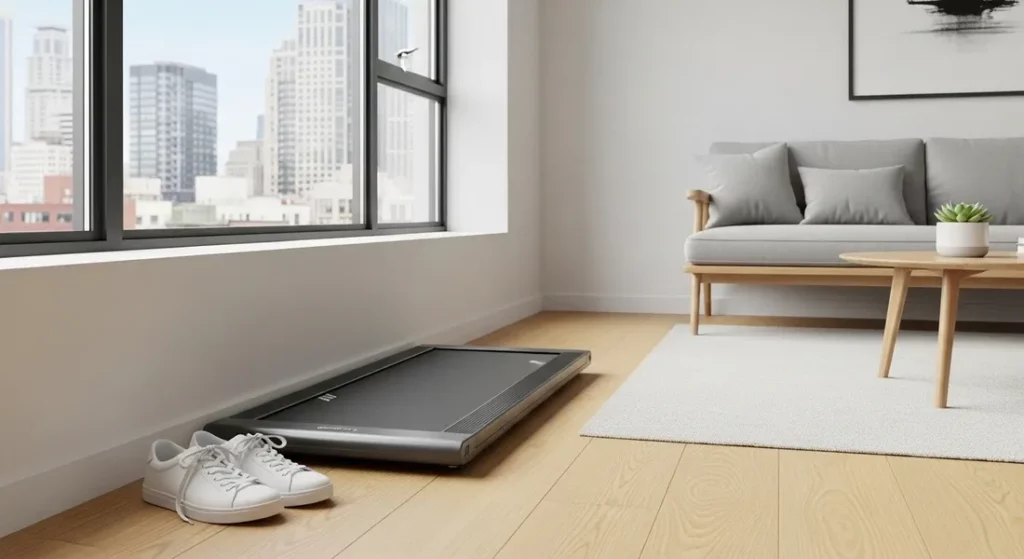
💎 Pro Investment – Sperax Walking Pad (Under Desk Treadmill)
Why we picked it: From a technical standpoint, this is the most reliable “apartment-friendly” treadmill. It allows you to get your Recovery Walk in while watching TV, ensuring you never skip active recovery. Technical Tip: Maintaining light movement is only half the battle; ensuring this is followed by optimized Sleep and Fitness habits is the secret to 24-hour muscle repair.
Frequently Asked Questions
Q: Can I do Active Recovery every day?
Yes. As long as the intensity is truly low (Zone 1). Daily low-impact movement is the secret to fitness longevity.
Q: When is Passive Rest better?
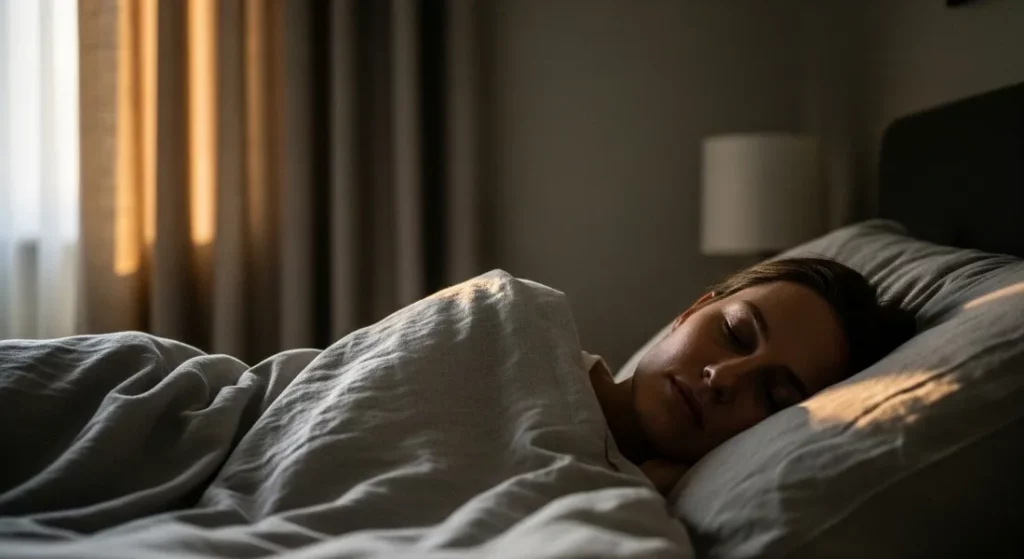
Choose passive rest if you have a fever, a sharp injury pain (not soreness), or if you slept less than 5 hours. In these cases, your body needs shutdown time, not movement.
Conclusion – Listen to Your Body
Recovery isn’t “one size fits all.”
Most days, you will feel better after a light walk or some basic mobility work.
But on those rare days when you are truly exhausted, don’t be afraid to take a nap and do nothing.
Now that you know how to spend your day off, let’s look at the foundation of all growth.
Without this next pillar, no amount of walking or stretching will help you build muscle.
Step 3: The Secret Growth Hormone
The Role of Sleep in Fitness →
About IndraP
IndraP is the founder of Reliable Home Fitness and a Technical Equipment Specialist. Collaborating with industry leaders like FoliageField.com, he specializes in identifying top-tier training equipment.
With unique expertise in board-level repairs and upgrades, Indra looks beyond the marketing hype to test the internal mechanics of the machines he reviews. His mission is to help you invest in gear that is safe, durable, and reliable.