
If you are eating perfectly and training hard, but only sleeping 5 hours a night, you are effectively “braking” while trying to accelerate.
Sleep is not just “down time” for your brain. It is the only time your body is in a state of complete physiological repair.
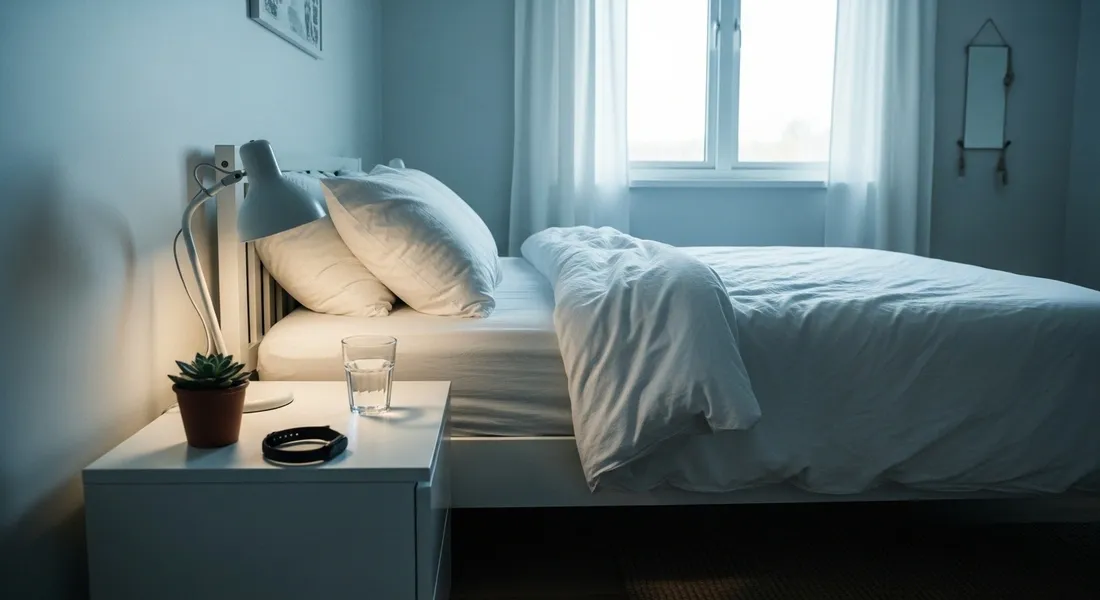
In fact, sleep is the most powerful performance enhancer in existence—and it’s completely free.
As we discussed in our Ultimate Guide to Workout Recovery, without quality sleep, your home workouts will never yield the results you’re working for.
💡 How does sleep affect muscle growth?
Sleep is critical for muscle growth because it is the primary time the body releases Human Growth Hormone (HGH) and Testosterone. During the deep “N3” stage of sleep, blood flow to the muscles increases, delivering oxygen and nutrients that repair microscopic tissue tears caused by exercise. Chronic sleep deprivation raises cortisol levels, which actively breaks down muscle tissue and promotes body fat storage.
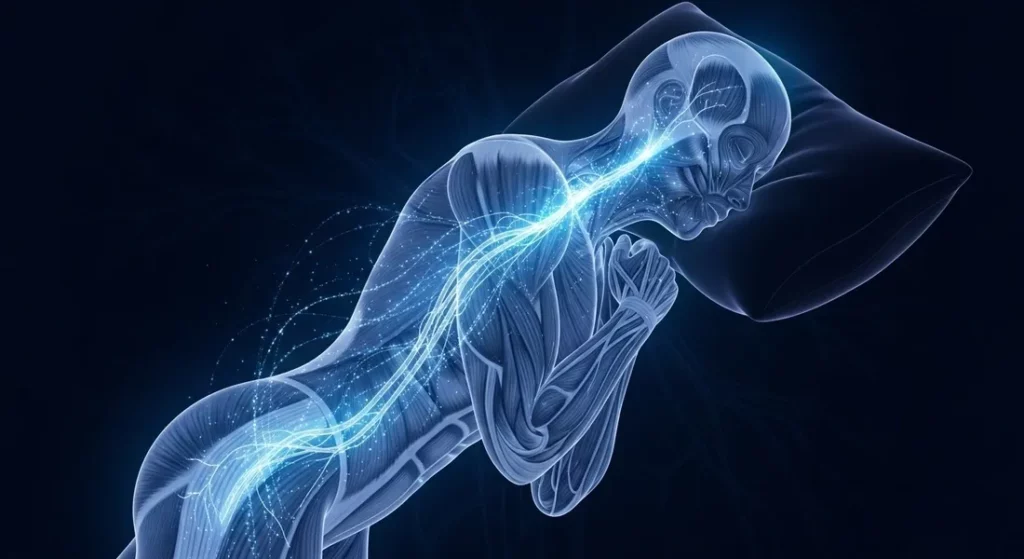
N3 vs. REM – The Two Stages of Fitness Recovery
To get the most out of your home training, you need to cycle through all stages of sleep.
For fitness, these two are the heavy hitters:
✅ The Anatomy of a Recovery Night
- Deep Sleep (N3 Stage): This is the “Physical Repair” shop. Your heart rate drops, your breathing steadies, and HGH is flooded into the system to build new muscle.
- REM Sleep: This is the “Mental Recovery” stage. It restores your Central Nervous System (CNS) so your “mind-muscle connection” remains sharp for your next session.
- The 7-Hour Rule: Most repair occurs in the second half of the night. If you cut sleep short, you lose the most productive REM cycles.
3 Ways to Optimize Your Sleep Environment
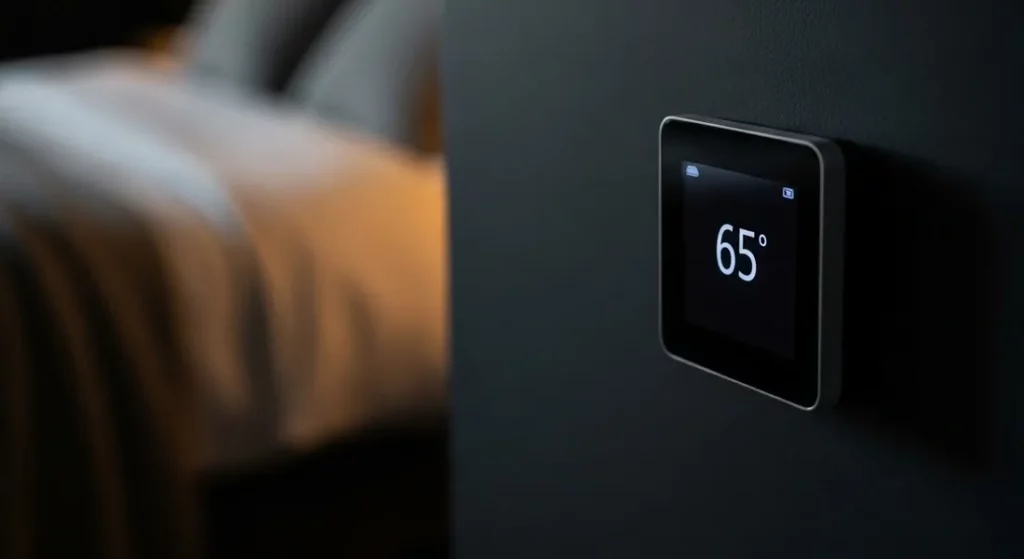
You don’t need expensive gadgets to sleep better; you need to optimize the “technical environment” of your bedroom.
- The 65-Degree Rule: The body needs to drop its core temperature by 2-3 degrees to initiate deep sleep. Keeping your room cool is a requirement, not a preference.
- Total Darkness: Even a tiny LED light from a TV can disrupt melatonin production. Use blackout curtains or a simple sleep mask to achieve “Cave-like” darkness.
- Digital Sunset: High-frequency light from phones suppresses melatonin for hours. Shut down screens 60 minutes before bed.
Technical Note on Blue Light and Signal Disruption
As someone who works with board-level electronics and circuitry, I view the human body’s circadian rhythm as a highly sensitive internal clock that can easily be “jammed” by outside signals.
🛠️ Technical Specialist’s Note:
“In my technical work, even minor electromagnetic interference can ruin a signal. Your brain works the same way. The blue light (wavelengths between 450–490nm) emitted by your phone or LED bulbs sends a ‘Daytime’ signal to your brain, jamming the production of melatonin. By using Red-shifted lighting in the evening or wearing amber-tinted glasses, you stop that interference and allow your ‘internal hardware’ to enter its natural repair mode.” — IndraP
The Nutrition-Sleep Connection

What you eat before bed determines how well you recover.
For a deeper look at this, see our Workout Nutrition Guide.
- Magnesium: This mineral relaxes the nervous system and prevents muscle cramps. It is the ultimate “pre-bed” mineral for home athletes.
- Casein Protein: Unlike whey, casein digests slowly. A small serving of cottage cheese or Greek yogurt before bed provides a “drip feed” of amino acids while you sleep.
- Avoid Alcohol: While it might help you fall asleep, alcohol “kills” your REM sleep and halts muscle protein synthesis.
One Tool for Better Recovery
If you struggle to stay in deep sleep because of light or noise, this is the only “gear” we recommend.
🌙 Editor’s Choice – Alaska Bear Silk Sleep Mask
Why we like it: Darkness is non-negotiable for muscle repair. This is a low-cost, high-impact tool that ensures you stay in deep sleep even if your apartment has outside light pollution.

Frequently Asked Questions
Q: Can I catch up on sleep during the weekend?
Not effectively. While “catch-up” sleep helps with cognitive fatigue, muscle protein synthesis requires daily consistency. You cannot “back-load” the muscle repair that was supposed to happen on Tuesday.
Q: Should I take Melatonin?
Melatonin is a hormone, not a vitamin. While it can help reset a clock (like after travel), it’s often better to focus on Magnesium Glycinate or natural light exposure during the day to fix your sleep naturally.
Conclusion – Sleep Your Way to Results
You can’t out-supplement a lack of sleep. If you want to see the muscles you’ve been working so hard for, you have to give them the time to grow.
Aim for 7–9 hours of quality rest, and watch your strength numbers climb.
Ready to keep your body limber? Once your “internal repair” is mastered through sleep, the next step is keeping your joints and muscles mobile.
Step 4 – Flexibility Basics
The Best 5-Minute Stretching Routines →
About IndraP
IndraP is the founder of Reliable Home Fitness and a Technical Equipment Specialist. Collaborating with industry leaders like FoliageField.com, he specializes in identifying top-tier training equipment.
With unique expertise in board-level repairs and upgrades, Indra looks beyond the marketing hype to test the internal mechanics of the machines he reviews. His mission is to help you invest in gear that is safe, durable, and reliable.