
In mechanical engineering, if a chassis is unstable, the power of the engine doesn’t matter—the system will eventually tip and fail.
For seniors, a fall is both a Structural Failure Point and the biological equivalent of a Total System Crash.

It is rarely a random event; rather, it is the result of accumulated Sensor Drift and degraded core-to-joint communication.
Because a fall is often the single event that ends physical independence, we must re-engineer the body’s ‘Internal Leveling System.’
The good news? Balance is not a fixed trait; it is a skill managed by three distinct biological sensors: your eyes, your inner ear (vestibular system), and your feet (proprioception).
This guide teaches you how to “re-calibrate” these sensors, a critical component of our Senior Longevity Masterclass.
In This Guide:
💡 How can seniors improve balance at home?
Seniors can improve balance by performing “Multi-Sensor” exercises that challenge the body’s stability. This includes Single-Leg Stands, Heel-to-Toe Walking, and using specialized Balance Equipment for Seniors. By strengthening the “Core-to-Ankle” chain and utilizing Stability Training Science, you can retrain the brain to react faster to trips, significantly reducing the risk of a fall-related injury.
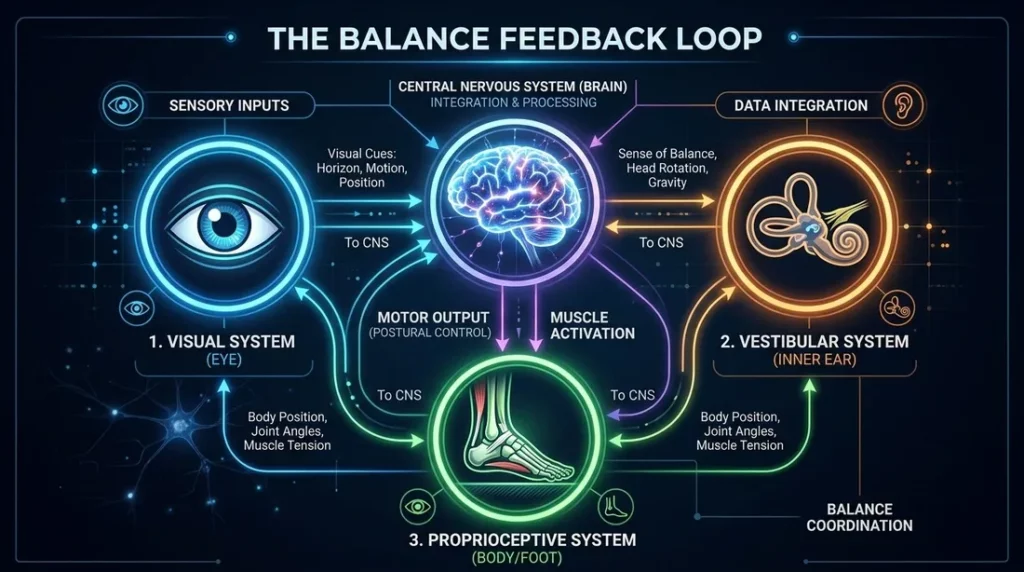
Falls are the leading cause of injury among seniors. We utilize technical frameworks similar to the CDC’s STEADI initiative to identify and eliminate system failure points in the home.
Proprioception – Your Body’s Internal GPS
Proprioception is the technical term for your brain’s ability to know where your limbs are without looking at them.
As we age, the “signal” from our joints to our central processor (the brain) can become “fuzzy,” leading to instability.
To restore your system’s coordination, focus on these three primary sensor recalibrations:
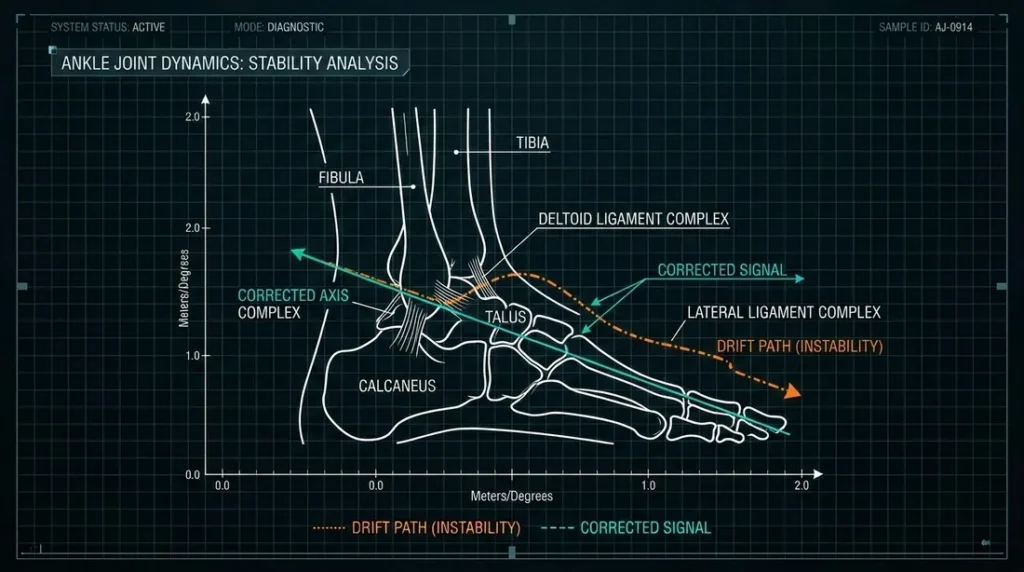
- The Mechanical Interface (Ankle Pivot): Most falls happen because the ankle lacks the “Reactive Strength” to correct a trip. Using Balance Equipment for Exercise helps sharpen this signal and reinforces the lower chassis.
- The Internal Gyroscope (Vestibular System): By practicing movements that involve controlled head turning, you keep your inner ear—your body’s internal “Level Sensor”—properly calibrated.
- The Optical Processor (Visual Recalibration): Many seniors become “Visual Dependent,” meaning the brain ignores the feet and ears and relies 100% on what it sees. To fix this “software bug,” you must shift the load back to your other sensors.
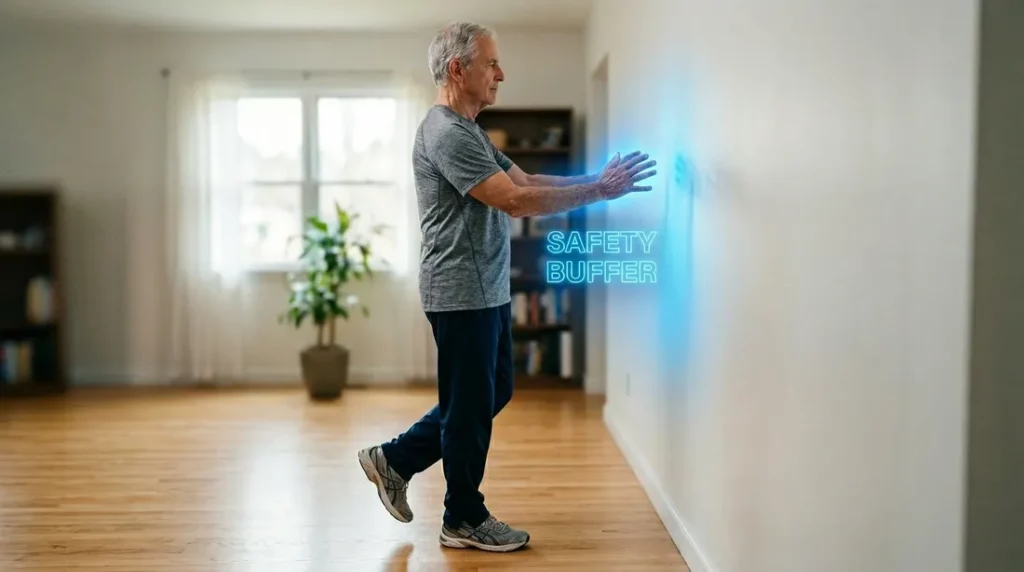
- The Fix: Practice your Daily Balance Exercises in dim lighting or with a hand hovering near a wall. This forces the brain to re-route data through the vestibular and proprioceptive sensors, ensuring your system doesn’t fail during a midnight trip to the bathroom.
✅ Stability Engineering Checklist
- Ankle Mobility: Ensure your “Lowest Joint” can move freely to absorb uneven ground.
- Core Bracing: A strong core acts as a stabilizer for the spine, preventing “Whiplash” during a stumble.
- Environmental Audit: Hardware calibration is useless if your environment is contaminated with trip hazards. Pair these balance exercises with a high-acuity Fall-Proof Home Lab Setup.
The Wall Fail-Safe – Engineering a Zero-Risk Zone
In technical testing, we always use a Safety Tether. When training balance at home, your safety tether is a solid wall or a heavy piece of equipment like a Recumbent Bike.
- The Hover Method: Perform your balance drills within 6 inches of a wall. Do not touch the wall, but keep your hands hovering. This reduces the Latency of your “Recovery Grab” if you lose your center of mass.
- Contact Redundancy: If you feel unstable, use “One-Finger Contact” on a table. This provides just enough sensory data to keep the system upright without doing the work for your muscles.
IndraP’s Technical Note – Solving ‘Sensor Drift’
In robotics, “Sensor Drift” is when a sensor slowly loses its accuracy over time, causing the machine to miss its target.
Human balance suffers from the exact same technical error.
🛠️ Technical Specialist’s Note: The Feedback Loop
“When I troubleshoot a feedback loop, I look for Latency. In seniors, the delay between ‘Sensing a Trip’ and ‘Firing a Muscle’ increases. This is sensor drift. To fix it, you need High-Fidelity Feedback. I recommend training on unstable surfaces like foam balance pads. From a technical standpoint, this creates ‘Signal Noise’ that forces your brain to work harder to find ‘Level.’ By intentionally introducing noise in a safe environment, you sharpen the actual signal. This is the core of The Science Behind Balance Training.” — IndraP
Smart Hardware for Stability Training
For the active senior, these premium tools provide the AI-guided coaching needed to ensure you are training your balance safely and effectively.
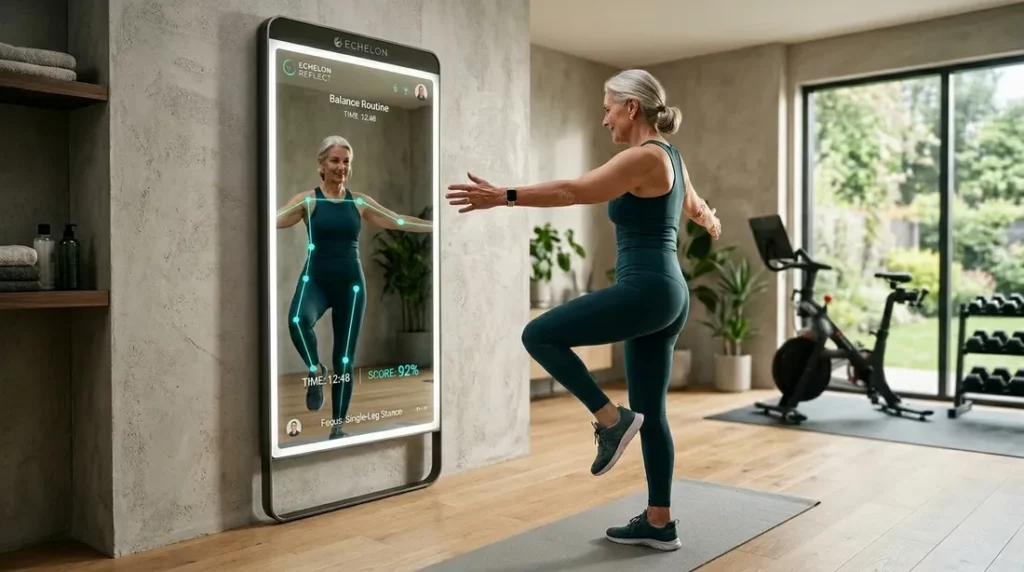
🏆 The Visual Feedback Hub – Echelon Reflect Smart Fitness Mirror
Why it matters: In stability engineering, Visual Biofeedback is the fastest way to correct “Sensor Drift.” The Echelon Reflect allows seniors to see their own reflection perfectly overlaid with a professional instructor. This is critical for ensuring the spine and hips remain neutral during balance work. From a technical standpoint, its wall-mounted design is a “Fail-Safe”—it provides a complete home gym experience without taking up floor space or creating new trip hazards in your workout laboratory.
💎 The “Analog” Essential – Airex Balance Pad Elite
Why it matters: This is a professional-grade stability tool used in clinical rehabilitation. Unlike cheap foam, Airex provides a specific “destabilizing” properties that force the small stabilizer muscles in your feet and ankles to fire. It is the most reliable way to perform “Sensor Recalibration” at home.
For those who have mastered basic stability, the next hardware upgrade is Reaction Training.
Using tools to improve your ‘Processing Speed’ is the final step in fall prevention, which we cover in our guide on Neuro-Motor Coupling.
Frequently Asked Questions
Q: How often should I practice balance?
Balance training is a “Low-Voltage” activity. You should aim for 5 to 10 minutes every single day. Because balance is a neurological skill, frequent short sessions are much more effective than one long session per week.
Q: Can core strength really prevent a fall?
Yes. Your core is your “Center of Mass Control.” If you trip, your core muscles must “fire” instantly to keep your torso upright. Without core strength, your weight continues to travel forward, making a fall inevitable.
Conclusion – A Fall-Proof Future
Stability Engineering is about making your body “Fault-Tolerant.”
By sharpening your internal sensors and strengthening your structural core, you reduce the risk of a system crash and ensure your “Legacy Hardware” remains upright and mobile for years to come.
Now that the chassis is stable, we need to choose the right tools to build cardiovascular endurance without damaging the joints.
Step 3: Gear Up for Safety
Best Home Equipment for Seniors →
About IndraP
IndraP is the founder of Reliable Home Fitness and a Technical Equipment Specialist. His mission is to apply “Fail-Safe” engineering principles to human movement.
Specializing in senior stability and proprioceptive training, Indra helps home athletes identify the high-fidelity tools needed to maintain balance and prevent injury during the aging process.