
In aviation and high-end engineering, no system is cleared for operation without a “Pre-Flight Checklist.”
We verify the pressure, the fuel, and the structural integrity before we apply full power.
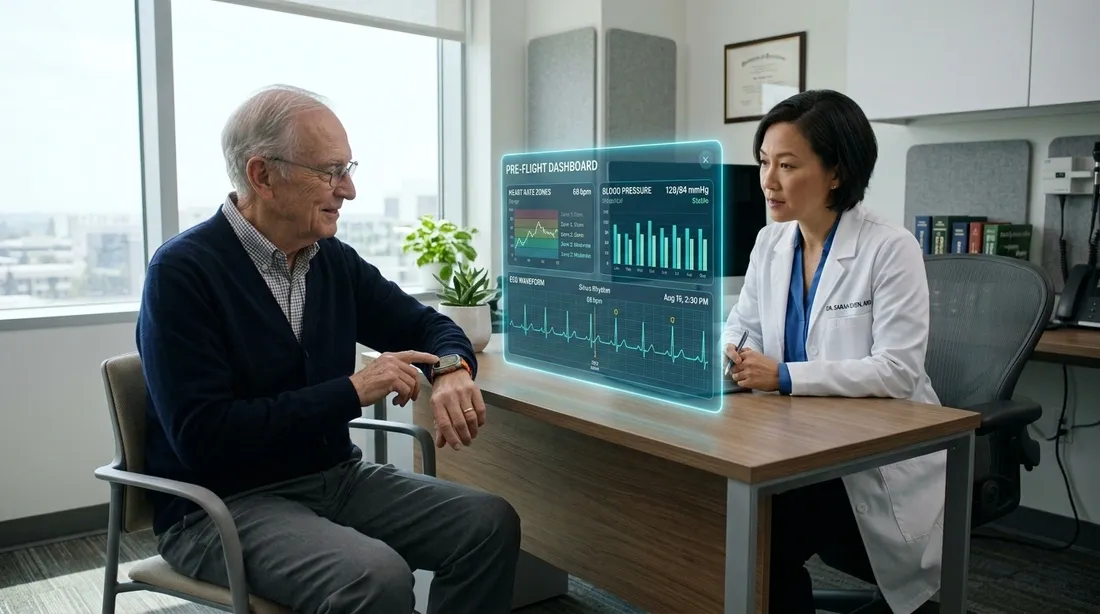
Your body is a high-value system, and as it ages, its Operating Tolerances change.
Before you begin your Senior Longevity Masterclass, you must perform a Clinical Architecture Review with your physician.
This isn’t just about “getting permission”; it’s about establishing the Safe Operating Envelope for your biological hardware and gathering the technical data you need to train safely.
This diagnostic foundation is the core of a reliable longevity strategy.
In This Guide:
💡 What should a senior ask their doctor before starting exercise?
A senior should ask their physician for specific Operating Constraints. Key questions include: “What is my safe target heart rate zone?”, “Are there any movements I should avoid due to my bone density or previous surgeries?”, and “How will my current medications affect my blood pressure during exertion?”. Establishing these thresholds ensures you can safely utilize Safe Supplements for Beginners and high-intensity home equipment without triggering a cardiac or orthopedic event.
🛠️ Specialist Tip: Bring Your Equipment Specs
Don’t just tell your doctor you are “working out.” Bring a list of the hardware in your home lab, such as your Recumbent Bike or Smart Gym. This allows your physician to evaluate the specific mechanical stresses (e.g., seated vs. standing) and provide more precise Operating Clearances.

Heart Rate Calibration – The Beta-Blocker Variable
For many seniors, standard heart rate formulas (like 220 minus age) are technically incorrect.
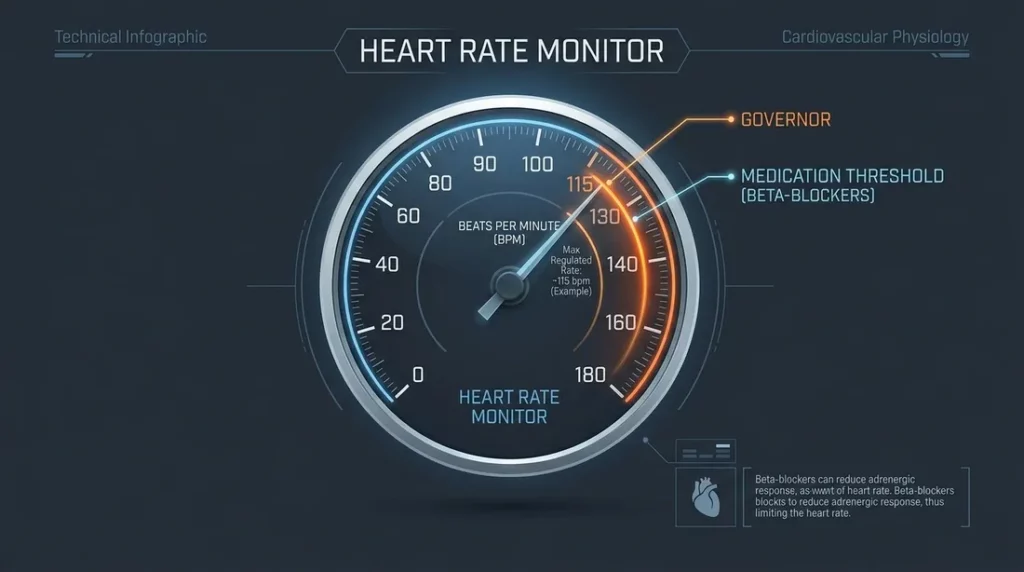
If you are on “Beta-Blockers” or blood pressure medication, your heart rate is “capped” by the medication.
- The Medication “Governor”: Beta-blockers act like a speed-governor on an engine. They prevent the heart from racing.
- The RPE Solution: If your heart rate data is suppressed by meds, you must rely on RPE (Rate of Perceived Exertion) to measure intensity. We cover this in depth in our guide on Modern Fitness Progress Tracking.
- The Talk Test: If you can’t speak a full sentence, you have exceeded your current “Ventilatory Threshold.”
Medication Telemetry – Managing Chemical Variables
In a technical system, adding a chemical catalyst changes the reaction threshold. In senior fitness, your medications act as these catalysts.
- Diuretics & Hydration: If you are on “Water Pills,” your system’s Coolant Levels (hydration) will drop faster. You must monitor your Senior Nutrition & Hydration more strictly to prevent orthostatic dizziness.
- Statins & Muscle Signal: Some cholesterol medications can cause “Signal Noise” in the form of muscle aches. It is vital to distinguish this from post-workout soreness.
- Blood Thinners: These reduce your “Structural Repair” speed in the event of a bruise or minor injury. High-safety environments like a Fall-Proof Home Lab are non-negotiable for those on anticoagulants.
Fault Detection – Recognizing Red Flag Signals
In technical monitoring, we look for “Critical Faults” that require an immediate system shutdown.
If you experience any of the following during home fitness, you must “Dump the Load” and contact your clinical team:
- Sudden Desaturation: If you feel lightheaded, it may be a respiratory bottleneck. See our guide on Warning Signs of Poor Lung Health for more.
- Pressure in the Chest: Not just pain, but a feeling of “heavy loading” on the chest or neck.
- Orthostatic Hypotension: Dizziness when moving from a seated position on a Recumbent Bike to a standing position.
- Delayed Recovery: If your Readiness Score does not return to baseline within 48 hours of a session, your “System Load” has exceeded your current “Repair Capacity.” This is a technical prompt to consult your doctor about potential underlying inflammation.
✅ The Pre-Flight Diagnostic List
- Blood Pressure Baseline: Know your resting numbers.
- Bone Density Score (DEXA): Determines if you can handle high-load resistance training.
- Cardiac Clearance: Ensure your “Pump” is structurally sound for increased “Voltage” (Intensity).
IndraP’s Technical Note – Operating within Tolerances
In electrical engineering, “Tolerance” is the allowable limit of variation in a physical dimension or property.
If you exceed a component’s tolerance, it melts or snaps.
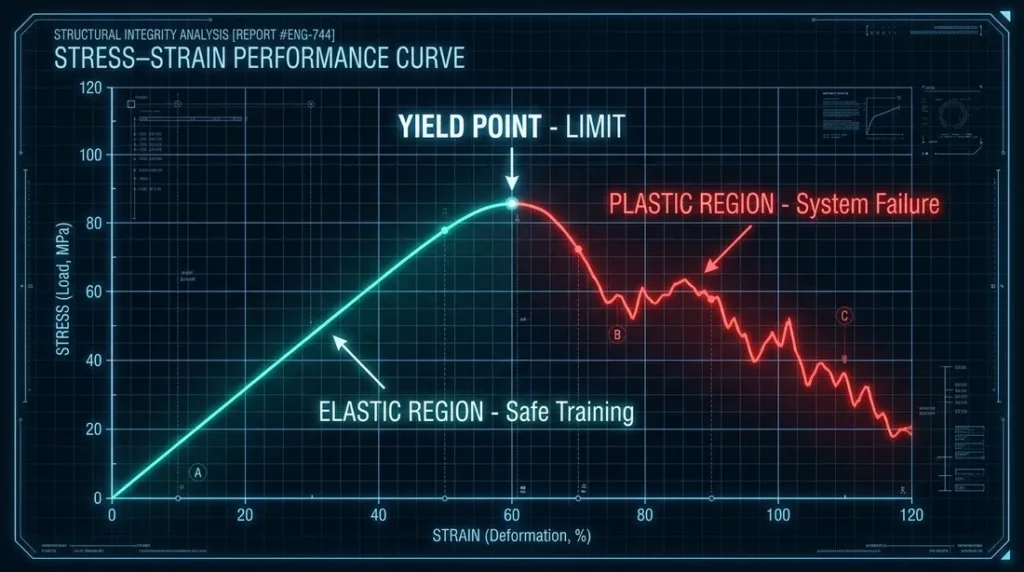
🛠️ Technical Specialist’s Note: The Stress-Strain Curve
“When I analyze a material, I look at the Stress-Strain Curve. Every material has an ‘Elastic Region’ where it can bend and return to shape, and a ‘Plastic Region’ where it permanently deforms (breaks). For seniors, your ‘Elastic Region’ is narrower than it was at age 20. Your physician’s job is to define your Yield Point. Once we know your yield point, we can design a home gym routine that stays within your ‘Safety Tolerance’ while still providing enough stress to trigger a biological upgrade. Don’t guess where your limit is—measure it clinically.” — IndraP
Premium Vitals Monitoring Hardware
To stay within your physician’s prescribed limits, you need high-fidelity telemetry.
🏆 The Heart Sentinel – Apple Watch Ultra 3
Why it matters: This is the ultimate “Maintenance Dashboard” for your body. For seniors, the Ultra 3 offers the largest, brightest 49mm display, making it the easiest interface to read during a workout. It features medical-grade ECG monitoring, Irregular Heart Rhythm Notifications, and the industry’s most reliable Fall Detection. From a technical standpoint, its 36-hour battery life is a critical safety feature, ensuring the “System Sentinel” stays online even if you forget a daily charge cycle.
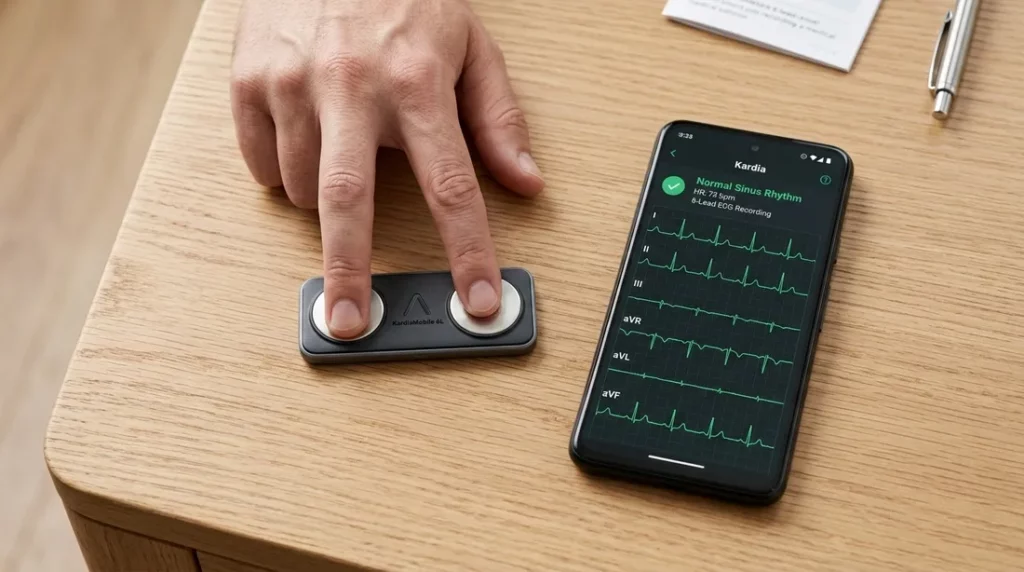
💎 Clinical Precision – KardiaMobile 6L Personal ECG
Why it matters: If your doctor is concerned about AFib or arrhythmias, this pocket-sized device provides a 6-lead ECG (the highest resolution available outside a hospital). It allows you to take a Diagnostic Snapshot immediately after a workout and email the data directly to your doctor. It is the ultimate tool for Closed-Loop safety management.
Frequently Asked Questions
Q: My doctor said ‘just take it easy.’ Is that enough info?
No. “Take it easy” is a subjective term. As a technical specialist, I recommend asking for quantifiable metrics: “What is my ceiling heart rate?” and “What is my blood pressure limit?”. Numbers provide clarity; vague advice provides risk.
Q: Should I stop my meds before a workout to get a ‘true’ heart rate?
NEVER alter your medication schedule for exercise without a direct physician order. Your goal is to train your body in its current “Operating State,” which includes your medications.
Conclusion – Cleared for Takeoff
Once you have established your clinical safety thresholds and verified your “System Specifications,” you are ready to begin the transformation process.
By training within your tolerances, you ensure that your journey is defined by progress, not setbacks.
With safety established, it’s time to build the most important defense system for the aging body: Muscle.
Let’s look at the science of Sarcopenia Defense.
Step 6: Defeat Muscle Loss
The Science of Senior Strength Training →
About IndraP
IndraP is the founder of Reliable Home Fitness and a Technical Equipment Specialist. He believes that “Reliability” starts with clinical safety and precise data.
Specializing in high-safety senior environments, Indra bridges the gap between medical advice and practical home gym setup, helping seniors maintain “Peak Uptime” throughout their longevity journey.