Ask any orthopedic surgeon or physical therapist for the “perfect” low-impact exercise, and they will likely give you the same answer: Swimming.
Why? Because water provides a unique type of resistance.
It supports your body weight (reducing gravity’s effect on your joints) and provides consistent, smooth resistance in every direction.
There is no jarring impact, no momentum, and no “dead spots” in the movement.
But there is one glaring problem: Most of us do not have a lap pool in our garage.
So, how do we replicate the joint-saving mechanics of water without getting wet?
The answer lies in Elastic Resistance (Resistance Bands).
Much like water, bands provide a smooth, increasing tension that eliminates the jerky stress of heavy iron weights.
In this guide, we will teach you “Dry Land Training”—how to use simple rubber bands to mimic the fluid mechanics of the pool.
? The “Dry Land” Concept
- Water Physics: Bands mimic water because the resistance gets harder the further you pull, eliminating momentum.
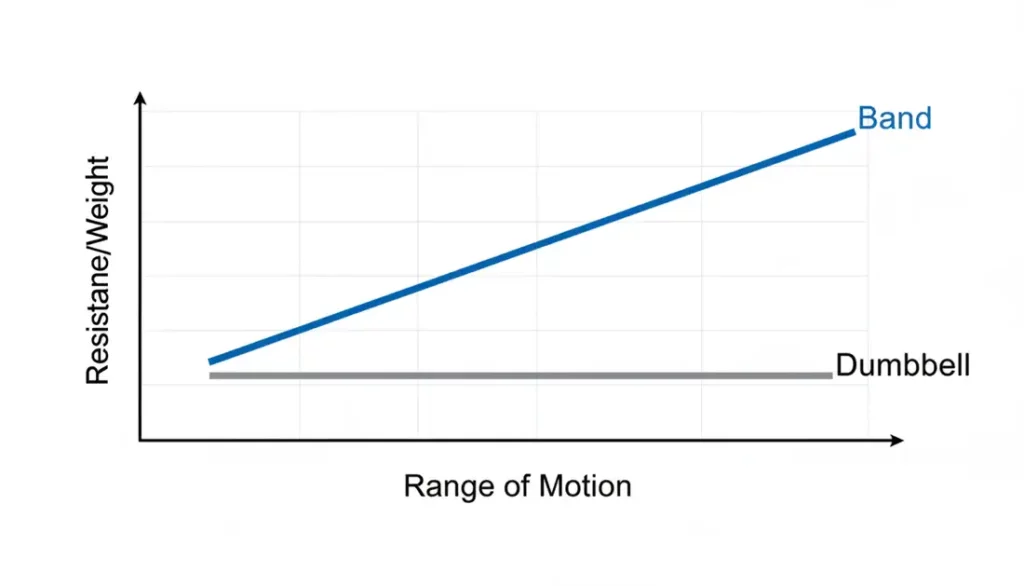
- Variable Resistance: Unlike dumbbells (which stay the same weight), bands change load dynamically, protecting your joints at their weakest points.
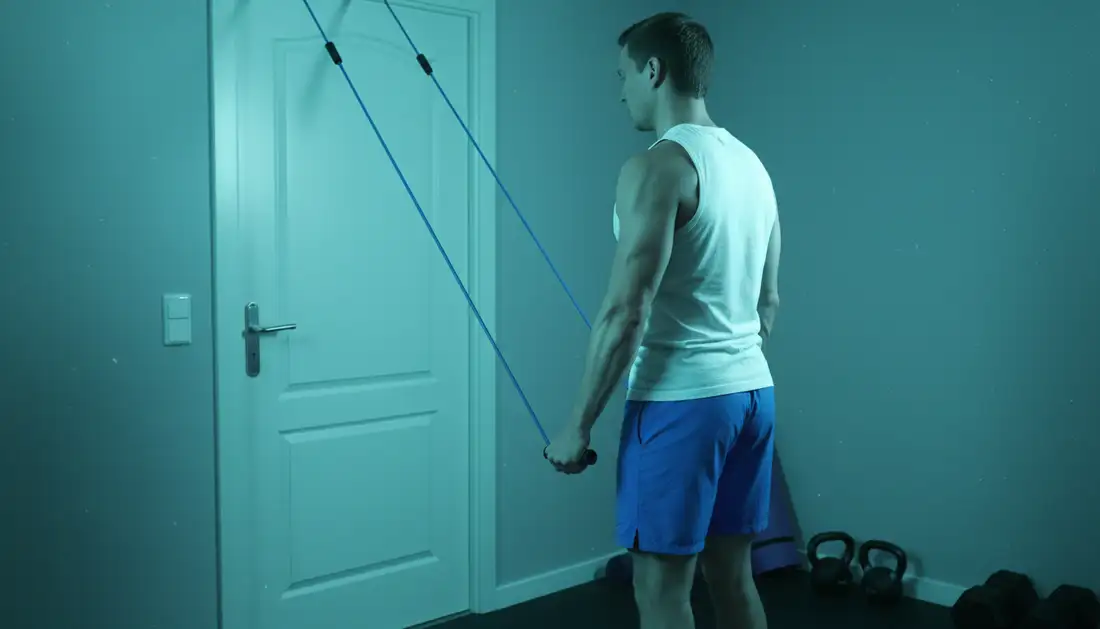
- Total Body: You can perform “Swim Strokes” (like lat pulls) against a door to build a V-taper back.
- Cost Effective: You can replicate a gym full of machines with a $30 set of bands.
The Science – Why Bands Feel Like Water
To understand why bands are safer than weights for joint pain, we need to define Linear Variable Resistance.
What is Linear Variable Resistance?
Linear Variable Resistance is a training property where the load increases as the range of motion increases. With resistance bands, the more you stretch the band, the heavier it becomes. This matches your body’s natural strength curve—you are weakest at the start of a lift and strongest at the end. This “smooth” loading mimics the feeling of pushing through water, sparing your joints from sudden spikes in force.
Comparison – Free Weights vs. Bands vs. Water
How does this stack up against traditional gym equipment?
| Type | Impact on Joints | Momentum Risk |
|---|---|---|
| Dumbbells (Iron) | High (at bottom) | High (Can “swing” weights) |
| Water (Swimming) | Zero (Buoyant) | Zero (Cannot cheat water) |
| Resistance Bands | Low (Elastic) | Low (Snap-back prevents cheating) |
The “Dry Land” Swim Workout
Professional swimmers actually use bands hooked to fences or doors to train when they can’t get to the pool.
Here is how to set up your own station.
Equipment Needed: A set of Tube Resistance Bands with a Door Anchor.
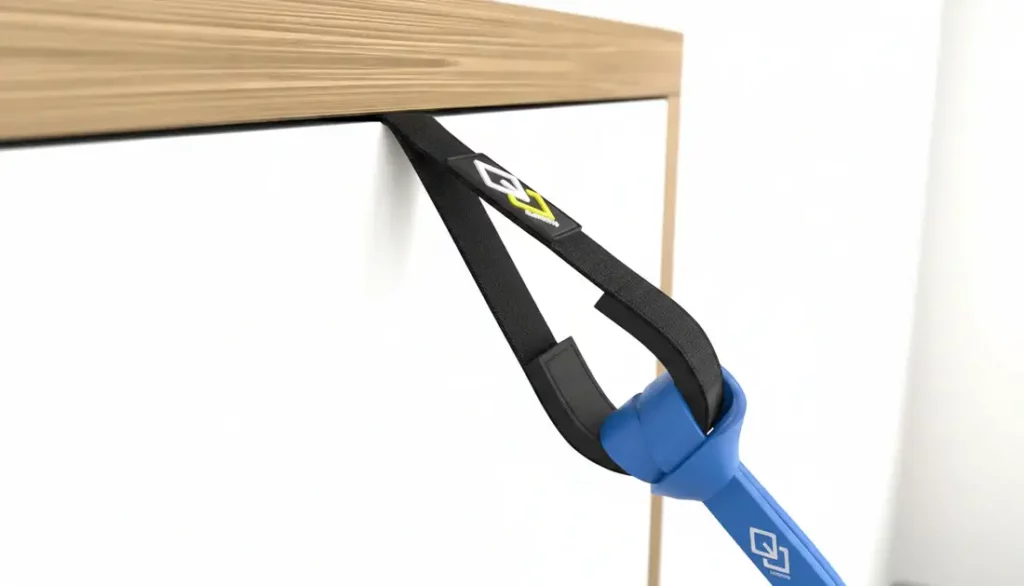
- Editors Pick: The Whatafit Resistance Bands Set is perfect because it includes the door stopper essential for these moves.
? The “Dry Land” Pool Kit
Whatafit Resistance Bands Set (11pcs)
Why this one? You cannot do these moves with loop bands. You need Tube Bands with Handles and a Door Anchor. This set includes a reinforced foam anchor that protects your door paint while holding up to 150lbs of tension.
1. The “Freestyle” (Standing Lat Pulldown)

? Safety Protocol: Always place the door anchor on the hinge side of the door (where it is strongest) or ensure you are pulling the door closed, not open. Lock the door if possible to prevent family members from walking in!
- Setup: Anchor band at the top of a door.
- Movement: Grab handles, hinge forward at hips, and pull your hands from above your head down to your pockets (keeping arms straight).
- Benefit: Targets the Lats (back muscles) exactly like a freestyle stroke, building a V-shaped back without pullups.
2. The “Breaststroke” (Chest Fly)
? Safety Protocol: Always place the door anchor on the hinge side of the door (where it is strongest) or ensure you are pulling the door closed, not open. Lock the door if possible to prevent family members from walking in!
- Setup: Anchor band at shoulder height.
- Movement: Face away from the door. Arms wide, then bring palms together in front of your chest.
- Benefit: Opens the chest and strengthens pectorals without the shoulder strain of bench pressing.
3. The “Backstroke” (Face Pulls)
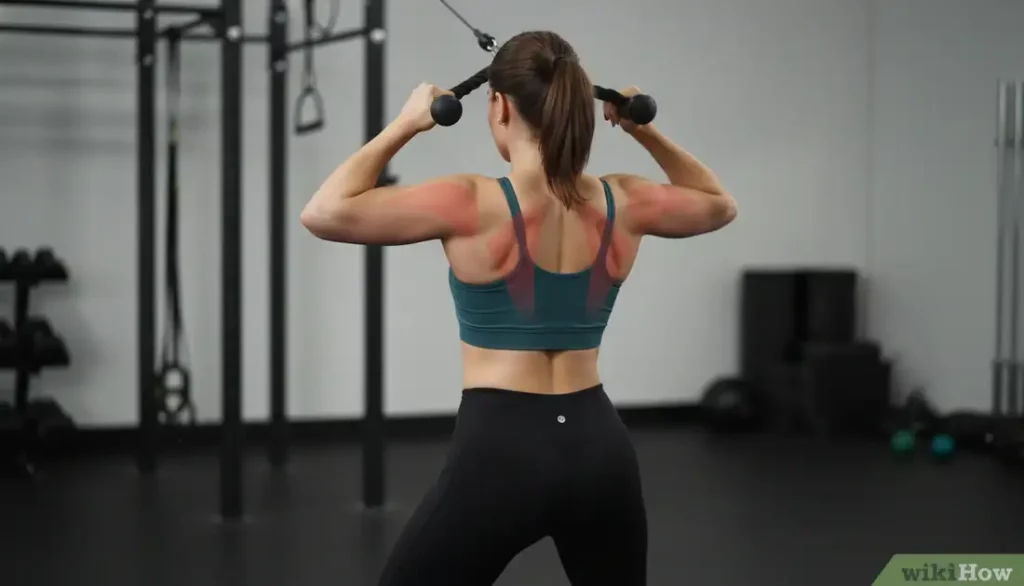
? Safety Protocol: Always place the door anchor on the hinge side of the door (where it is strongest) or ensure you are pulling the door closed, not open. Lock the door if possible to prevent family members from walking in!
- Setup: Anchor band at face height.
- Movement: Face the door. Pull the center of the band toward your forehead, flaring your elbows out.
- Benefit: This is the #1 exercise for Posture Correction and shoulder health. It reverses the “slouch” from sitting at a computer.
Sample Routine – 15-Minute Joint Relief
Perform this circuit 3 times. Move slowly—imagine you are pushing through thick water.
Frequently Asked Questions (Bands)
Q: Can I really build muscle with just bands?
Yes. Your muscles do not know if you are holding iron or rubber; they only detect tension. If the band is thick enough to cause fatigue in 12-15 reps, you will build muscle just as effectively as weights, often with less joint strain.
Q: Are bands safe for arthritis?
They are often preferred for arthritis because they are easier to grip (especially tube bands with foam handles) and they eliminate the initial “jerk” of lifting a dead weight from a dead stop, which is often where joint pain occurs.
Conclusion – The Complete Low-Impact Toolkit
You have now completed the Ultimate Beginner’s Guide to Low-Impact Workouts.
You have learned:
- That means “One Foot on the Ground.”
- That Machines like Rowers and Ellipticals can save your knees.
- That Bodyweight moves can be silent and effective.
- That Walking is a fat-burning superpower when done right.
- And finally, that Bands allow you to “swim” without a pool.
You have no more excuses. Pain is no longer a barrier. It’s time to start moving.
Next: Best Supplements & Recovery Tools.
Read Chapter 6: Joint Repair Secrets →
About IndraP
IndraP is the founder of Reliable Home Fitness and a Technical Equipment Specialist. Collaborating with industry leaders like FoliageField.com, he specializes in identifying top-tier training equipment.
With unique expertise in board-level repairs and upgrades, Indra looks beyond the marketing hype to test the internal mechanics of the machines he reviews. His mission is to help you invest in gear that is safe, durable, and reliable.