
Disclosure: As an Amazon Associate, I earn from qualifying purchases. This technical audit contains affiliate links which support our research at no cost to you.

Abstract: Respiratory efficiency is the primary limiting factor in metabolic output and mechanical endurance.
In home fitness environments, the absence of real-time coaching often leads to “Ventilatory Drift”—a systemic failure in breathing mechanics that accelerates muscular acidosis and reduces structural stability.
This audit evaluates the technical protocols required to optimize pulmonary function during exertion.
1.0 Biomechanics of Diaphragmatic Loading
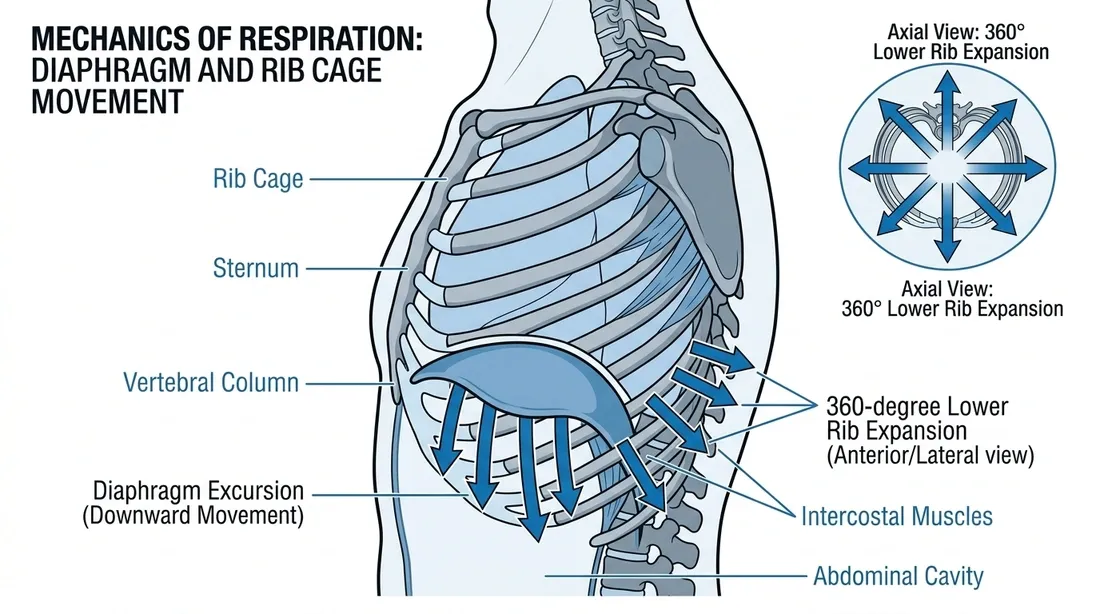
The human diaphragm functions not only as a primary respiratory pump but as a critical stabilizer of the lumbar spine.
Effective home fitness protocols require the synchronization of Intra-Abdominal Pressure (IAP) with physical movement patterns.
1.1 The 360-Degree Expansion Protocol
To maximize alveolar ventilation, the athlete must avoid “Clavicular Breathing” (lifting the shoulders).
Instead, technical focus should be placed on lateral costal expansion.
This increases the structural yield of the core, protecting the spine during high-load home gym exercises.
2.0 Modality-Specific Ventilatory Protocols
2.1 High-Velocity Metabolic Conditioning (HIIT)
During treadmill or elliptical use, metabolic acidosis is managed through Rhythmic Locomotor-Respiratory Coupling (LRC).
The recommended technical standard is the 2:2 Cadence: two mechanical movements (footfalls) per inhalation and two per exhalation.
This prevents visceral impact during the vulnerable exhalation phase.
2.2 Resistance Training & Internal Bracing
For home-based strength training, the Valsalva Maneuver remains the engineering gold standard for spinal protection.
By inhaling to 80% capacity and holding during the concentric phase, the athlete creates a pressurized fluid cylinder in the abdomen.
This significantly reduces shear force on the vertebrae.
3.0 Technical Exhibits: Respiratory Aids
| Equipment Type | Mechanical Objective | Performance Metric |
|---|---|---|
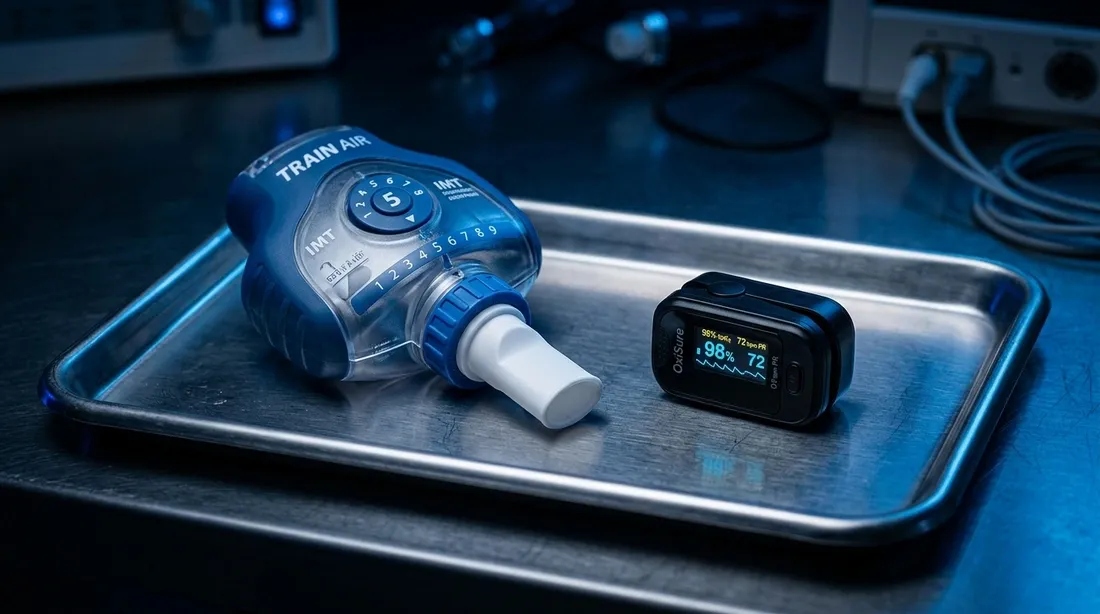
| Inspiratory Trainers | Diaphragm Hypertrophy | cmH2O (Pressure Resistance) |
| Nasal Dilators | Reduced Airway Resistance | % Increase in O2 Volume |
4.0 Environmental & Safety Diagnostics
Home athletes must monitor for “Post-Exercise Oxygen Debt” (PEOD).
If heart rate variability (HRV) fails to return to baseline within 20 minutes of cessation, it indicates a failure in pulmonary gas exchange efficiency.
