
You crushed your 20-Minute Bodyweight Circuit. You are feeling strong.
But the next morning?

You wake up stiff. Your legs feel heavy walking down the stairs.
Your chest is tight.
This is called DOMS (Delayed Onset Muscle Soreness).
For many beginners, this discomfort is where they quit.
They think, “I can’t workout today, I’m too sore,” and then they break the habit.
Why Recovery Matters
- The Truth: Muscles grow while you rest, not while you work.
- Active Recovery: Light movement (walking, stretching) heals you faster than sitting on the couch.
- Tools: Simple tools like foam rollers can fix stiffness before it becomes an injury.
- Goal: To feel better leaving the workout than when you started.
The secret to long-term consistency isn’t pushing harder; it’s recovering smarter.
In this guide, we will teach you exactly what to do on your “Off Days” to protect your joints, reduce pain, and get back to training faster.
Rest vs. Active Recovery – The Big Difference
There are two ways to rest:
- Passive Rest: Lying on the couch doing nothing.
- Active Recovery: Gentle movement that pumps fresh blood (and nutrients) into sore muscles without straining them.
Active Recovery Wins.
Think of your blood as a delivery truck.
It brings oxygen and protein to repair your muscles and hauls away the waste products that cause soreness. If you sit still all day, the trucks stop moving.
If you move gently, the traffic flows.
The 10-Minute “Rest Day” Routine
On the days you aren’t doing your strength circuit, perform this simple mobility flow.
1. The Deep Squat Hold (Hips)
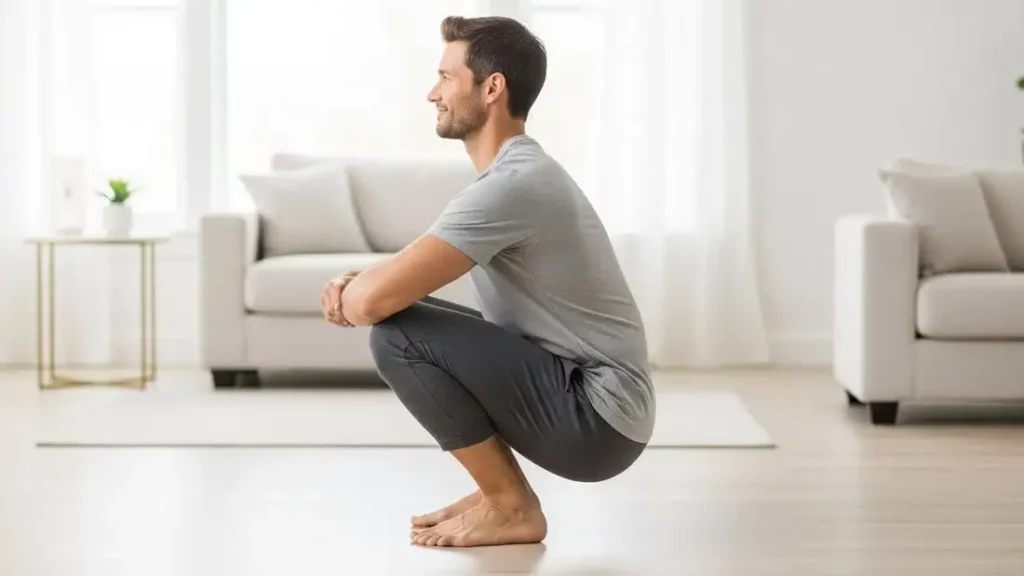
- How: Drop into a squat as deep as you can. Keep your heels down.
- Time: Hold for 30–60 seconds.
- Why: This opens up tight hips and ankles. If you struggle here, read Unlock Deeper, Safer Squats – The Essential Role Of Hip Flexor Mobility.
2. The Cat-Cow (Spine)
- How: On hands and knees, arch your back up like a scared cat, then dip your belly down and look up.
- Time: 10 slow cycles.
- Why: Lubricates the spine after sitting at a desk.
3. The Doorway Stretch (Chest)
- How: Place your forearms on a doorframe and step through gently.
- Time: 30 seconds.
- Why: Counters the “hunched over” posture from push-ups and computer work.
Using Tools to Speed Up Healing
While bodyweight training requires no equipment, Recovery is where spending a few dollars can save you a lot of pain.
1. Foam Rolling (Self-Myofascial Release)

Think of a High-Density Foam Roller as a poor man’s massage therapist.
It uses your body weight to iron out “knots” in the muscle fascia.
- Target Areas: Quads (front of thigh) and Upper Back (Thoracic spine).
- Warning: Never roll your lower back directly.
2. Percussive Therapy (Massage Guns)
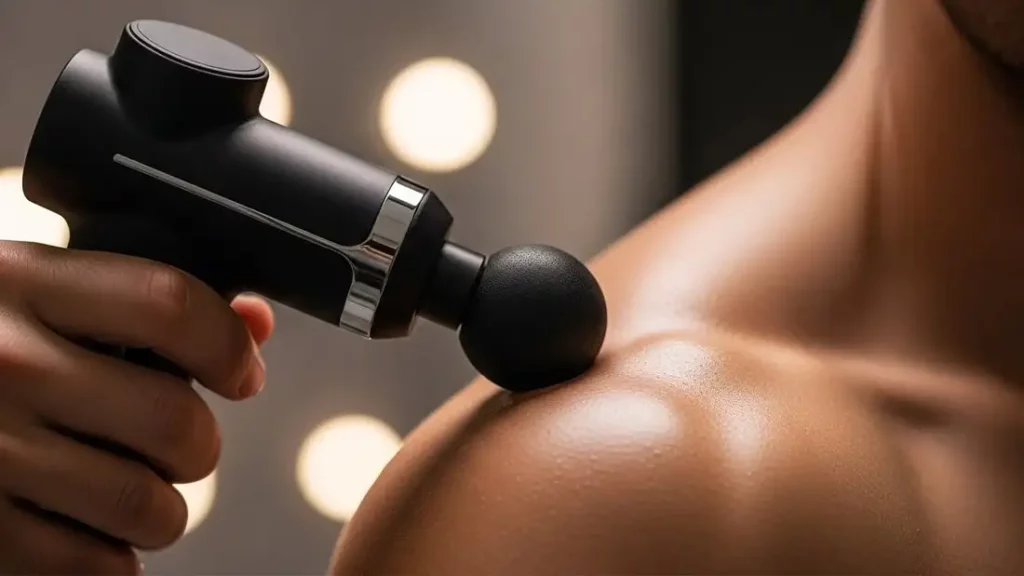
If you have the budget, a Massage Gun is a game-changer for “busy parents.”
- Why: It delivers rapid pulses deep into the muscle tissue.
- Best For: Using on your glutes or calves for 2 minutes while watching TV. It increases blood flow instantly and reduces the perception of pain.
3. Heat & Hydration

- Drink: Muscles are 75% water. If you are dehydrated, you will stay sore longer.
- Bath: A warm bath with Epsom Salts (Magnesium Sulfate) is a classic remedy to relax tight muscles before bed.
When to Rest Completely?
Active recovery is great, but sometimes you need to do absolutely nothing.
Listen to your body.
If you feel sharp pain (not just soreness), extreme fatigue, or if your resting heart rate is much higher than normal, take a full rest day.
Sleep is the ultimate performance enhancer.
- Related: Why You Aren’t Seeing Results: Troubleshooting Common Bodyweight Training Mistakes (Discussing Overtraining).
Frequently Asked Questions
- Should I stretch before or after my workout?
After. Static stretching (holding a pose) tells your muscles to relax, which you don’t want before a workout. Do dynamic warm-ups before, and static stretching (or this recovery routine) after or on off days. - Does foam rolling actually work?
Yes, but it doesn’t physically “break up” knots. Instead, it signals your nervous system to relax the tension in that area, which improves range of motion and reduces pain sensation. - Can I use a Massage Gun on my neck?
Be very careful. Never use it on the front of your throat or directly on the spine bones. Use it gently on the “Traps” (the meaty muscle between your shoulder and neck). - How much sleep do I need to build muscle?
Most research suggests 7–9 hours is optimal. If you are training hard but only sleeping 5 hours, you will likely see slower results and higher risk of injury.
Conclusion – Protect Your Asset
In bodyweight training, your body is your only machine.
You need to perform regular maintenance on it.
Incorporating a simple mobility and recovery routine will keep you in the game for the long haul.
Remember: Consistency > Intensity.
Ready to start?
You now have the full toolkit.
Now, it’s up to you to take action.
(Disclaimer: This content is for informational purposes only. Consult a physician/physiotherapist for specific pain issues.)