Imagine building a stronger, leaner body without spending a single cent on gym memberships or bulky machines.
Imagine getting a full-body workout while your dinner is in the oven or while the kids are napping.

This isn’t a fantasy—it’s the power of bodyweight training.
For many beginners, the fitness industry paints a confusing picture: you supposedly need heavy metal, expensive treadmills, or a garage full of gear to get fit.
But the truth is, your own body is the most sophisticated machine you’ll ever own.
Whether you are a busy parent with only 20 minutes to spare or someone looking to save money, a bodyweight workout at home is the most practical solution to start your fitness journey today.
In this guide, we will move beyond generic advice.
We’ll explore how to train safely to protect your joints, how to use the “mind-muscle connection” to get double the results in half the time, and exactly how to start without getting overwhelmed.
What is a Bodyweight Workout?
A bodyweight workout (often called calisthenics) is a strength training method that uses an individual’s own weight and gravity to provide resistance. It requires no external equipment or gym memberships. Research suggests that for beginners, bodyweight training is just as effective as weightlifting for building muscle and improving cardiovascular health, provided the exercises are performed with proper form and progressive intensity.
Why Choose Bodyweight Over the Gym?
If you’ve read our Beginners Guide to Starting Home Fitness – Your First Steps, you know that the hardest part of fitness is simply showing up.
Bodyweight training removes the friction of driving to a gym, changing clothes in a locker room, and waiting for machines.
But is it better?
Let’s look at the comparison.
Comparison – Bodyweight vs. Commercial Gym
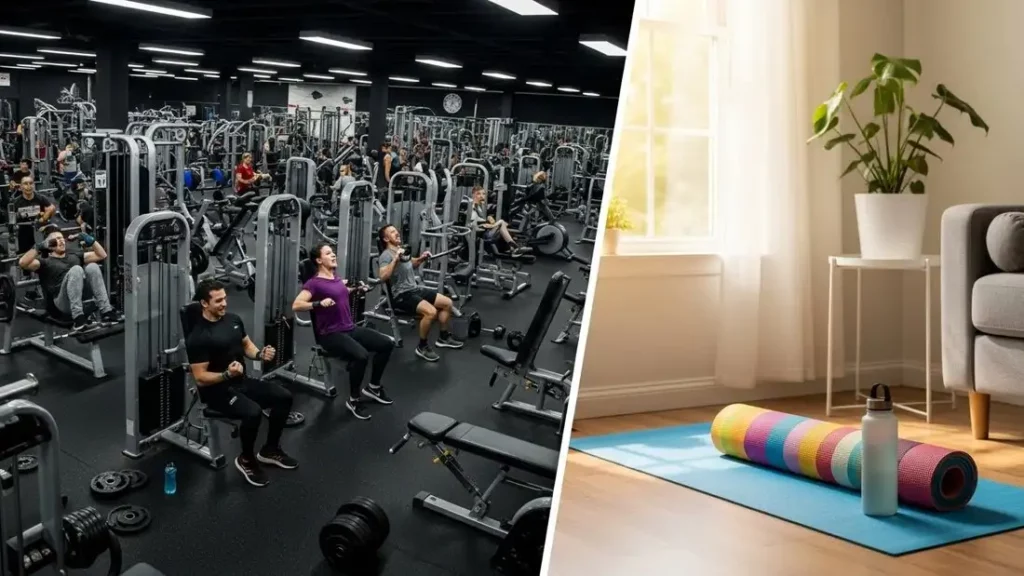
| Feature | Bodyweight Training at Home | Commercial Gym / Machines |
| Cost | $0.00 | $50 – $100 / month |
| Commute | 0 minutes | 15–30 minutes each way |
| Risk of Injury | Lower (Natural joint movement) | Higher (If overloaded incorrectly) |
| Muscle Focus | Functional (Multiple muscles work together) | Isolation (Single muscle focus) |
| Space Needed | Size of a Yoga Mat | Dedicated room or facility |
As you can see, for the Budget Conscious and Busy Professional, bodyweight wins hands down.
For a deeper dive on saving money, check out our guide on Home Gym Budgeting – How to Build an Affordable Home Workout Space.
The Science – Can You Actually Build Muscle?
A common skepticism is: “Can I really build muscle without heavy weights?”
The short answer: Yes.
The Science: A study published in the Journal of Strength and Conditioning Research compared low-load training (like bodyweight push-ups) against high-load training (bench press).
The findings showed that as long as the exercise was performed close to failure (meaning you couldn’t do another rep with good form), muscle growth (hypertrophy) was remarkably similar.
Your muscles are blind.
They don’t know if you are holding a dumbbell or pushing the floor; they only understand tension.
However, expectations matter.
You won’t look like a bodybuilder overnight, but you will build an athletic, functional physique.
- Read the full breakdown here: Can You Build Muscle with Just Bodyweight? The Honest Truth & Science.
The “Big 5” Foundational Movements

You don’t need 50 different exercises to get fit.
You need to master these five movement patterns.
These are “Compound Movements,” meaning they work multiple joints and muscles at once.
- The Squat: The king of leg exercises. (Works: Quads, Glutes, Core)
- The Push-Up: The ultimate upper-body builder. (Works: Chest, Shoulders, Triceps)
- The Lunge: Essential for balance and hip health. (Works: Legs, Stabilizers)
- The Plank: Safer than sit-ups for your back. (Works: Deep Core) . “The plank is just the beginning. If you want to sculpt a six-pack while protecting your spine, read our deep dive: Beyond Crunches – The Best Bodyweight Ab Exercises (That Save Your Back).”
- The Glute Bridge: Reverses the damage of sitting all day. (Works: Hamstrings, Glutes)
Master the Form: Bad form leads to injury. We have created a dedicated visual guide for these moves. Master the Basics – 5 Essential Bodyweight Exercises for Full-Body Strength
Troubleshooting – Why Am I Not Seeing Results?

Start doing bodyweight squats today, and you might be sore tomorrow.
But in 4 weeks, those same squats will feel easy.
This is where most beginners fail—they stop making progress because they stop challenging themselves.
This concept is called Progressive Overload.
Since you can’t add weight plates, you must change how you exercise.
- Slow Down: Take 4 seconds to lower yourself in a push-up.
- Reduce Rest: Cut your rest time from 60 seconds to 30 seconds.
- Fix Your Mechanics: Are you actually using your muscles, or just bouncing?
We have a specific guide to help you fix plateaus and joint pain (like hurting wrists during push-ups).
Why You Aren’t Seeing Results – Troubleshooting Common Bodyweight Training Mistakes
Recommended Gear (Optional but Helpful)
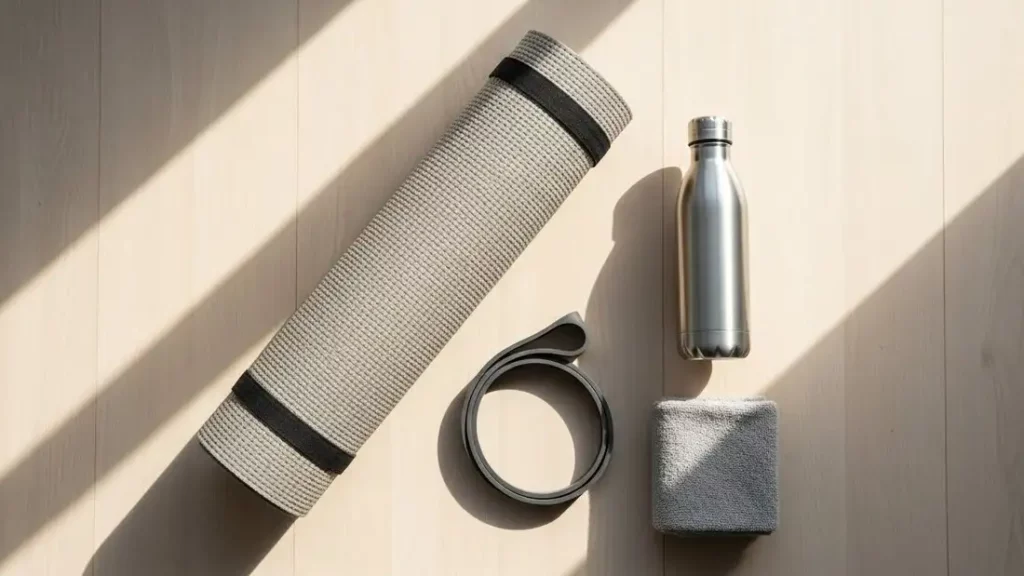
While the philosophy is “No Equipment,” a few inexpensive accessories can make your workouts safer and more comfortable.
- A Good Mat: A Thick Yoga/Exercise Mat is crucial for protecting your spine during glute bridges and your elbows during planks.
- Push-Up Bars: If you have wrist pain, Push-Up Bars/Parallettes allow you to keep a neutral wrist position.
- Resistance Bands: As you get stronger, Resistance Loop Bands are the cheapest way to add difficulty to squats and push-ups without buying weights.
- Weighted Vest: For the advanced, a Weighted Vest keeps your hands free while adding load.
How to Structure Your Routine
Random exercises give random results. To see changes, you need a plan.
For beginners, we recommend a Circuit Style workout.
This keeps your heart rate up (burning fat) while fatiguing the muscles (building strength).
The “Busy Parent” Structure:
- Frequency: 3 Days per Week (e.g., Mon, Wed, Fri).
- Duration: 20 Minutes.
- Method: Perform exercises back-to-back with minimal rest.
Get the Full Plan: We have mapped out exactly how many reps and sets to do in our routine guide. The “No-Time” 20-Minute Bodyweight Circuit for Busy Parents.
Safety First – Listen to Your Body
Bodyweight training is generally safe, but you can still get hurt.
The most common issues are wrist strain from push-ups and knee pain from lunges.
- Always Warm Up: Never start cold.
- Quality > Quantity: 5 perfect reps are better than 20 sloppy ones.
- Breathing: Don’t hold your breath! It raises blood pressure.
- Essential Read: Breathing For Bodyweight Exercises – Powering Through Your Workouts.
- Essential Read: Basic Home Workout Safety Rules – Your Non-Negotiable Guide.
Frequently Asked Questions
- Can I really lose weight with just bodyweight exercises?
Yes. Bodyweight exercises, especially when done in a circuit format (like HIIT), burn significant calories. Furthermore, building muscle increases your resting metabolic rate, meaning you burn more calories even when sleeping. - How often should I do bodyweight workouts?
For beginners, 3 to 4 times per week is ideal. This allows for a “Rest Day” in between sessions to let your muscles and joints recover. - Do I need protein powder?
No, supplements are not necessary if you eat a balanced diet. However, if you struggle to eat enough protein from food (chicken, eggs, beans), a protein shake can be a convenient tool to help recovery. - Is bodyweight training safe for seniors?
Generally, yes. Because you control the pace and there are no heavy weights to drop, it is very safe. However, seniors should focus heavily on balance exercises (like lunges) and consult a doctor before starting.
Conclusion – Your Journey Starts Here

The beauty of a bodyweight workout at home is that the barrier to entry is zero.
You don’t need to wait for a delivery truck or a payday.
You just need a small space and the willingness to move.
Consistency beats intensity every time.
A 15-minute workout you actually do is infinitely better than the hour-long workout you skip.
Where to go next?
- Step 1: Learn the moves in Master the Basics – 5 Essential Bodyweight Exercises.
- Step 2: Check your form against our Troubleshooting Guide.
- Step 3: Grab your mat and start your first 20-Minute Circuit.
You have the tools.
Now, let’s get to work.
(Disclaimer: This content is for informational purposes only. Consult a physician before starting any new exercise program, especially if you have pre-existing health conditions.)