
If you walk into any commercial gym, the treadmill section is usually the busiest.
But for those of us with aching knees, stiff backs, or a history of shin splints, the treadmill can feel less like a workout tool and more like a torture device.
The physics are undeniable: The impact of your foot striking the belt sends shockwaves up your ankles, knees, and hips with every step.
Fortunately, modern engineering has solved this.
Low-Impact Cardio Machines allow you to achieve the same heart-health benefits as running, but with zero trauma to your joints.
But with so many options, which one is right for your specific injury or goal? Is a bike better for your back?
Does an elliptical burn more calories?
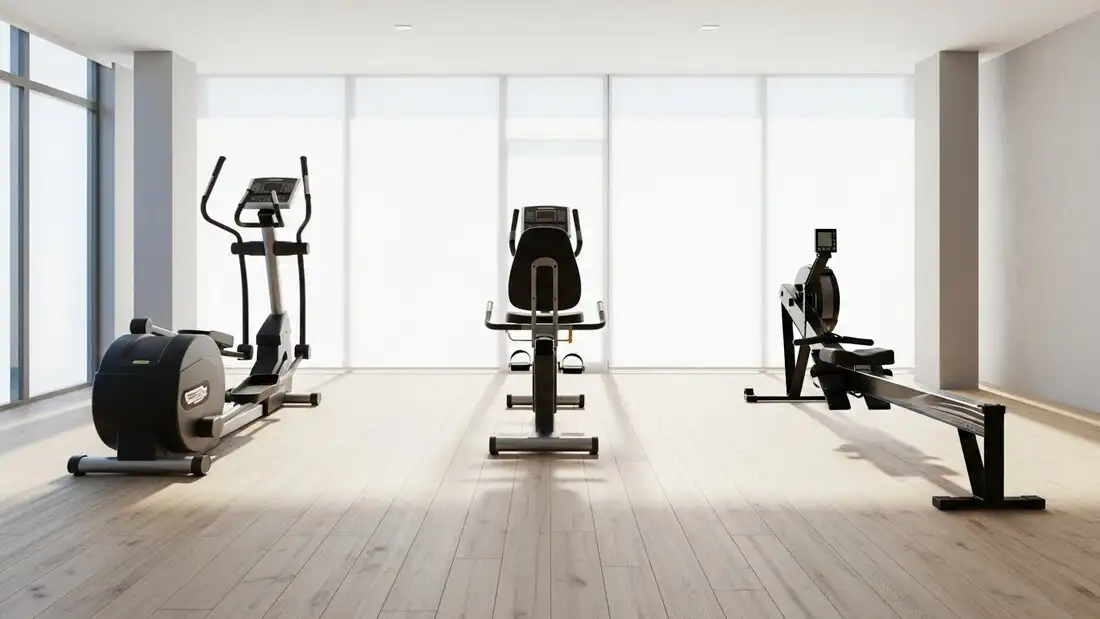
In this guide, we compare the “Big 3“—The Elliptical, The Stationary Bike, and The Rower—to help you decide which investment belongs in your home.
? The “Big 3” Quick Summary
- The Elliptical: Best for Runners who miss the motion of jogging but can’t handle the impact.
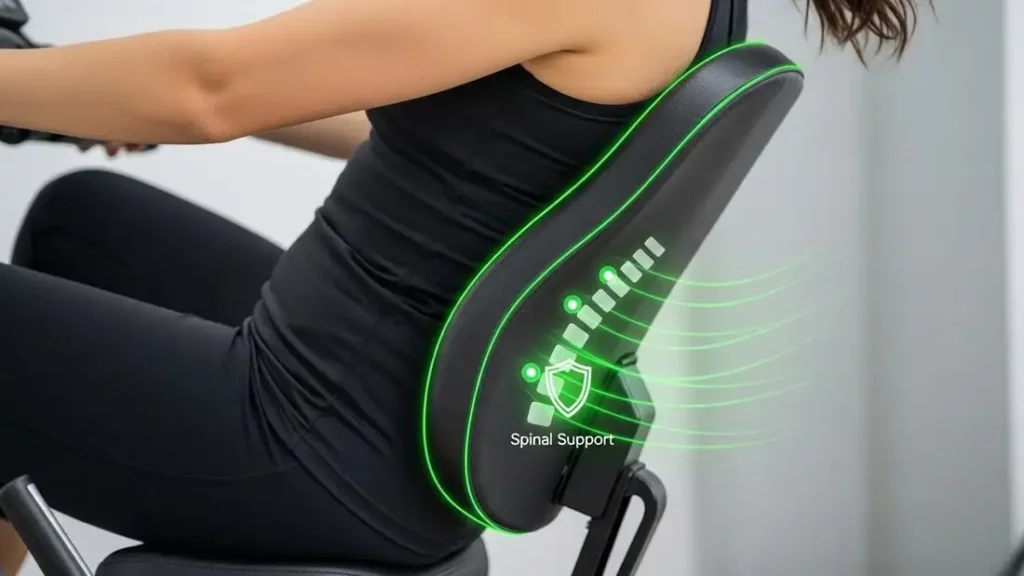
- The Recumbent Bike: Best for Back Pain. The bucket seat provides full spinal support.
- The Rowing Machine: Best for Weight Loss. It uses 86% of your muscles, burning maximum calories.
- The Rule: All three are “Closed Kinetic Chain,” meaning your feet never leave the pedals, ensuring safety.
1. The Elliptical Trainer (The Runner’s Savior)

The elliptical was specifically invented to mimic the biomechanics of a running stride without the landing.
Your feet are fixed to pedals that move in an oval (elliptical) shape.
Why it works for knees:
It creates a “floating” sensation.
You get the weight-bearing benefits (which are good for bone density) without the sharp spike in ground reaction force.
✅ The Pros
- Targets Glutes/Hamstrings effectively.
- Upper body handles engage arms.
- Closest feel to running.
❌ The Cons
- Can take up a lot of floor space.
- Cheap models can feel “jerky.”
- Some people experience numb toes.
- Deep Dive: Unsure if you want a bike or elliptical? Read our full showdown: Elliptical vs. Exercise Bike – The Ultimate Beginner’s Showdown.
2. The Stationary Bike (The Back Protector)
Cycling is unique because it is non-weight-bearing.
The seat supports your body weight, which gives your knees and ankles a complete break.
However, the type of bike matters immensely.
Upright vs. Recumbent – A Critical Difference
- Upright Bikes (Spin Bikes): You lean forward over the handlebars. Great for intense cardio, but can put stress on the lumbar spine (lower back) and wrists.
- Recumbent Bikes: Feature a large “bucket seat” with a backrest, and the pedals are out in front of you.
The Verdict: If you suffer from Lower Back Pain or are recovering from surgery, the Recumbent Bike is the gold standard.
- Top Home Pick: The Marcy Recumbent Exercise Bike is widely considered the best value for beginners. It’s affordable, easy to get on/off (step-through design), and whisper-quiet.
3. The Rowing Machine (The Total Body Solution)
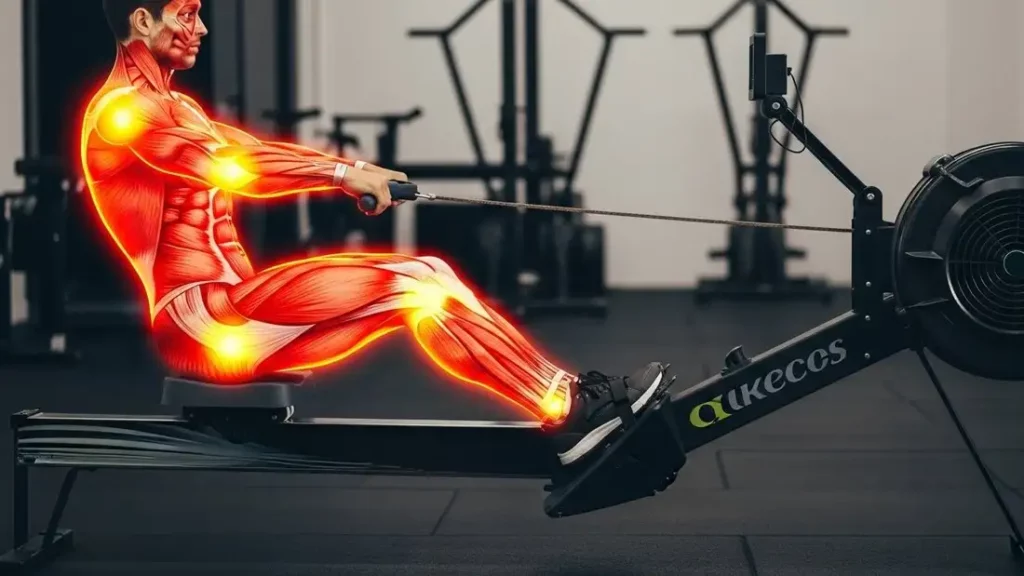
Unlike the bike or elliptical (which are mostly leg-dominant), rowing is a total-body power movement.
Why it works:
Rowing engages 86% of your body’s muscle mass, including your lats, core, quads, and grip.
Because you are seated, there is zero impact on the knees.
- Fluid Resistance: Air and Water rowers provide “Variable Resistance.” The harder you pull, the harder it gets. This makes it infinitely scalable for beginners and pros.
The Caution: Rowing requires technique. If you round your back, you can cause injury. Form is everything.
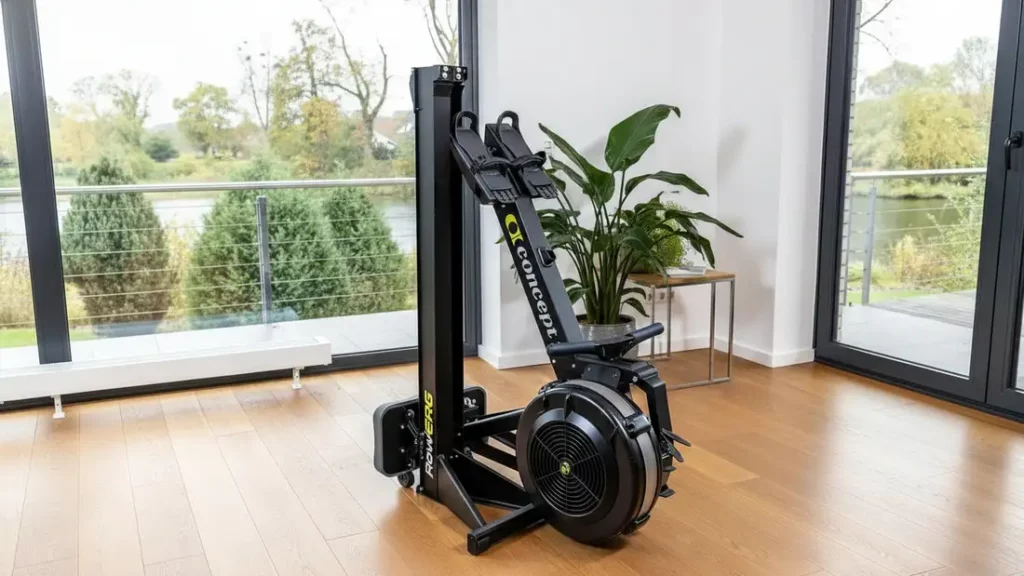
- Top Home Pick: The Concept2 RowErg is the industry standard found in every CrossFit gym because of its durability. However, if you need something smaller and quieter, magnetic rowers like the Sunny Health & Fitness are an excellent budget alternative.
- Learn More: Decoding Your Perfect Row – A Beginner’s Guide.
Comparison – Which one fits your home?
Space is often the deciding factor for home gyms.
| Feature | Elliptical | Recumbent Bike | Rower |
|---|---|---|---|
| Joint Impact | Very Low | Zero | Zero |
| Back Support | None (Standing) | Excellent | None (Requires Core) |
| Calorie Burn | High | Moderate | Very High |
| Storage | Large Footprint | Medium | Folds Upright |
Frequently Asked Questions
Q: Is a rowing machine bad for your back?
It depends. If you row with proper form (straight back, driving with legs first), it actually strengthens your back. However, if you round your spine, it can cause injury. We recommend Recumbent Bikes for those with active back injuries.
Q: Which machine burns the most belly fat?
The Rowing Machine generally burns the most calories per minute because it engages the upper and lower body simultaneously. However, the Elliptical is a close second if you use the moving handles vigorously.
Q: Are cheap ellipticals worth it?
We advise caution. Cheap ellipticals often have a short stride length (13-15 inches), which can feel “jerky” and unnatural for tall people. Look for a stride length of at least 18 inches for a smooth motion.
Conclusion – Making the Choice
The “best” machine is simply the one you will actually use.
- If your knees are the problem but you love to stand, choose the Elliptical.
- If your lower back is the problem, choose the Recumbent Bike.
- If you want a full-body transformation and are willing to learn proper form, choose the Rower.
But what if you don’t have the budget or space for any of these machines?
Can you get a low-impact workout with just your body weight?
No equipment? No problem.
Read Chapter 3: Silent Bodyweight Moves →
About IndraP
IndraP is the founder of Reliable Home Fitness and a Technical Equipment Specialist. Collaborating with industry leaders like FoliageField.com, he specializes in identifying top-tier training equipment.
With unique expertise in board-level repairs and upgrades, Indra looks beyond the marketing hype to test the internal mechanics of the machines he reviews. His mission is to help you invest in gear that is safe, durable, and reliable.