
That sharp, shooting pain that radiates from your lower back, through your hip, and down your leg is unmistakable.
Sciatica can be debilitating, and when you’re in pain, you’ll do almost anything to find relief.
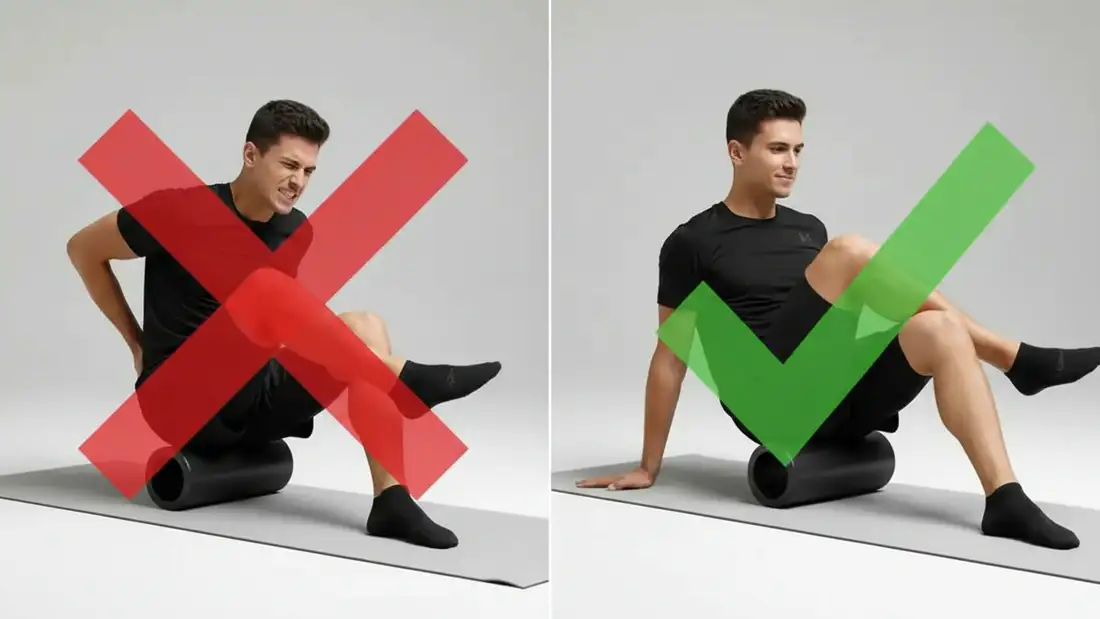
A foam roller can be a powerful ally in this fight, but the approach is completely counterintuitive.
Using it incorrectly will not only fail to help but could make your pain significantly worse.
This guide is built on one principle: safety first.
We will explain why you must avoid the site of the pain, recommend the right type of gentle roller for this sensitive condition, and teach you a safe, physical-therapist-approved routine that targets the root cause of your sciatica.
The Golden Rule – NEVER Roll Directly on Your Lower Back or Sciatic Nerve
If you remember only one thing from this article, let it be this: do not roll your lower back or the path of the pain down your leg.
Your sciatic nerve is the longest nerve in your body, running from your lower spine down your leg.
When it’s irritated, it’s already inflamed and compressed.
Rolling directly on it is like pressing on a bruised, sensitive nerve—it can dramatically increase inflammation and sharpen your pain.
This is one of the most critical errors we highlight in our guide to 7 Common Foam Rolling Mistakes.
How Foam Rolling Safely Helps Sciatica by Targeting the Cause
So, how does foam rolling help?
By treating the cause, not the symptom.
While sciatica can have several causes, a very common one is Piriformis Syndrome.
As the medical experts at Spine-Health explain in detail, this is a condition where the piriformis muscle, located deep in the buttocks, spasms and irritates the nearby sciatic nerve.
Think of your sciatic nerve as a garden hose.
The piriformis is a small, deep muscle in your glutes that runs directly over this “hose.”
When the piriformis muscle becomes tight and knotted, it clamps down and “pinches the hose,” compressing the sciatic nerve and causing pain.

Our goal is to release the tension in the muscles that are pinching the nerve.
The three key targets are:
- The Piriformis: The primary culprit.
- The Glutes: The larger muscles surrounding the piriformis.
- The Hamstrings: Tight hamstrings can tilt the pelvis, contributing to piriformis tightness.
By releasing these muscles, you take the pressure off the sciatic nerve, providing lasting relief.
What to Look for in a Foam Roller for Sciatica
When you’re dealing with nerve pain, gentleness is key.
The wrong tool can do more harm than good.
- Density: Start Soft. A rock-hard, high-density roller is too aggressive for sciatica. You need a soft or medium-density roller that can release muscle tension without inflaming the underlying nerve.
- Texture: Keep it Smooth. Textured rollers with aggressive knobs can irritate the sensitive piriformis area. A smooth surface provides broad, consistent pressure, which is much safer and more comfortable.
- The Pro Tool: A Massage Ball. For a more advanced and precise approach, a massage ball (like a lacrosse ball) is the best tool for targeting the deep, specific trigger point in the piriformis muscle.
The 3 Best Foam Rollers & Tools for Sciatica Relief
1. OPTP PRO-ROLLER Soft – The Gentle Beginner’s Choice

When you are in acute pain, you need the gentlest tool possible.
The OPTP PRO-ROLLER is made from a durable, soft closed-cell foam that provides forgiving compression.
It allows you to gently release your glutes and hamstrings without the intense pressure that could aggravate your sciatica.
| Density | Surface | Best For |
| Soft | Smooth | Acute pain, high sensitivity |
2. TriggerPoint GRID – The Versatile All-Rounder

If your pain is less acute or you want a roller that will grow with you, the TriggerPoint GRID is a perfect medium-density choice.
Its flat surfaces act like a smooth roller, providing consistent pressure, while its hollow core gives it a firmness that is effective but not overly aggressive.
| Density | Surface | Best For |
| Medium-Firm | Lightly Textured | General use, post-acute pain |
3. Kieba Lacrosse Ball – The Piriformis Pinpointer

A foam roller is great for the larger glute and hamstring muscles, but a lacrosse ball is the expert’s choice for targeting the piriformis itself.
Its small, firm surface allows you to apply precise pressure directly to the knot that is causing the problem.
| Density | Surface | Best For |
| Extra-Firm | Smooth | Pinpoint piriformis release |
The Safe 3-Move Routine for Sciatica Relief
Perform this routine slowly and gently.
If you feel any sharp or radiating nerve pain, stop immediately.
1. The Glute & Piriformis Roll
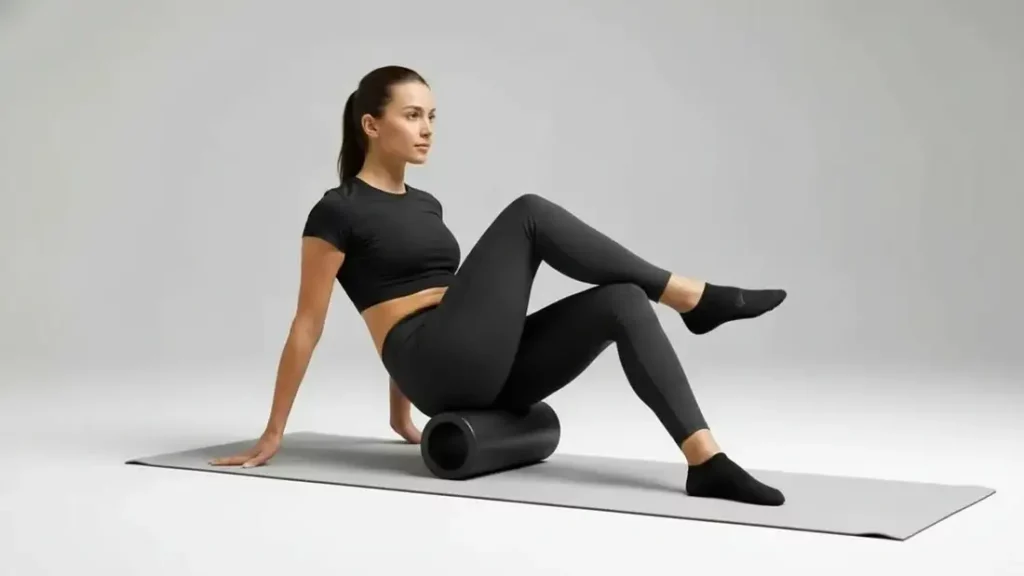
- Sit on the floor (not the roller) and place the foam roller behind you.
- Lean back and place the glute of your affected side on the roller. Use your hands and other foot for support.
- Slowly and gently roll over the fleshy part of the glute to warm up the area.
- To target the piriformis: Cross the ankle of your affected leg over the opposite knee (a “figure-four”). Gently tilt your weight toward the affected hip and make very small, subtle movements on any tender spots. Hold for 15-20 seconds.
2. The Hamstring Roll
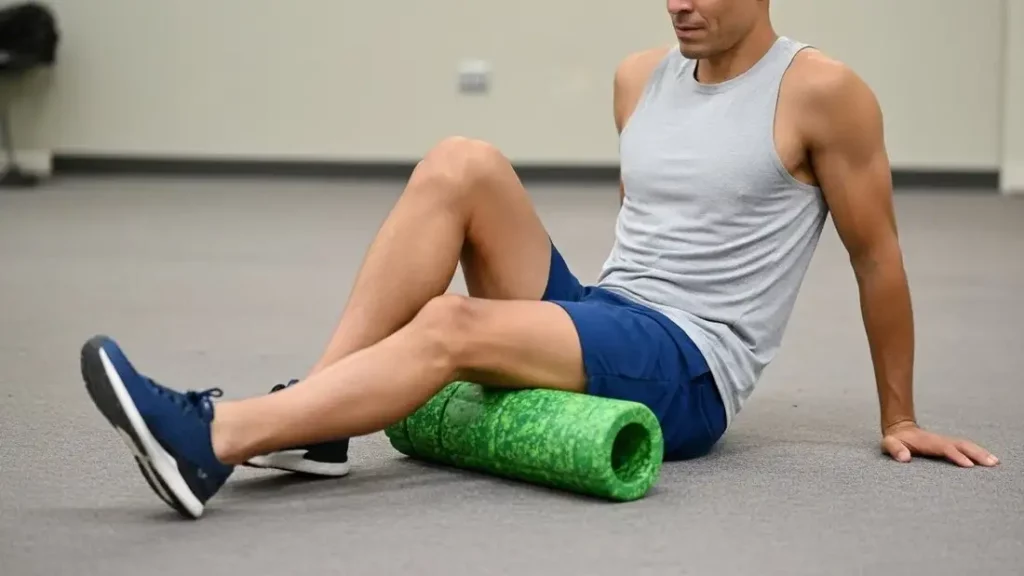
- Sit with the roller under your hamstrings.
- Support your weight with your hands and lift your hips.
- Roll slowly from the base of your glutes to just above the back of your knee. Releasing the hamstrings helps to neutralize the tilt of your pelvis.
3. The Seated Piriformis Stretch (No Roller Needed)

- Sit in a sturdy chair with your feet flat on the floor.
- Cross the ankle of your affected leg over your opposite knee.
- Keeping your back straight, gently lean your chest forward until you feel a deep stretch in your glute and hip.
- Hold for 30 seconds, breathing deeply. Do not bounce.
Key Takeaways – The Sciatica Safety Protocol
| Do This | Don’t Do This |
| ✅ Roll the glutes and hamstrings. | ❌ NEVER roll your lower back. |
| ✅ Use a soft or medium-density roller. | ❌ Don’t use an aggressive, hard roller. |
| ✅ Move slowly and gently. | ❌ Don’t roll quickly or apply heavy pressure. |
| ✅ Stop if you feel nerve pain. | ❌ Don’t try to “push through” sharp pain. |
Frequently Asked Questions (FAQ)
Q: Can foam rolling make sciatica worse?
A: Yes, absolutely. If you roll directly on your lower back or sciatic nerve path, you can increase inflammation and make the pain significantly worse. You must follow the safe protocol of only rolling the connecting muscles like the glutes and hamstrings.
Q: How often should I do this routine for sciatica?
A: You can perform this gentle routine 1-2 times per day. The key is to be gentle and consistent. Stop if your symptoms worsen.
Q: When should I see a doctor for sciatica?
A: A foam roller is not a substitute for medical advice. According to medical authorities like the Mayo Clinic, you should see a doctor immediately if you experience severe pain, numbness or muscle weakness in your leg, or have trouble controlling your bladder or bowels.
Conclusion – A Safe and Smart Approach to Relief
When you’re dealing with sciatica, your recovery strategy must be smart and safe.
By avoiding direct pressure on your spine and instead focusing on releasing the deep hip muscles that are the root cause of the problem, you can use a foam roller to find lasting relief.
Always listen to your body, start with a gentle tool, and perform these movements slowly.
If your pain persists or worsens, your next step should always be to consult a qualified medical professional.
Explore More Pain Relief Solutions
Now that you understand the safe way to manage sciatica, explore other methods for relieving muscle tightness and improving your overall well-being.
- Discover how breathing can play a key role in releasing tension in our guide to The Role Of Breathing In Hip Flexor Health.