
Now that you understand the powerful benefits of resistance bands, it’s time to choose your tool.
But a quick search can leave you feeling confused—you’ll see tubes with handles, giant loops, small loops, and thin, stretchy ribbons.

Don’t worry.
Choosing the right band is simple once you know what each type is designed for.
This clear, no-nonsense guide will walk you through the four main types of resistance bands and help you pick the perfect one for your specific fitness goals.
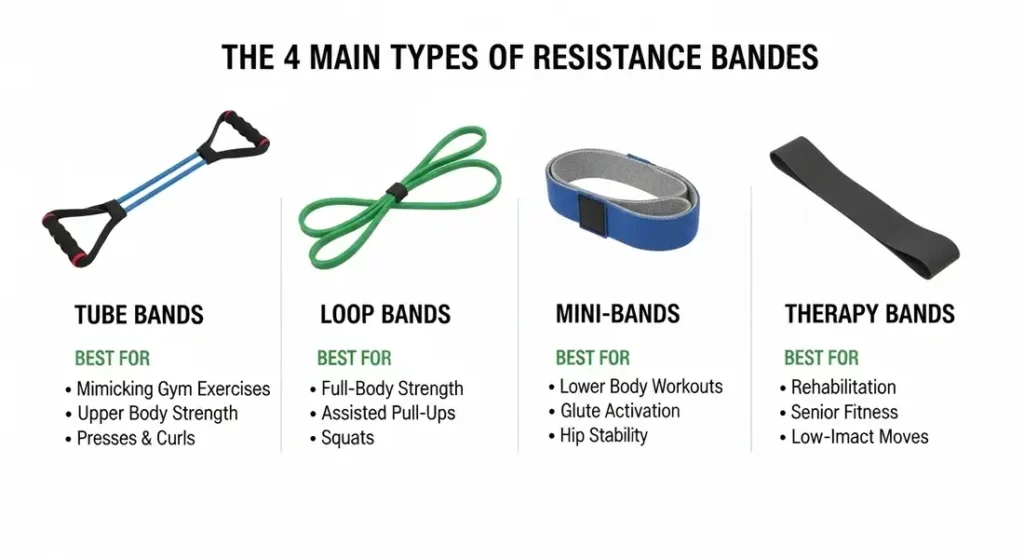
Tube Bands with Handles
These are the classic resistance bands and what most people picture first.
They are essentially stretchy tubes with handles attached to each end.
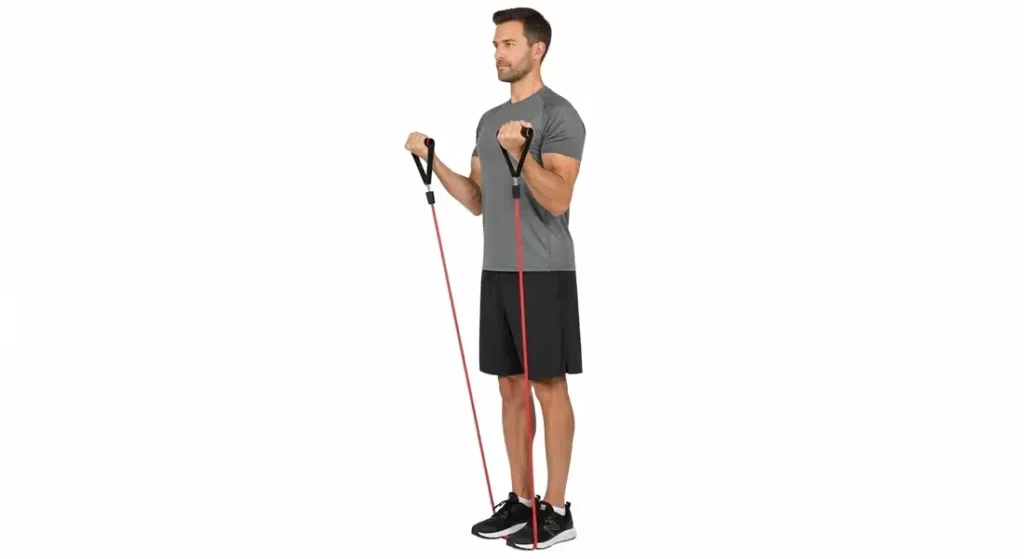
- Best for: Mimicking traditional gym exercises. If you want to do bicep curls, chest presses, shoulder presses, and rows, these are your best choice.
- Pros: The handles provide a comfortable and secure grip, making them very intuitive for beginners to use for upper body workouts. Most sets are “stackable,” meaning you can clip multiple bands to the handles for more resistance.
- Cons: They are less suitable for exercises that require the band to be wrapped around your legs or ankles.
- Our Top Pick on Amazon: The Bodylastics Stackable Tube Resistance Bands Set is a best-seller for a reason. It’s durable, comes with a wide range of resistance levels, and includes all the attachments you need to get started.
Power & Mobility Loop Bands
Often called “power bands,” these are thick, continuous loops of heavy-duty rubber.
They are the undisputed workhorse of the resistance band world due to their incredible versatility.
- Best for: Full-body workouts, assisted pull-ups, and adding resistance to bodyweight exercises like squats, push-ups, and deadlifts. They are also excellent for stretching.
- Pros: Extremely durable and can provide very high levels of resistance for building serious strength. Their closed-loop design makes them perfect for securing around your body or an anchor point.
- Cons: The raw rubber can be less comfortable on bare skin compared to bands with handles.
- Our Top Pick on Amazon: We recommend the WODFitters Resistance Bands. They are made from high-quality layered latex, ensuring they are tough enough for any workout you throw at them.
Mini-Bands (Hip Circle / Booty Bands)
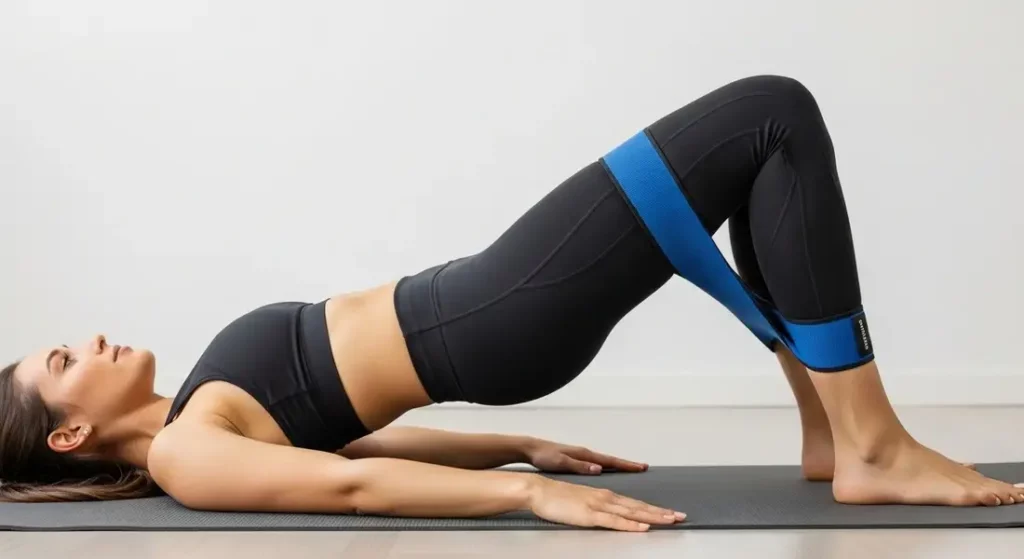
These are small, looped bands designed to be worn around your thighs or ankles.
They are a game-changer for lower body workouts.
- Best for: Lower body warm-ups, glute activation exercises (like clamshells and glute bridges), and adding a challenge to squats and lunges.
- Pros: They are unmatched for specifically targeting the hips and glutes, which are crucial for stability and power. We strongly recommend fabric bands over traditional latex ones, as they have non-slip grips and won’t roll up your legs.
- Cons: Their use is almost exclusively limited to the lower body.
- Our Top Pick on Amazon: The Fit Simplify Fabric Booty Bands are our favorite. They are comfortable, stay in place, and provide the perfect resistance for sculpting and strengthening your lower body.
Therapy Bands
These are long, thin, flat bands that do not form a loop and do not have handles. They are typically sold in long rolls.
- Best for: Physical therapy, gentle rehabilitation exercises, and low-impact senior fitness.
- Pros: They offer the lightest resistance available, making them ideal for targeting small, delicate muscles, especially in the shoulders and knees. They can be cut to any desired length.
- Cons: They are not durable enough for general strength training and will snap if overstretched.
- Our Top Pick on Amazon: TheraBand Resistance Bands are the gold standard used by physical therapists worldwide. They are trusted for their quality and consistent resistance levels.
Comparison Table – Which Band Should You Buy?
Still unsure? This simple table breaks it all down.
| Band Type | Primary Use | Best For… | Our Top Pick (on Amazon) |
| Tube Bands | Mimicking Gym Exercises | Upper Body Strength | Bodylastics Set |
| Loop Bands | Full-Body Strength | Squats & Assisted Pull-ups | WODFitters Bands |
| Mini-Bands | Lower Body Toning | Glute & Hip Activation | Fit Simplify Fabric Bands |
| Therapy Bands | Rehabilitation | Gentle, Low-Impact Exercise | TheraBand |
Now that you know the type of band that best fits your goals, the final step is choosing the right strength.
This is crucial for getting results without risking injury.
Ready to make your final selection?
Head to our next guide: How to Choose the Right Resistance Band Level (A Beginner’s Chart).