
You have your bands and an effective workout plan.
There’s just one crucial step before you begin: learning how to use your equipment safely.
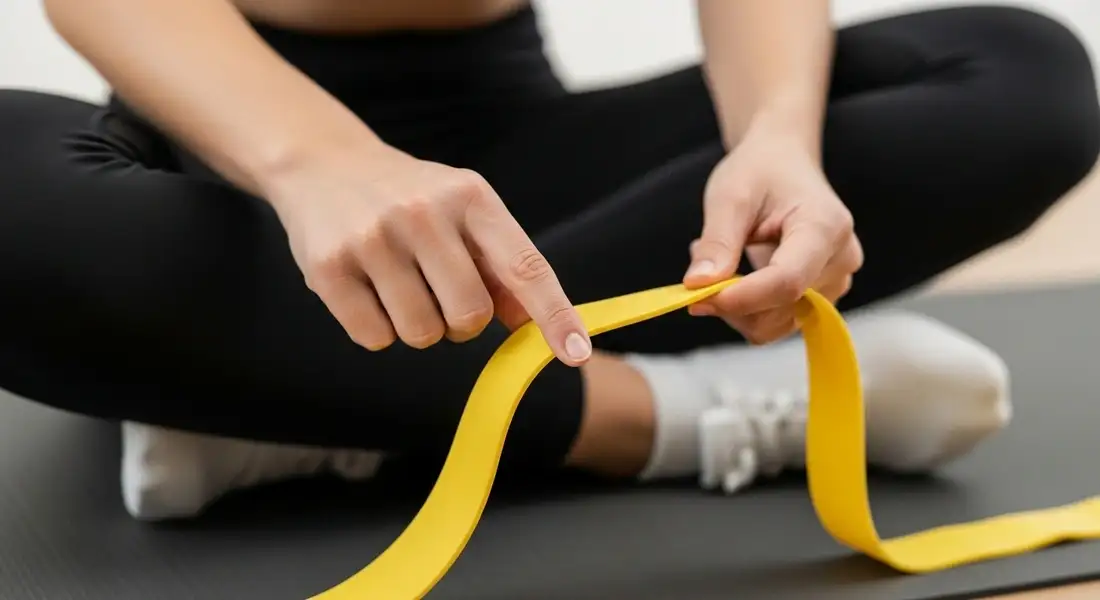
While resistance bands are one of the safest pieces of home gym equipment, taking a few simple precautions is non-negotiable.
It prevents injuries from snapped bands or insecure anchors and ensures you get the maximum benefit from every exercise.
Think of this as your pre-flight safety check before you take off on your fitness journey.
The Pre-Workout Inspection – Check Your Bands
Before every single workout, take 30 seconds to visually inspect your bands.
A damaged band can snap under tension, which can cause serious injury.
Look for:
- Nicks, Scratches, or Cuts: Even a small tear can compromise the band’s integrity.
- Brittleness or Discoloration: Old latex can become dry and brittle, making it more likely to snap.
- Worn Areas: Pay close attention to the points where the band connects to handles or where you anchor it most often.
If you find any signs of damage, do not use the band. It’s always better to be safe and replace it.
Anchoring Your Bands Securely – Your Top Priority
An anchor point is anything you use to hold the band in place.
If your anchor fails, the band can snap back at you. Here’s how to anchor your bands the right way.
Using a Door Anchor (The Correct Way)
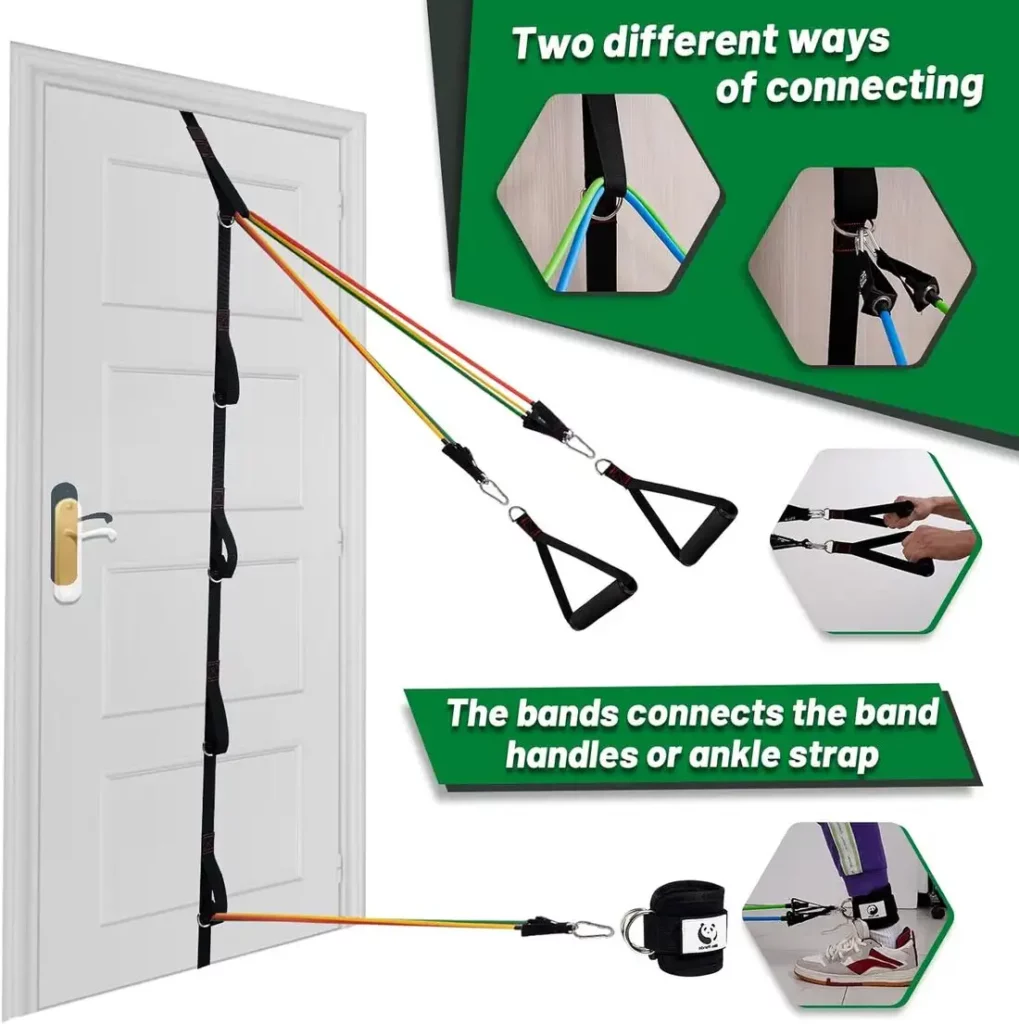
A door anchor is an incredibly useful tool, but it must be used correctly.
- Choose a Solid Door: Never use a hollow door. It should be a sturdy, well-constructed door that closes firmly in its frame.
- Use the Hinge Side: Place the anchor over the top of the door or on the side, but always on the side where the hinges are. This ensures that when you pull, you are pulling the door closed into its frame, not open.
- Lock the Door: If possible, lock the door to prevent anyone from opening it while you are exercising. A simple sign on the other side can also help.
- Test It: Before you put your full body weight into an exercise, give the band a few firm tugs to ensure the anchor is secure.
- Affiliate Link: Most good band sets include a door anchor, but if you need a more robust replacement, this heavy-duty door anchor from Slim Panda on Amazon is an excellent and secure choice.
Using Your Feet or Body as an Anchor
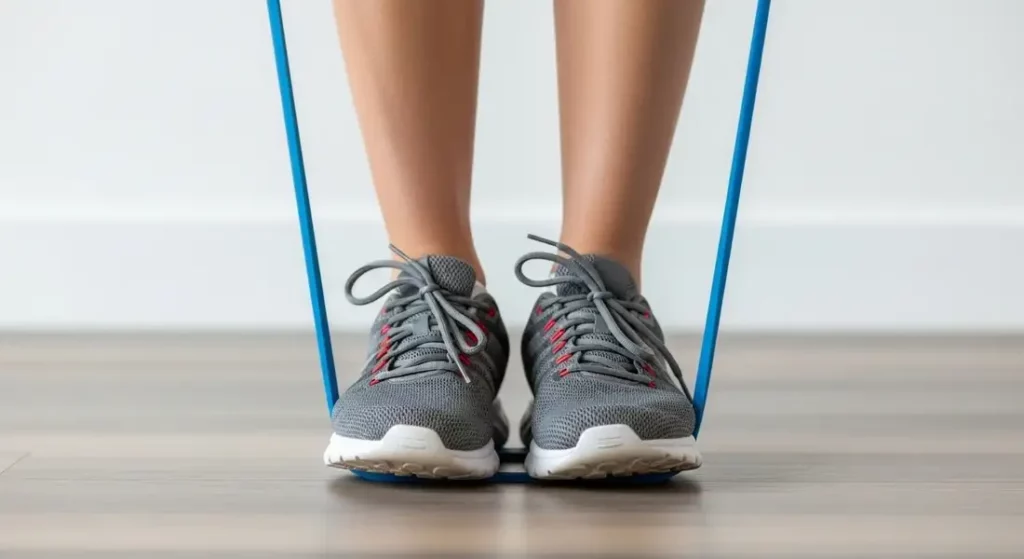
When standing on a band (for exercises like bicep curls or overhead presses), proper placement is key.
- Place the band under the arch of your foot, not your toes. This provides the most secure footing and prevents the band from slipping out from under you.
- Wear shoes with good grip whenever possible.
What NOT to Use as an Anchor
Never anchor your bands to any object that is not completely stable or has sharp edges. Avoid:
- Table or chair legs
- Bed posts
- Door knobs
- Any furniture that can slide or tip over
- Any object with sharp corners that can cut or fray the band
Master Your Form – Control, Don’t Rush
Proper form is not just for getting results—it’s for safety.

- Control the Release: The most common mistake is letting the band snap back after a rep. The release (or eccentric) phase of the movement is just as important as the pull. A good rule of thumb is a “2-second pull, 4-second release” tempo.
- Don’t Overstretch: Never stretch a band more than 2 to 2.5 times its resting length. Overstretching can cause the band to snap. If an exercise feels too easy, move up to the next resistance level instead of stretching a lighter band beyond its limit.
Safety Checklist (Quick Recap)
Before each workout, run through this mental checklist:
- [ ] Inspect: Did I check my bands for damage?
- [ ] Anchor: Is my anchor point solid and secure?
- [ ] Form: Am I controlling the band, or is it controlling me?
Call to Action
You now have the knowledge to stay safe while you train.
But are there any subtle mistakes you might be making that could be holding back your progress or putting you at risk?
Let’s find out.
Move on to our next guide: Common Resistance Band Mistakes (And How to Fix Them).