
Now that you understand the incredible benefits of foam rolling, you’re ready for the exciting part: choosing your tool.
A quick search reveals a dizzying array of options—long, short, soft, hard, smooth, and bumpy.

While they all work toward the same goal, the right roller can make the difference between a great session and an uncomfortable one.
This guide will demystify the options, helping you select the perfect foam roller with confidence.
The Most Important Factor for Beginners – Foam Roller Density
Density, or the hardness of the roller, is the most critical factor to consider when you’re starting out.
It determines the intensity of your massage.
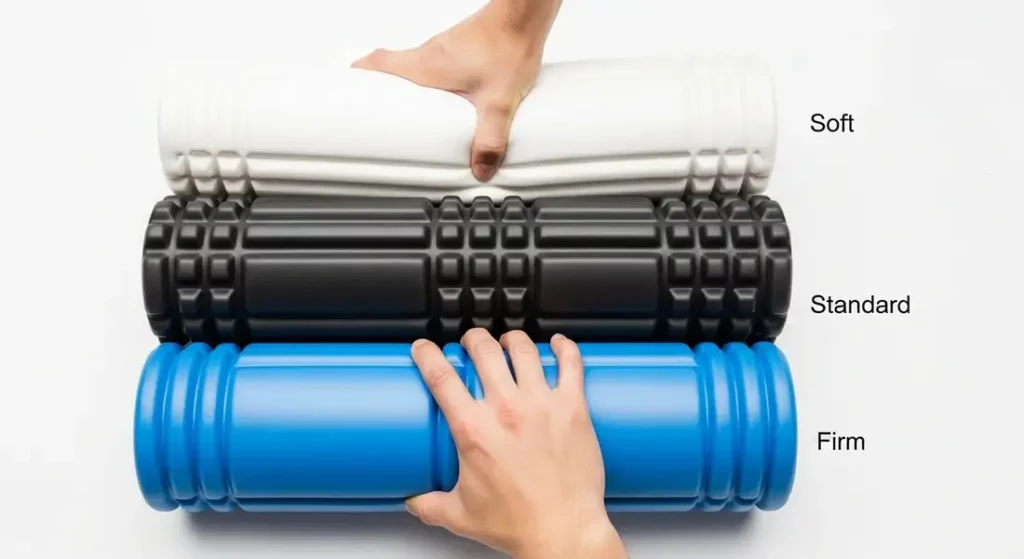
Soft Density (Low-Density) – The Gentle Giant
A soft foam roller has more “give” and provides a gentler, more comfortable massage.
It’s the ideal choice for anyone who is brand new to foam rolling or has very sensitive muscles.
- Best for: Absolute beginners, individuals with high muscle sensitivity, or for use on particularly sore muscles.
- Our Recommendation: The OPTP PRO-ROLLER Soft Foam Roller is a popular, high-quality option available on Amazon.
Standard Density (Medium) – The All-Rounder
This is the middle-of-the-road option and the most common type you’ll find.
It provides a firm enough massage to be effective on muscle knots but still has enough cushioning for comfort.
If you’re not sure where to start, a standard density roller is a safe and effective bet.
- Best for: Most users, regular exercise, both pre- and post-workout routines.
- Our Recommendation: The classic Amazon Basics High-Density Round Foam Roller offers fantastic value and is perfect for most beginners.
Firm Density (High-Density) – For the Knottiest Muscles
A firm roller provides the most intense and deepest massage.
It’s designed to tackle serious muscle knots and is best suited for experienced users, athletes, or anyone who knows they need very deep pressure to get relief.
For a beginner, this can feel too intense and even painful.
- Best for: Experienced users, athletes, and those who need deep-tissue pressure.
- Our Recommendation: The TriggerPoint GRID Foam Roller is a top-tier firm roller with a unique texture.
Smooth vs. Textured – What’s the Difference?
The surface of the roller also plays a big role in the type of massage you receive.
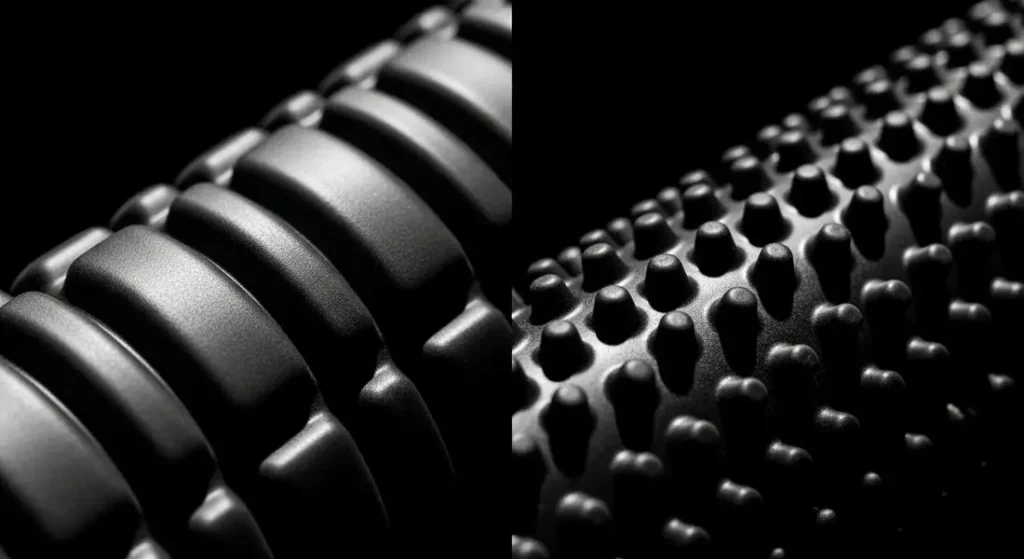
Smooth Rollers – Consistent Pressure for Beginners
A smooth surface provides even, consistent pressure across the entire length of the muscle.
This is the standard design and is highly recommended for beginners as it allows you to get used to the sensation of foam rolling without any surprisingly intense spots.
Textured Rollers (Knobs and Grids) – Targeting Trigger Points
Textured rollers have knobs, ridges, or a grid pattern on the surface.
These are designed to mimic the feeling of a massage therapist’s thumbs and fingers, providing a more targeted and intense pressure to break up specific muscle knots.
While very effective, they can be too intense for someone just starting out.
Does Size Matter? Choosing the Right Length and Diameter
Foam rollers typically come in a standard 6-inch diameter, but the length can vary significantly.
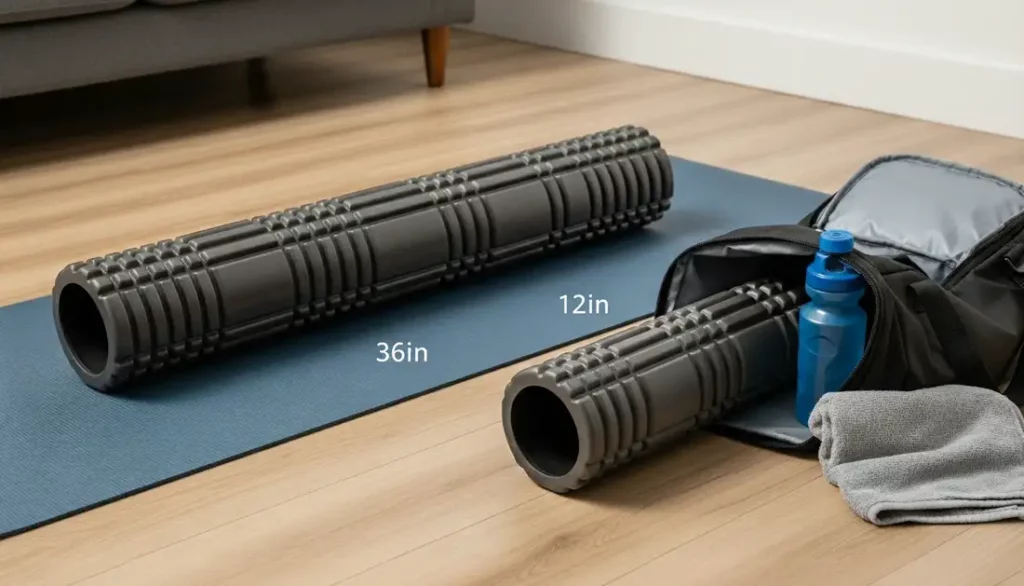
Standard Length (36 inches)
This is the most versatile option.
A 36-inch roller is wide enough to span across your entire back, making it perfect for exercises where you lie on it vertically (like for the upper back).
Its length provides excellent stability for beginners.
Shorter Lengths (12-24 inches)
Shorter rollers are fantastic for portability and travel.
They are also great for targeting smaller, more specific areas like calves, hamstrings, and arms.
However, they are less stable for back exercises.
Beyond the Cylinder – Other Myofascial Release Tools
As you get more comfortable with foam rolling, you may want to add other tools to your recovery arsenal.
- Foam Roller Balls: These are perfect for hitting small, hard-to-reach areas like the piriformis (deep in the glutes), shoulders, and feet. A massage ball set is a great, affordable addition.
- Foam Roller Sticks: A handheld muscle roller stick gives you complete control over the pressure and is excellent for massaging your quads, calves, and hamstrings without having to get on the floor.
Comparison Table – Which Foam Roller is Right for You?
| Feature | Soft Density | Standard Density | Firm Density | Textured |
| Best For | Beginners, Sensitive Muscles | Most Users, All-Purpose | Athletes, Deep Knots | Targeted Relief |
| Feel | Gentle & Cushioned | Firm but Forgiving | Intense & Deep | Varies by Spot |
| Surface | Smooth | Smooth | Smooth | Bumps & Grids |
| Goal | General Relaxation | Balanced Recovery | Deep-Tissue Work | Trigger Points |
Key Takeaways
- For Beginners: Start with a standard-density, smooth-surfaced, 36-inch foam roller. It’s the most versatile and forgiving option.
- Listen to Your Body: The goal is effective release, not unbearable pain.
- Consider Your Goals: If you travel often, a shorter roller might be a great second option.
Frequently Asked Questions
Q: What is the single best foam roller for a total beginner?
A: A 36-inch, standard-density (medium-firm) foam roller with a smooth surface is the most recommended starting point. It’s versatile, stable, and effective without being overly intense.
Q: How do I know if my foam roller is too hard?
A: If you find yourself tensing up, holding your breath, or feeling sharp pain while rolling, your roller is likely too firm. Foam rolling should be comfortably uncomfortable, not agonizing.
Q: Is a longer foam roller better?
A: Not necessarily, but it is more versatile. A 36-inch roller is better for stability and back exercises, while a shorter 12 or 18-inch roller is better for travel and targeting specific limbs.
You’ve Picked Your Roller, Now What?
Congratulations! You’ve successfully navigated the world of foam rollers and have the knowledge to pick the perfect one.
But owning the tool is only half the battle.
Using it correctly is crucial for getting results and avoiding injury.
Let’s move on to our essential guide on How to Use a Foam Roller Correctly to learn the safe and effective techniques that will unlock its full potential.