
Finished a workout and felt that satisfying-but-sore muscle ache?
Or maybe you’re feeling stiff and tight from sitting at a desk all day?
There’s a simple, effective tool that can help you feel better, move more freely, and take control of your recovery.
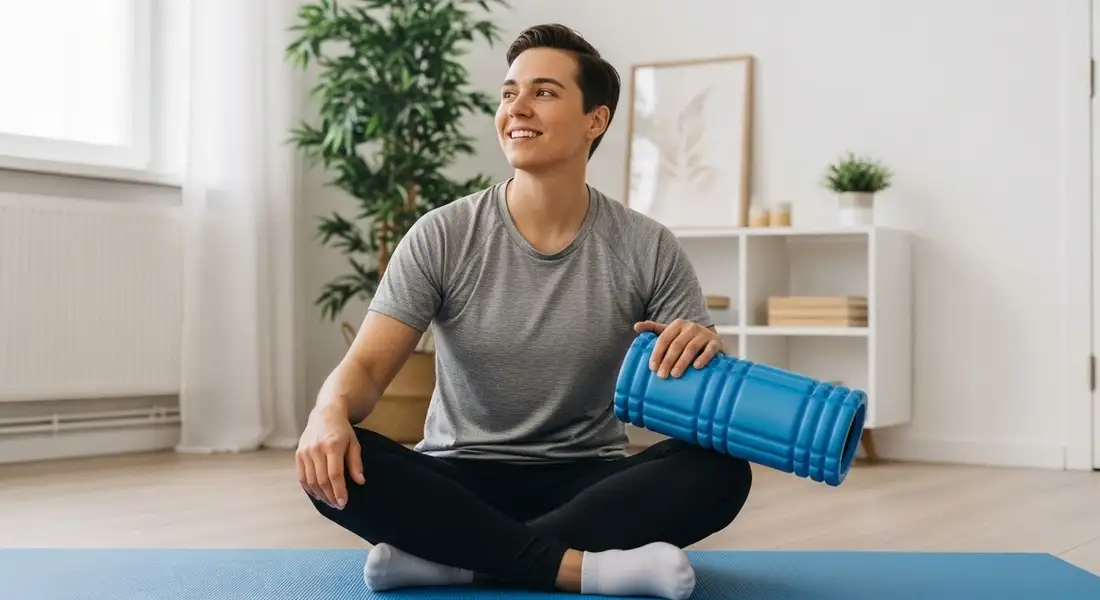
It’s called a foam roller.
A foam roller is a powerful, yet simple, tool for anyone—from fitness newcomers to seasoned athletes—to relieve muscle tightness, reduce soreness, and improve flexibility right in the comfort of their own home.
Think of it as your personal, on-demand massage therapist.
In this complete guide, we’ll walk you through everything you need to know to get started with foam rolling.
We will cover what it is, the different types available, how to use one correctly, and the best exercises for beginners to achieve optimal muscle recovery.
What is Foam Rolling and Why Should You Bother?
At its core, foam rolling is a form of self-massage, technically known as self-myofascial release.
Its main purpose is to find and release muscle knots, also called trigger points, which are tight bands of muscle that can cause pain and restrict movement.
By applying pressure to these spots, you can encourage them to release, helping your muscles relax and function properly.
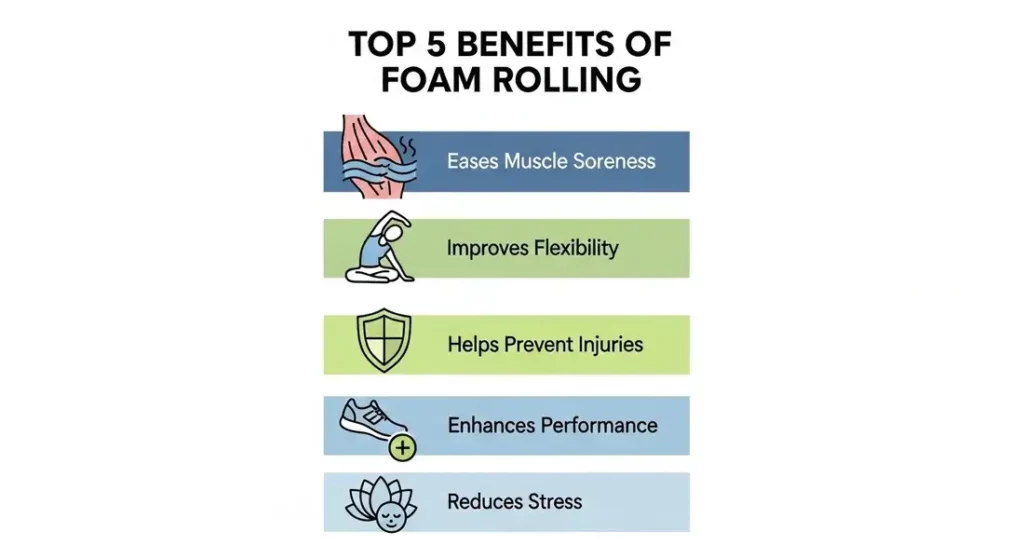
The key benefits of making foam rolling a regular habit include:
- Reduces muscle soreness and tightness
- Improves flexibility and range of motion
- Helps prevent common injuries
- Enhances athletic performance
- Aids in relaxation and stress reduction
Ready to dive deeper into the science behind it?
Learn exactly what foam rolling does for your body in our detailed guide: What is Foam Rolling and Why Should Beginners Do It?
Choosing Your First Foam Roller – A Quick Overview
Walking into the world of foam rollers can feel overwhelming at first—they come in all shapes, sizes, and colors.
But not all foam rollers are created equal. The right one for you depends on your goals, sensitivity level, and what muscle groups you plan to target.
The three key factors to consider are density (how hard or soft it is), texture (smooth or bumpy), and size (long or short).
A smooth, softer roller is perfect for absolute beginners, while a firm, textured one can provide deeper tissue work for those with more experience.
Feeling confused by the options?
Don’t worry. We’ve broken it all down for you.
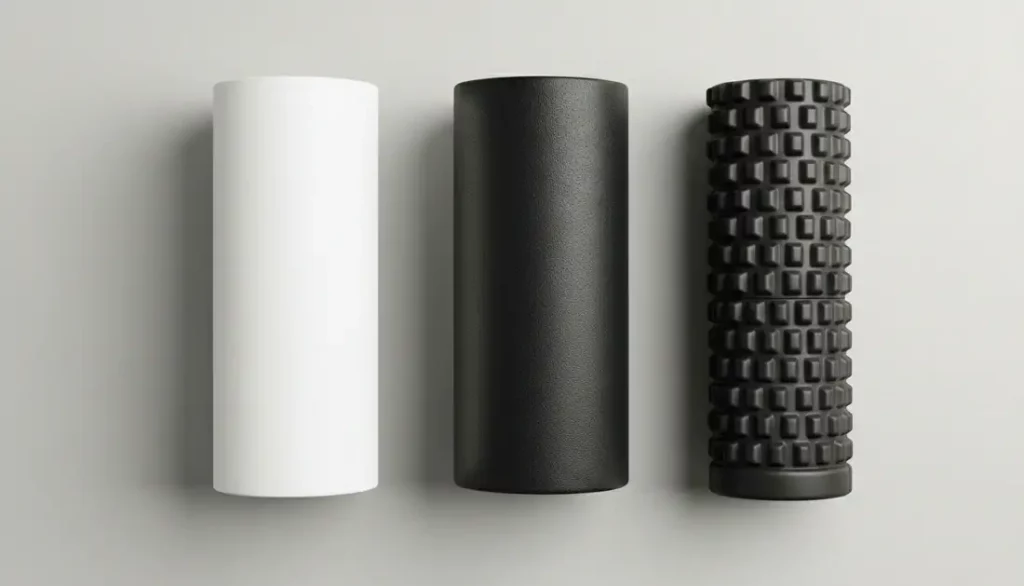
Find the perfect roller for your needs in our guide to the Types of Foam Rollers (Density, Texture, Size).
The Golden Rules – How to Foam Roll Safely and Effectively
To get the amazing benefits of foam rolling and avoid making things worse, technique is absolutely crucial.
Simply rolling up and down as fast as you can won’t get the job done.
In fact, doing it wrong can be ineffective or even cause bruising or injury.
Remember these essential tips for a safe and effective session:
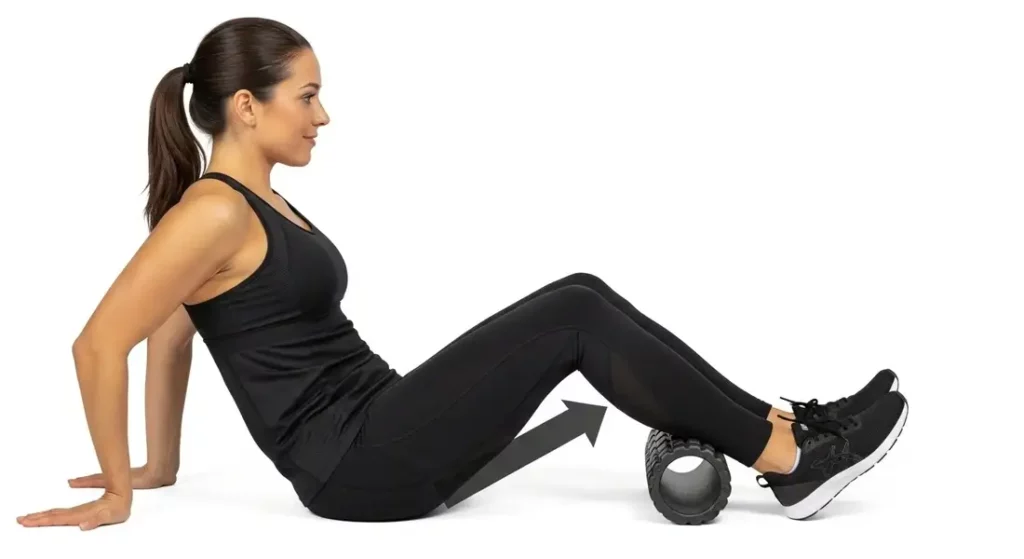
- Roll slowly and deliberately. Use short, slow rolls over the target muscle.
- Pause on tender spots. When you find a sore spot (a trigger point), hold gentle pressure on it for 20-30 seconds until you feel the tightness start to release.
- Remember to breathe. Deep, slow breathing helps your muscles relax, making the release more effective.
- Avoid rolling directly on joints or bones. Foam rolling is for muscles. Avoid your knees, ankles, lower back, and hip joints.
Mastering the basics is key to any fitness practice, including sandbag training for injury prevention.
Learn the proper techniques step-by-step in our guide on How to Use a Foam Roller Correctly.
Your First Foam Rolling Routine – Simple Exercises for Key Muscles
You don’t need a complicated, hour-long routine to feel a difference.
A few basic moves targeting the body’s major muscle groups can provide immediate relief and long-term benefits.
For beginners, it’s best to start with the large, hardworking muscles that often hold the most tension.
A great starting routine will focus on:
- Calves (especially for runners or walkers)
- Hamstrings and Quadriceps (the front and back of your thighs)
- Glutes (a major source of tightness for those who sit a lot)
- Upper Back (to counteract slouching and desk posture)
Ready to roll?
Follow our visual, step-by-step instructions in Basic Foam Rolling Exercises for Major Muscle Groups.
Common Pitfalls – Mistakes to Sidestep on Your Journey
Many beginners make the same few mistakes when starting out.
While usually not serious, these errors can reduce the effectiveness of your sessions and, in some cases, even lead to more pain and discomfort.
Two of the most common mistakes are rolling way too fast, which doesn’t give the muscle time to release, and tensing up because the pressure is too intense.
Knowing what to avoid is just as important as knowing what to do.
Ensure you’re getting the most out of every session.
Read our guide on the Common Foam Rolling Mistakes to Avoid.
Key Takeaways for Your Foam Rolling Journey
| Feature | Summary | Your Next Step |
| What It Is | A self-massage technique to release muscle tightness and knots. | [Learn the Science] |
| The Gear | Rollers vary in firmness, texture, and size to suit different needs. | [Choose Your Roller] |
| The Technique | Slow, controlled movements with focused pressure are key for results. | [Master the Technique] |
| The Moves | Start with simple exercises for large, tight muscle groups. | [See the Exercises] |
| The Cautions | Proper form prevents pain and maximizes the benefits of every roll. | [Avoid Common Mistakes] |
Answering Your Top Questions
How often should a beginner foam roll?
For beginners, starting with a 10-15 minute session, 3 to 4 times per week, is a great goal. You can foam roll on rest days for recovery or as part of your warm-up and cool-down routine. The most important thing is to listen to your body and adjust as needed.
Does foam rolling actually work?
Yes, numerous studies and fitness experts confirm that foam rolling can help increase flexibility, reduce post-exercise muscle soreness, and improve range of motion. It is a widely accepted and effective practice in both the fitness and physical therapy communities.
Can foam rolling be harmful?
When performed correctly, foam rolling is very safe. However, it can be harmful if you roll too aggressively, use a roller that is too firm for your tolerance, or roll directly over sensitive areas like your joints, the bony part of your spine, or varicose veins. Always follow proper techniques to ensure safety.
Your Next Step to a More Mobile You
You now have a complete roadmap to begin your foam rolling journey.
By understanding what foam rolling is, how to choose the right tool, and the correct way to use it, you’ve taken the first and most important step toward managing muscle soreness, improving your flexibility, and enhancing your overall well-being.
Remember, consistency is more important than intensity. A few minutes each day or every other day will yield far better results than one long, painful session per week.
Now that you have the foundation, it’s time to put this knowledge into action.
Ready to start feeling the benefits?
1. Master the Basics: Your first assignment is to dive into the specifics. Begin by exploring our complete guide on What is Foam Rolling and Why Should Beginners Do It? to truly understand the magic happening inside your muscles.
2. Explore Other Tools: While a foam roller is perfect for most situations, you might find that some stubborn knots require a more targeted approach. For those cases, we’ve created a guide to the 5 powerful foam roller alternatives that can provide a deeper tissue release.
3. Level Up Your Skills: Once you have practiced these fundamentals and are comfortable with your routine, you’ll be ready for the next level. When you are ready, check out our Foam Rolling Masterclass to Boost Mobility and Relieve Tightness