There is a dangerous and persistent myth in the fitness world: “No Pain, No Gain.”
For decades, we have been told that a “real” workout requires gasping for air, dripping in sweat, and slamming our feet against the pavement until our shins ache.
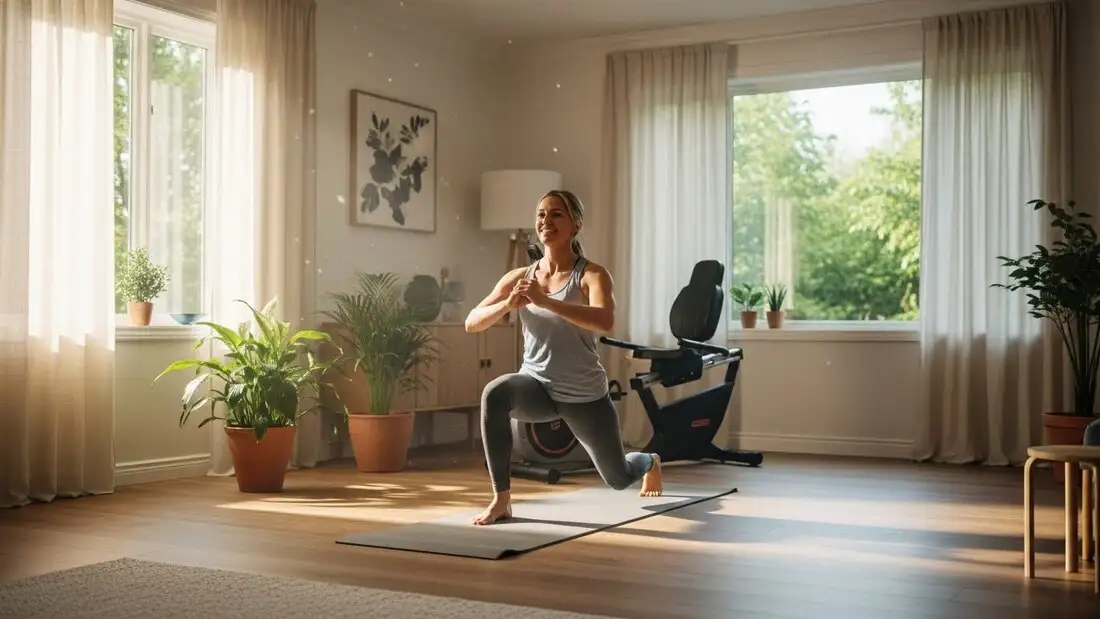
We see images of athletes jumping onto high boxes or sprinting on concrete and assume that is the only path to weight loss.
For the beginner—especially one dealing with joint pain, recovering from an injury, or simply living in a second-floor apartment—this mindset is not just discouraging; it is dangerous.
It leads to burnout, inflammation, and quitting before you even see results.
It is time to rewrite the rules.
Welcome to the world of Low-Impact Training.
This is not “lazy” exercise.
It is smart exercise.
Whether you are managing arthritis, returning to fitness after pregnancy, or you simply want to be able to walk comfortably when you are 80 years old, this guide is your blueprint.
In this comprehensive hub, we will explore how to build a gym-quality physique without ever jumping, stomping, or destroying your joints.
?️ The Low-Impact Manifesto
- Sustainability Over Intensity: The best workout is the one you can do consistently without pain.
- Protect the Chain: Low impact reduces the “ground reaction force” traveling up your ankles, knees, and hips.
- Silence is Golden: Perfect for home gyms in apartments where noise is a concern.
- Versatility: You can train using machines, bodyweight, or simple walking techniques.
Part 1 – What Exactly is Low-Impact Exercise?
Many people confuse “Low Impact” with “Low Intensity.”
They imagine a gentle water aerobics class moving in slow motion.
While that is one form, low-impact training can also be incredibly intense.
The Definition:
What qualifies as Low-Impact Exercise?
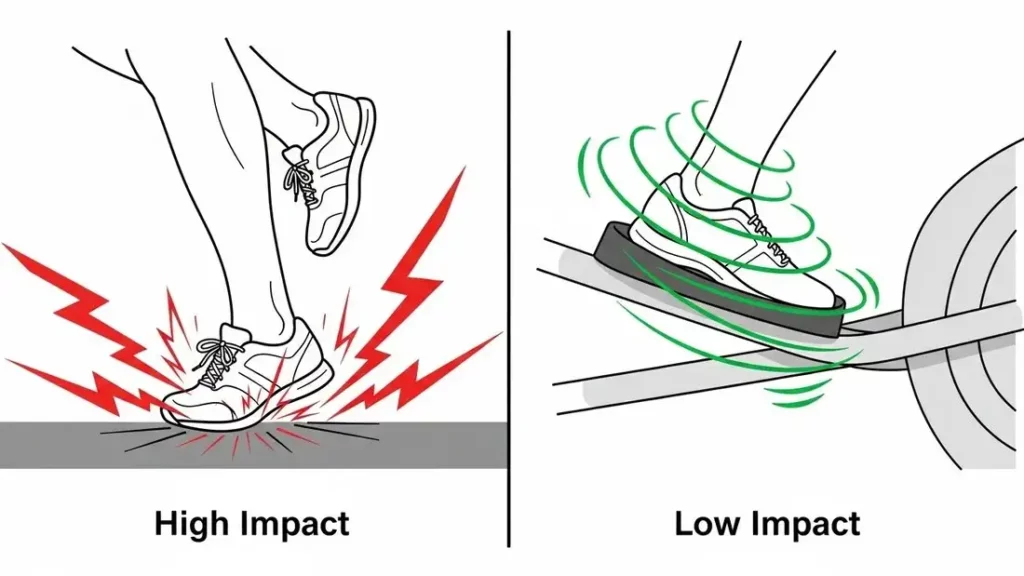
Low-impact exercise is defined as any physical activity where at least one foot remains in contact with the ground at all times. This drastically reduces the impact load (shock) absorbed by the skeletal system. “No Impact” exercises (like cycling or swimming) involve the body being supported by water or a seat, removing gravitational stress entirely.
When you run (High Impact), you are briefly airborne.
When you land, your joints absorb 2.5 to 3 times your body weight.
If you weigh 200 lbs, that is 600 lbs of force slamming into your knee with every step.
Low-impact training removes this “flight phase,” protecting your cartilage while still taxing your muscles and heart.
- Deep Dive: Want to understand the mechanics and who specifically benefits? Read our full guide: What is Low-Impact Exercise? (Hint: It’s Not Just for Seniors).
Part 2 – The “Big 3” Cardio Machines for Bad Knees
If you have the space and budget for a home gym, machines are often the safest route because they guide your movement pattern, reducing the risk of bad form.
However, not all machines are created equal.
A treadmill is generally high-impact (unless you only walk).
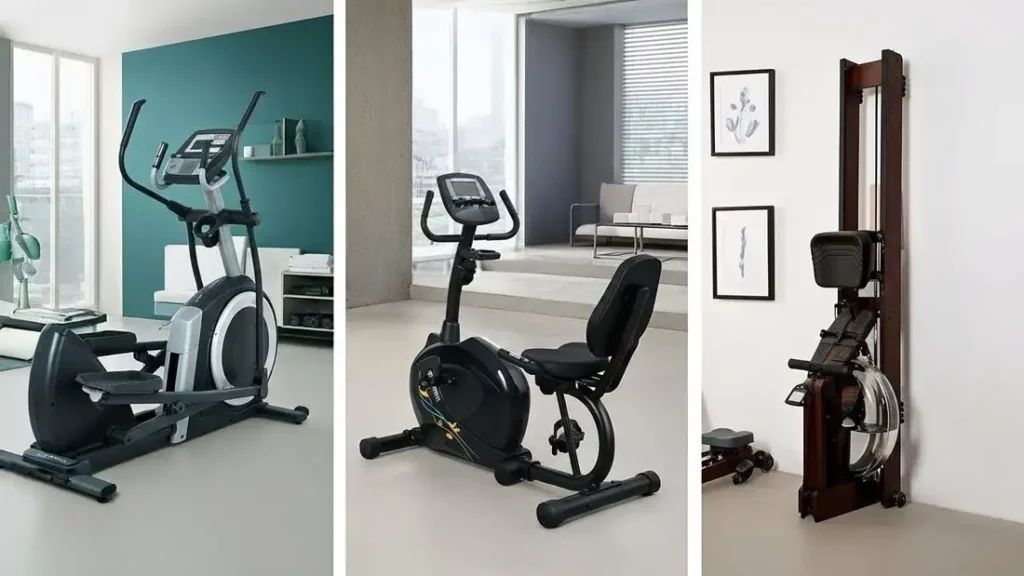
For true joint protection, we look at the “Big 3”:
1. The Elliptical Trainer
The elliptical is the runner’s best friend.
It mimics the biomechanics of a running stride—engaging the quads, hamstrings, and glutes—but your foot never leaves the pedal.
It is a “closed kinetic chain” movement, which provides stability.
2. The Recumbent Bike
Unlike a spin bike (where you hunch forward), a recumbent bike has a bucket seat with a backrest.
This takes the weight of your upper body off your hips and lower back.
It is arguably the safest piece of equipment for spinal issues.
3. The Rowing Machine
Rowing is unique.
It is a “power-endurance” sport that uses 86% of your muscles.
Because you are seated, there is zero impact on the knees, but the resistance (often air or water) allows for unlimited intensity.
- Comparison Guide: Which one should you buy? We break down the pros, cons, and prices in our buyer’s guide: Best Low-Impact Cardio Machines for Bad Knees (Elliptical vs. Bike vs. Rower).
Part 3 – Bodyweight Training (No Noise, No Gear)

You might think you need heavy weights to build muscle, or that you need to do burpees to burn fat.
Neither is true.
You can build a strong, lean physique using only your body weight, provided you focus on Time Under Tension (TUT).
By slowing down a movement (e.g., taking 3 seconds to lower yourself into a squat), you force the muscle to work harder without needing to jump or slam the floor.
The “Apartment Advantage”:
Low-impact bodyweight moves are silent. If you have neighbors downstairs, they will never hear you doing a “Glute Bridge” or a “Slow Mountain Climber.”
- Get the Routine: We have designed a “Silent Circuit” specifically for home use. Check it out here: No Jumping, No Noise – The Best Low-Impact Bodyweight Exercises.
Part 4 – Walking (The Underrated Superpower)
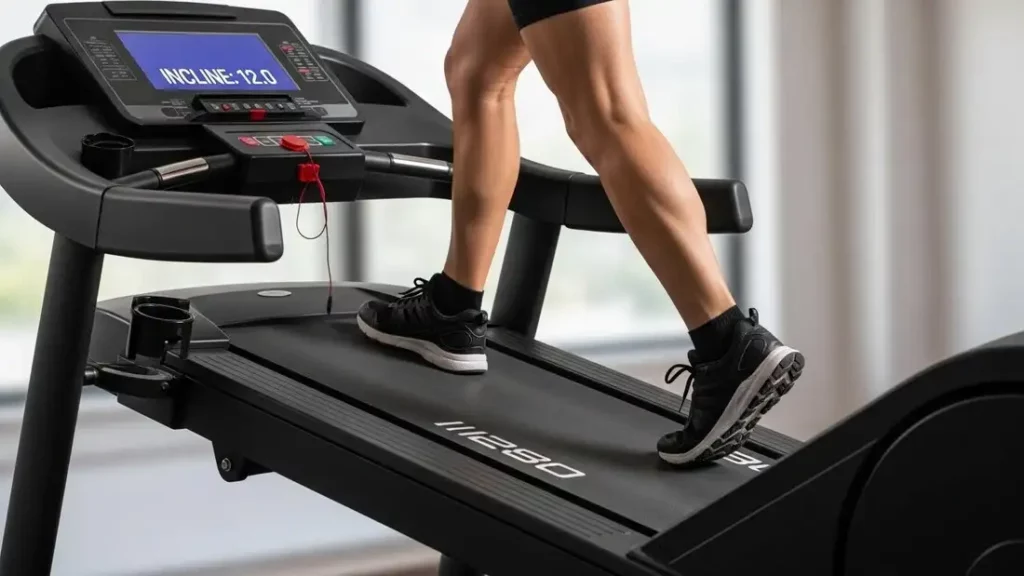
Walking is the most accessible form of low-impact exercise.
It lowers cortisol (stress hormones), aids digestion, and requires zero learning curve.
But is it a “workout”?
Yes—if you manipulate the variables.
A casual stroll burns minimal calories.
But if you add Incline (walking uphill) or Load (wearing a weighted vest), walking becomes a potent fat-burning activity that rivals running.
- The Strategy: Learn how to use “Rucking” (weighted walking) and treadmill inclines to transform your daily walk: Walking for Weight Loss – How to Turn a Daily Walk into a Workout.
Part 5 – Fluid Resistance (Bands vs. Water)
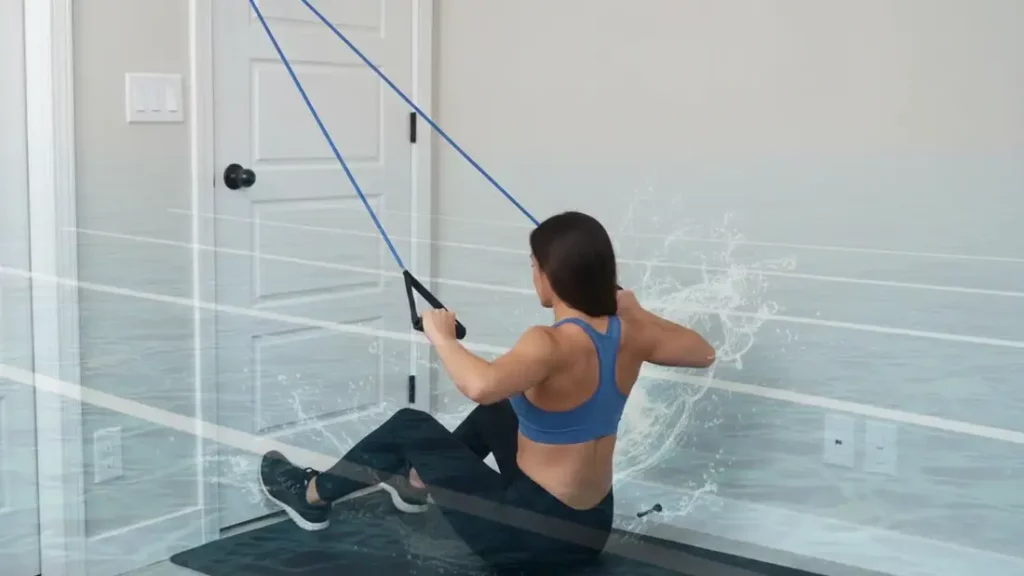
Doctors often prescribe swimming as the “perfect” exercise because water provides consistent resistance in all directions without gravity.
But most of us don’t have a lap pool in our garage.
The solution? Resistance Bands.
Bands provide “Linear Variable Resistance.”
As you stretch them, they get heavier.
The motion is smooth and fluid, much like moving through water.
There is no jerky momentum to hurt your shoulders or elbows.
- Dry Land Swimming: Learn how to use tube bands to mimic the benefits of the pool: Fluid Resistance – How to Get “Swimming” Benefits on Dry Land.
How to Structure a Beginner’s Low-Impact Week
One of the benefits of low-impact training is Frequency.
Because you aren’t beating up your joints, you can train more often than a high-impact sprinter.
Here is a sample schedule for a beginner:
| Day | Activity | Focus |
|---|---|---|
| Monday | Bodyweight Circuit | Strength & Stability |
| Tuesday | Power Walking (Incline) | Cardio Zone 2 |
| Wednesday | Active Recovery | Stretching / Foam Rolling |
| Thursday | Bodyweight Circuit | Strength & Stability |
| Friday | Machine Cardio (Rower/Bike) | Endurance |
Frequently Asked Questions (FAQs)
Q: Can I lose belly fat with low-impact exercise?
Yes. Fat loss is a result of a caloric deficit and consistent movement. A 45-minute incline walk can burn as many calories as a 25-minute run, but because it is less stressful on the body, you might be able to do it more often, leading to greater long-term results.
Q: Do I need special shoes for low-impact workouts?
While you don’t need “shock absorption” shoes like runners do, you need Stability. If you are doing bodyweight lunges or lifting, a flat-soled shoe (or even training barefoot on a non-slip mat) is often better for balance.
Q: Is yoga considered low impact?
Yes, Yoga and Pilates are excellent forms of low-impact strength training. They focus on isometric holds and flexibility, which complement the cardio methods discussed in this guide.
Conclusion – Play the Long Game
Fitness is not about how hard you can destroy yourself in 30 days; it is about how long you can maintain a healthy lifestyle.
High-impact training has its place, but for longevity, joint health, and sustainable fat loss, Low Impact is the smartest tool in your arsenal.
You are now ready to dive deeper.
Start by understanding the full definition and mechanics in our first chapter.
Ready to learn the basics?
Read Chapter 1: What Is Low Impact? →
About IndraP
IndraP is the founder of Reliable Home Fitness and a Technical Equipment Specialist. Collaborating with industry leaders like FoliageField.com, he specializes in identifying top-tier training equipment.
With unique expertise in board-level repairs and upgrades, Indra looks beyond the marketing hype to test the internal mechanics of the machines he reviews. His mission is to help you invest in gear that is safe, durable, and reliable.