
“I’d love a home gym, but I just don’t have the space.” It’s the single most common hurdle for aspiring home fitness enthusiasts.
The good news?
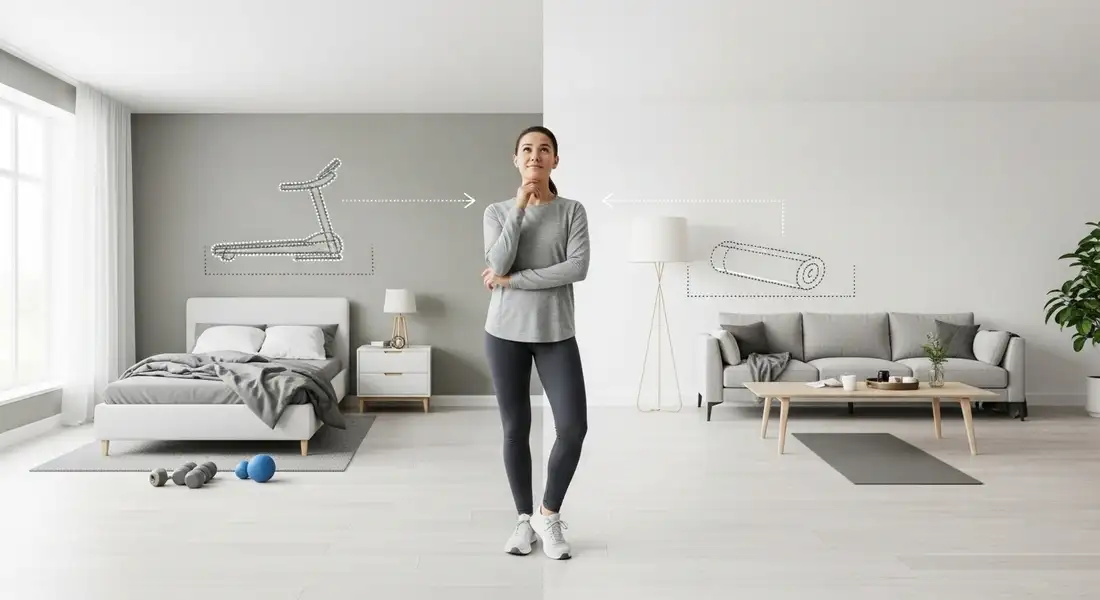
You almost certainly have more viable options than you think.
A functional and motivating workout space isn’t about having a huge, dedicated room; it’s about making smart use of the space you have.
Whether you live in a spacious house or a cozy apartment, the perfect spot for your fitness journey is waiting to be discovered.
This guide, a part of our Ultimate Beginner’s Guide to Setting Up a Home Gym, will walk you through finding the ideal location that fits your lifestyle, budget, and workout style.
Key Factors to Consider Before You Choose
Before you start rearranging furniture, take a moment to assess your potential spaces with a critical eye.
Thinking through these factors will save you headaches down the road.
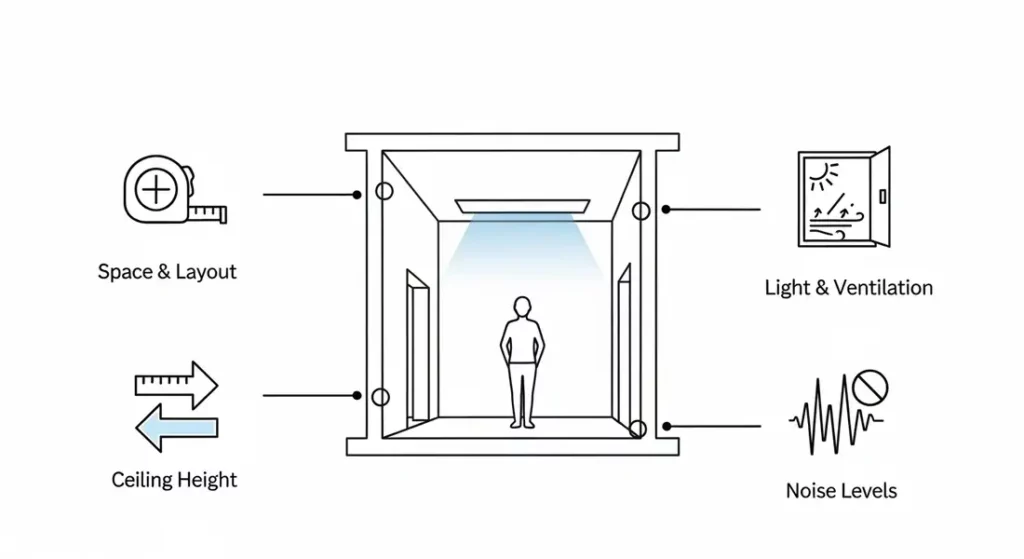
- Space & Layout: Get out the tape measure! It’s not just about whether a treadmill fits. You need room to move. Can you fully extend your arms for a jumping jack? Can you lie on the floor for a crunch? Consider the “wingspan” needed for exercises like dumbbell flys and the length for burpees or yoga poses.
- Flooring Foundation: The existing floor will influence your setup. A concrete garage floor is forgiving, but cold. Hardwood in a spare bedroom looks great but needs serious protection. This choice is crucial for safety and protecting your home, which is why we have a dedicated Home Gym Flooring Guide to help you.
- Ceiling Height: This is a non-negotiable for certain exercises. If you’re tall or plan on activities like overhead presses, jump rope, or box jumps, ensure you have adequate clearance to avoid injury. A standard 8-foot ceiling is often sufficient, but always test your full range of motion.
- Noise & Neighbors: Be a considerate neighbor—to your family and those next door. Heavy deadlifts on the second floor can sound like a thunderstorm below. If you plan on high-impact cardio or dropping weights, a ground-floor or garage location is far more suitable.
- Ventilation & Lighting: A stuffy, dark corner is incredibly demotivating. Prioritize a spot with a window for fresh air and natural light. If that’s not possible, ensure good airflow with a fan and invest in bright, energizing lighting to make the space feel inviting.
Top Home Gym Location Ideas (Pros & Cons)
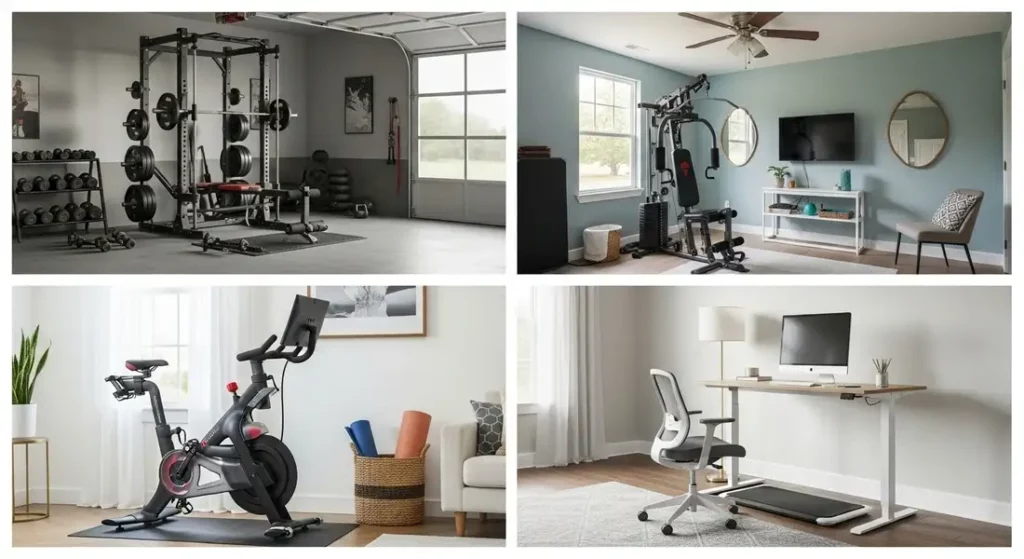
Let’s explore the most common and effective places to set up your home gym.
1. The Dedicated Spare Room
This is the dream scenario for many. It offers privacy and the ability to create a truly separate fitness environment.
- Pros: Private, secure, and can be customized completely. You can close the door and leave the “gym” behind at the end of a workout.
- Cons: Not everyone has a spare room; it can feel like a “waste” of a guest room for some families.
- Best For: Individuals who want a clear separation between their living and workout spaces and have the room to spare.
2. The Garage or Basement
A classic choice for a reason.
These rugged spaces are often perfect for more serious strength training and can handle a bit of wear and tear.
- Pros: Durable concrete floors can handle heavy drops. Noise is less of an issue. Often has ample space for larger equipment like power racks.
- Cons: Can be subject to extreme temperatures (hot/cold), dust, and pests. May require more effort to make the space feel clean and motivating.
- Best For: Heavy lifters, CrossFit enthusiasts, and anyone needing a tough, spacious, and utilitarian workout zone.
3. The Multi-Purpose Living Room Corner
This is the ultimate solution for apartment dwellers and those with limited square footage.
It proves that you don’t need a separate room to get a great workout.
- Pros: Extremely convenient and makes use of otherwise unused space. Forces you to choose compact, aesthetically pleasing equipment.
- Cons: Lacks privacy. Can make your living area feel cluttered if not organized well. Equipment is always “on display.”
- Best For: People in small apartments or homes who prioritize convenience and focus on bodyweight, yoga, or workouts with minimal, easy-to-store gear. Explore our list of Living Room Gym Equipment for great ideas.
4. The Office/Gym Combo
For the millions working from home, this is a highly efficient setup.
It provides a built-in reminder to take a fitness break during your workday.
- Pros: Super convenient for mid-day workouts. Encourages movement and helps break up long periods of sitting.
- Cons: Can be distracting. The line between “work” and “workout” can blur, making it hard to focus on either. Requires disciplined organization.
- Best For: Remote workers who want to seamlessly integrate fitness into their daily professional routine. A Desk Elliptical can be a perfect addition here.
Making it Work – Tips for Small & Shared Spaces
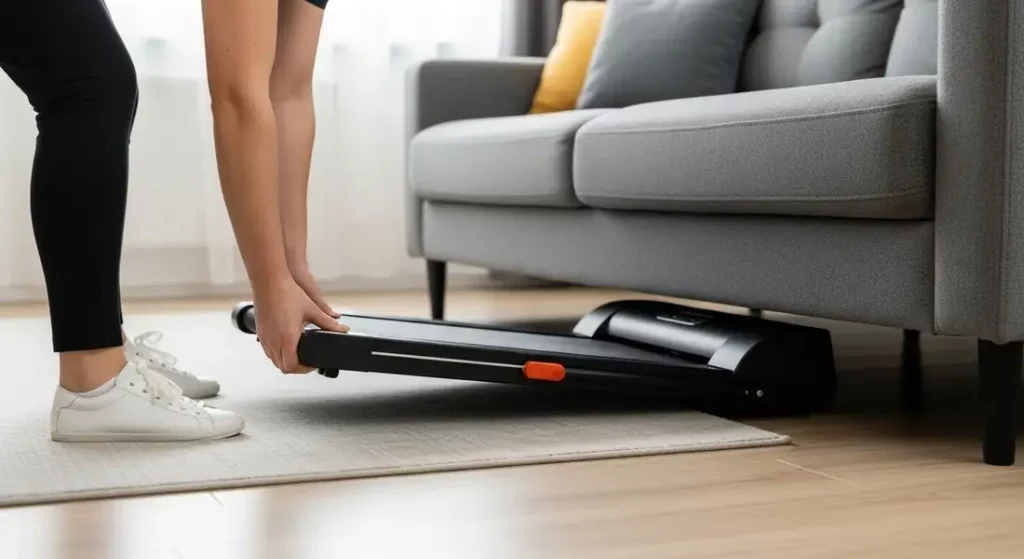
If you’re leaning towards a corner or multi-use space, don’t despair.
You can create a fantastic gym with a few clever strategies.
- Go Vertical: Your walls are untapped real estate. Use shelves or pegboards to store resistance bands, yoga mats, and foam rollers. This keeps your floor clear and your gear organized.
- Choose Foldable & Compact Equipment: This is where smart shopping pays off. Invest in Adjustable Dumbbells, which replace an entire rack of weights. Look for foldable benches, resistance bands, and other Functional Fitness Gear for Tiny Spaces.
- Define Your Zone: Create a psychological separation even in a shared room. Use interlocking gym mats to visually define the workout area. You can even use a decorative folding screen to hide equipment when not in use. This simple trick helps you mentally “enter the gym” when it’s time to train. For more inspiration, check out our dedicated guide on Home Gym Ideas for Small Spaces.
Your Perfect Spot Awaits
Ultimately, the best location for your home gym is the one you will use consistently.
Don’t get discouraged if you don’t have a “perfect” empty room.
A well-planned corner in your living room that you use every day is infinitely better than a pristine garage gym that gathers dust.
By considering your workout style, space limitations, and these practical tips, you can confidently choose a location that will serve as the foundation for your fitness success.
Now that you’ve got a location in mind, the next critical step is protecting it.
Next Step: Explore our Home Gym Flooring Guide to Choose the Best Surface for Your Workouts