When you hear that a 20-minute workout can produce better results than an hour of jogging, it is natural to be skeptical.
In the fitness industry, if something sounds too good to be true, it usually is.
However, HIIT (High-Intensity Interval Training) is the exception to the rule.
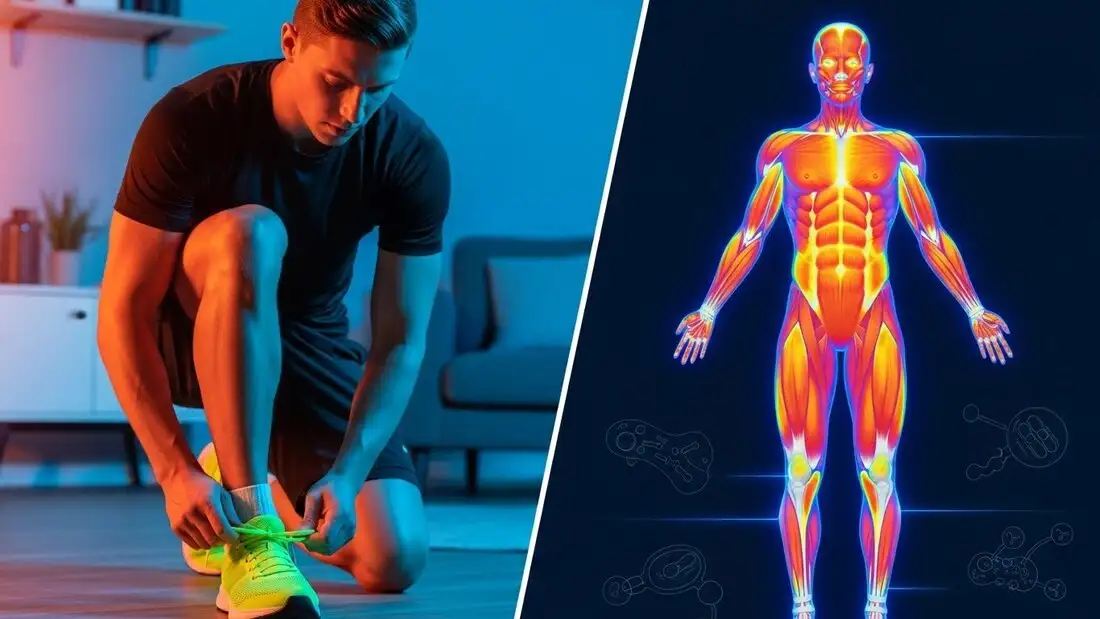
The reason HIIT has become the dominant training methodology of the last decade isn’t because of marketing hype; it is because of physiological efficiency.
It changes how your body processes energy, not just while you are moving, but for hours after you stop.
If you are a busy parent with limited time or a beginner looking for the most effective path to weight loss, understanding why HIIT works will help you stay consistent when the workouts get tough.
? Why HIIT Works (The Science)
- The “Afterburn” (EPOC): You burn calories for hours after the workout ends, not just while moving.
- Time Efficiency: Research shows you can achieve the same aerobic benefits in 50% of the time compared to steady cardio.
- Targets Visceral Fat: HIIT is scientifically proven to target stubborn belly fat more effectively than walking.
- Muscle Retention: Unlike long-distance running which can break down tissue, HIIT preserves lean muscle mass while burning fat.
1. The “Afterburn” Effect (EPOC)
What is the “Afterburn” (EPOC)?
EPOC (Excess Post-exercise Oxygen Consumption) is the physiological process where your body continues to burn calories at an accelerated rate for hours after a workout. Because HIIT creates an oxygen deficit, your body must work overtime to restore balance, keeping your metabolism elevated long after you leave the gym.
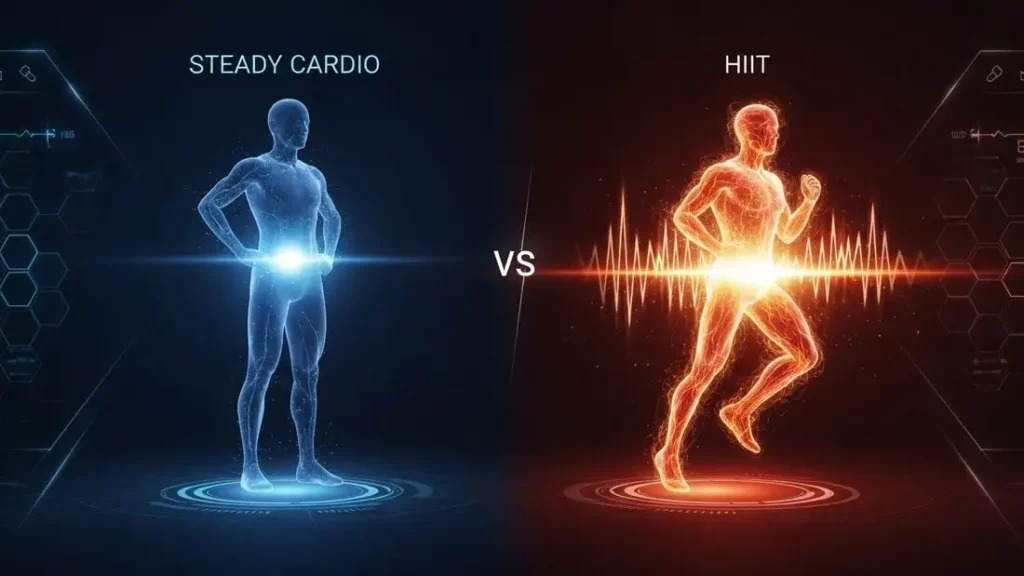
HIIT is the race.
Because you push your heart rate high (anaerobic zone) and create an oxygen deficit, your body has to work overtime after the workout to restore oxygen levels, repair muscle fibers, and clear lactic acid.
This process consumes energy (calories).
? Research Spotlight
“A comprehensive review published in the National Institutes of Health (NIH) database confirms that HIIT protocols led to a 28.5% greater reduction in total fat mass compared to moderate-intensity cardio, all while requiring significantly less time.”
2. It Targets “Visceral” Fat
Not all body fat is created equal.
Visceral fat is the fat stored deep inside the belly, surrounding your organs.
It is the most dangerous type of fat for heart health and often the hardest to lose.
Steady-state cardio (like walking) is good for burning general calories, but HIIT triggers a hormonal response (releasing adrenaline and norepinephrine) that specifically helps mobilize fat stores for energy.
Tracking Your Progress
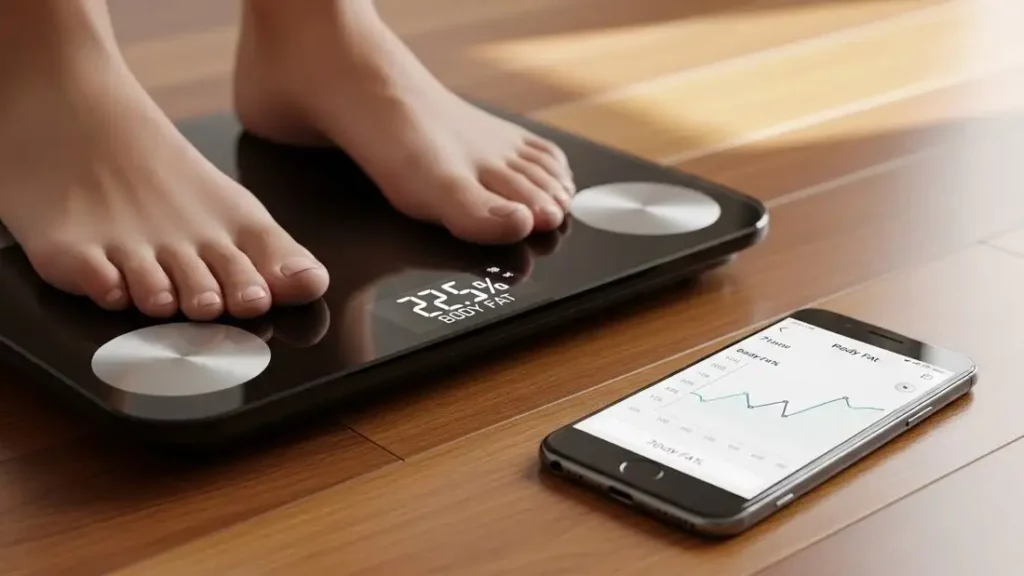
Because HIIT builds muscle while burning fat, the number on a standard bathroom scale might not move as fast as you want.
We highly recommend focusing on body composition instead.
- Product Recommendation: Consider using a smart scale like the RENPHO Smart Body Fat Scale. It syncs with your phone to track body fat percentage and muscle mass, giving you a truer picture of your health than just weight alone.
3. It Fits into a Busy Schedule (Time Efficiency)
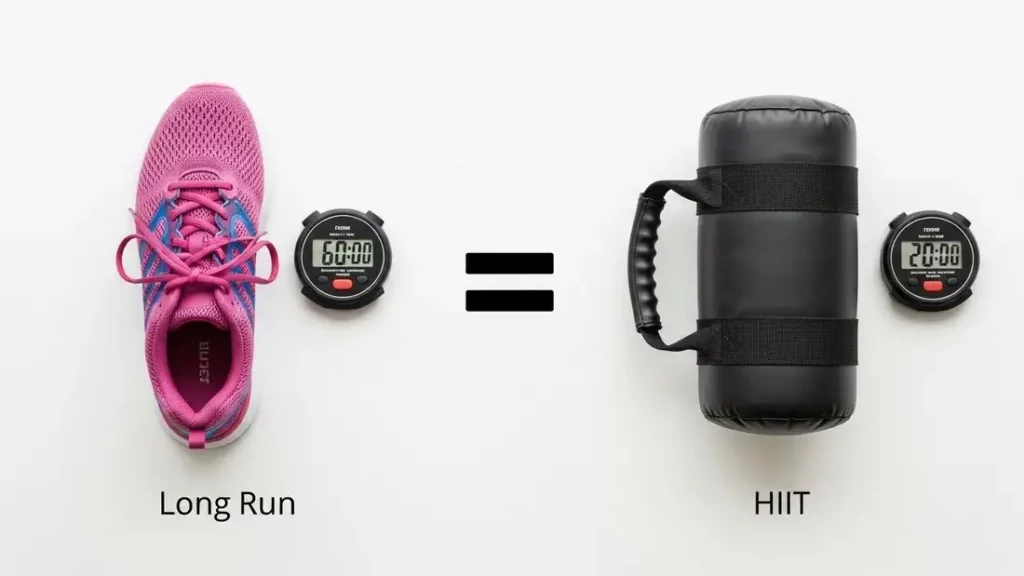
This is the benefit that matters most to busy parents and professionals. You do not need an hour.
A 2014 study demonstrated that just 30 minutes of HIIT three times a week produced the same cardiovascular and metabolic improvements as 60 minutes of steady cardio five times a week.
- The implication: You can get hours of your life back every week without sacrificing your health.
- Related: Cardio for Weight Loss – Best Home Equipment Options
4. You Keep Your Muscle (No “Skinny Fat” Look)

One of the downsides of excessive long-distance running or extreme dieting is muscle loss.
Your body creates a catabolic (breakdown) environment.
HIIT, however, recruits Type II (Fast Twitch) muscle fibers.
These are the fibers responsible for strength and power.
By engaging these fibers, HIIT stimulates muscle maintenance.
- Sandbag Training: To maximize this benefit, adding resistance is key.
5. Improved V02 Max (Heart Health)
VO2 Max is the maximum amount of oxygen your body can utilize during exercise.
It is widely considered the best indicator of cardiovascular fitness.
Traditionally, it was thought that only long endurance training improved VO2 Max.
However, research shows that HIIT improves VO2 Max just as well, if not better, because it forces the heart to pump at near-maximum capacity for short bursts.
6. No Equipment Necessary (But Scalable)
The barrier to entry for HIIT is zero. Sprinting in place, burpees, and lunges cost nothing.
This makes it the ultimate budget-friendly workout.
However, as you get fitter, you can introduce tools to keep the intensity high without high-impact jumping:
- Kettlebells: For swings.
- Rowing Machines: For full-body, low-impact sprints.
7. Metabolic Flexibility (Insulin Sensitivity)
HIIT helps your body become more “Metabolically Flexible.”
This means your body gets better at switching between burning carbs (sugar) for fuel and burning fat for fuel.
Regular HIIT training has been shown to reduce blood sugar levels and improve insulin resistance, which is vital for preventing type 2 diabetes.
Common Questions
Common Questions About HIIT Science
Q: How long does the “Afterburn” last?
Studies suggest EPOC can elevate metabolism for 12 to 24 hours post-workout, depending on how intense the session was.
Q: Will I lose muscle doing HIIT?
No. Because HIIT uses explosive movements, it recruits Type II muscle fibers (growth fibers), helping you retain muscle while burning fat.
- Product Recommendation: A dedicated tracker like the Garmin Forerunner 55 or a simple Polar H10 Chest Strap will visualize your zones, ensuring you actually worked hard enough to earn the afterburn.
Conclusion
The science is clear: HIIT is efficient, effective, and excellent for metabolic health.
It is the perfect solution for anyone who wants to maximize their results in the minimum amount of time.
But knowing why it works is only half the battle.
Now you need to know how to build a workout that fits your level so you don’t burn out on day one.
Next Step: Learn the perfect ratios for your first workout in our guide: