
You know what HIIT is, and you know why it works.
Now comes the practical part: How do you actually do it?
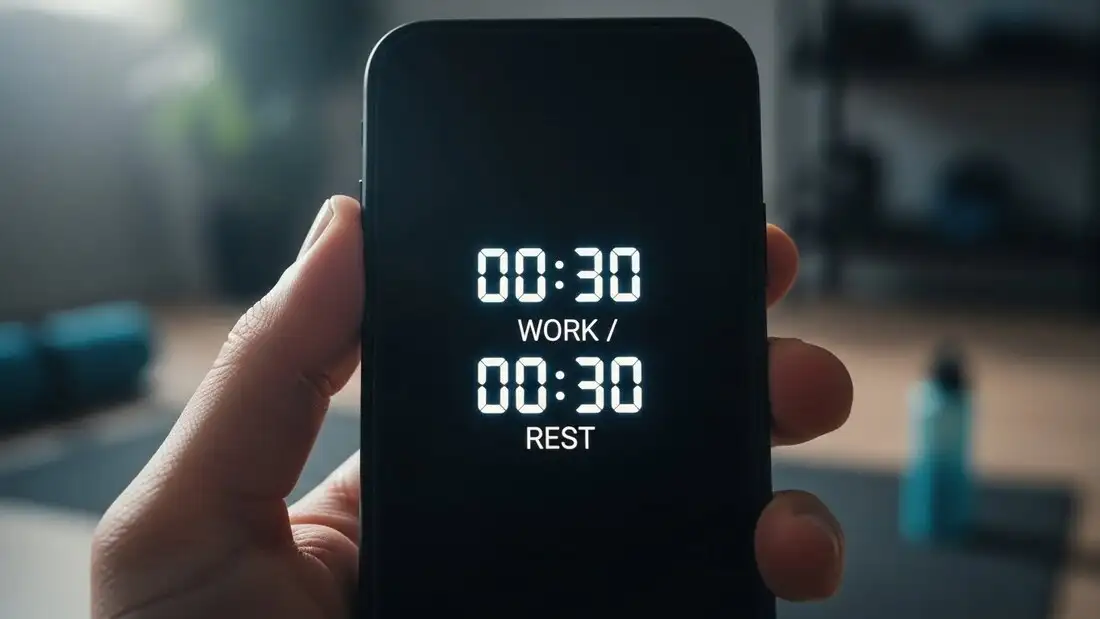
One of the biggest hurdles for beginners is “Analysis Paralysis.”
You stand in your living room, ready to work out, but you don’t know how long to run, how long to rest, or which exercises to pair together.
The beauty of HIIT is its structure.
Unlike a generic gym session where you might wander from machine to machine, HIIT is governed by the clock.
Once you understand the Work-to-Rest Ratio, you can turn any exercise—from burpees to elliptical gliding—into a fat-burning workout.
In this guide, we will break down the math of intervals, helping you design a routine that matches your fitness level.
⏱️ Key Takeaways – Structure
- The Ratio Rules All: Your fitness level determines your math. Beginners need more rest than work to stay safe.
- The 1:2 Ratio: This is the Gold Standard for starting out (e.g., 30s work, 60s rest). It allows your heart rate to recover fully.
- Active Recovery: What you do during the “rest” is vital. Never sit down; keep moving to clear lactic acid.
- Timer Tools: Don’t count in your head (you will count too fast!). Use technology to keep you honest.
Step 1 – Choose Your Ratio (The Math)
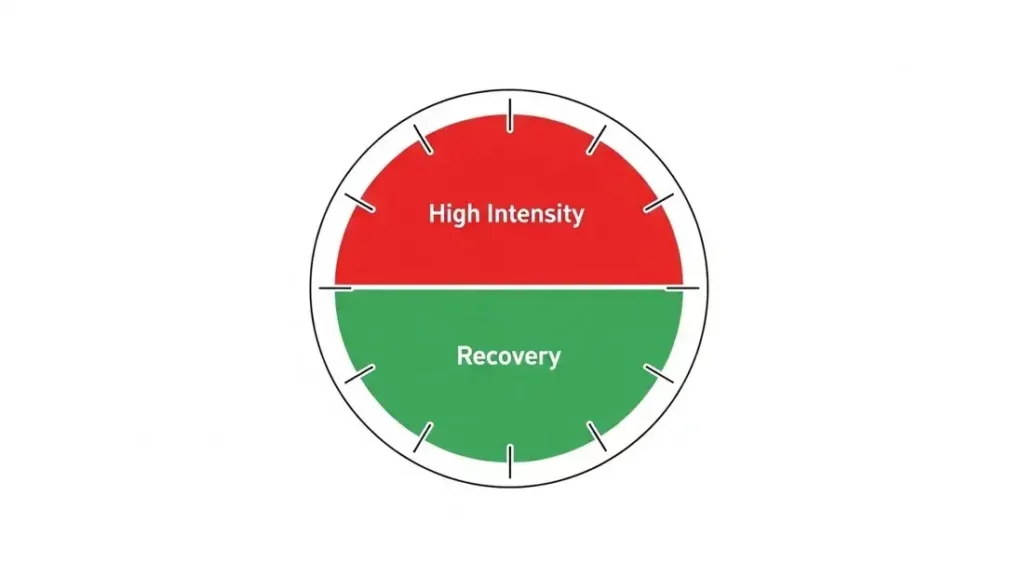
The “Ratio” is simply the comparison of time spent working (High Intensity) versus time spent recovering (Low Intensity).
The Beginner Ratio (1:2 or 1:3)
- The Formula: For every second of work, you take two or three seconds of rest.
- Why: Your heart needs time to recover efficiently so you can push hard again on the next set. If you rest too little, your intensity drops, and it just becomes a sloppy cardio session.
- Example: 30 Seconds Sprint / 60 Seconds Slow Walk.
The Intermediate Ratio (1:1)
- The Formula: Equal work and rest.
- Why: This is the standard for most fitness classes. It keeps the heart rate elevated throughout the entire session.
- Example: 30 Seconds Burpees / 30 Seconds Rest.
The Advanced / Tabata Ratio (2:1)
- The Formula: Twice as much work as rest.
- Why: This is often called the “Tabata” protocol (20s work / 10s rest). It is extremely taxing and generally not recommended for beginners until they have built a solid aerobic base.
Step 2 – Choose Your Movements
You don’t need complicated choreography.
In fact, simple movements are safer because fatigue makes you clumsy.
You can perform HIIT using:
- Bodyweight: Squats, Lunges, Pushups, High Knees.
- Weighted Implements: Using a Sandbag is fantastic for HIIT because it forces your core to stabilize the shifting weight.
- Cardio Machines: Rowing machines and Ellipticals are ideal because you can switch speeds instantly.
Step 3 – The Timer (Don’t Count in Your Head)
? The “No-Phone” Rule
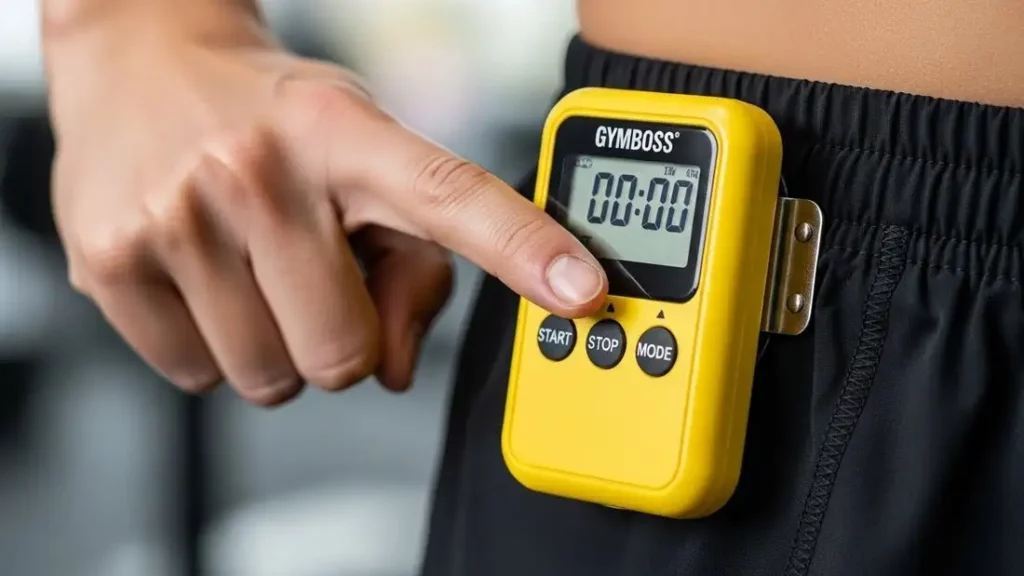
Don’t use your phone stopwatch. Texts and notifications will distract you, ruining your intensity. We recommend a dedicated clip-on device like the Gymboss Interval Timer. It vibrates on your hip, so you never have to look at a screen.
You cannot focus on your intensity if you are staring at a clock or counting “1… 2… 3…” in your head.
You will inevitably count faster when you are tired.
The Solution: Use an interval timer.
- The Classic Choice: The Gymboss Interval Timer. It is a small, pager-sized device that clips to your waistband. It vibrates or beeps when it’s time to switch. It’s cheap, durable, and keeps you off your phone (so you don’t get distracted by texts).
- The Visual Choice: If you have a garage gym, a wall-mounted LED timer like the GymNext Flex Timer allows you to see the countdown from across the room, which is helpful if you are doing movements like rowing or pushups.
Sample Beginner Routine (The 1:2 Model)
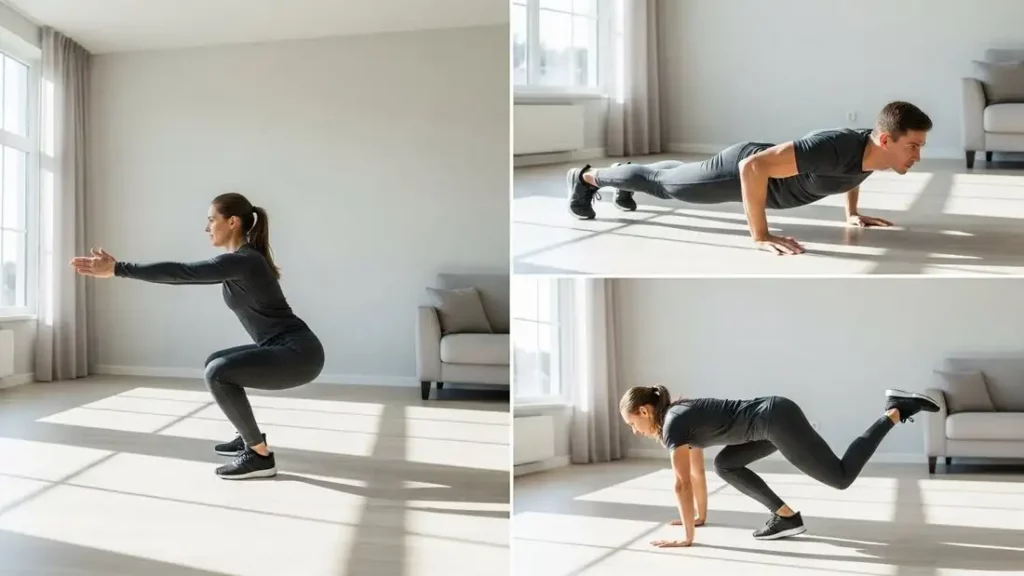
Here is a 15-minute workout you can do right now.
- Warm Up: 3 Minutes (Light jogging, arm circles).
- The Workout: Perform the following circuit 3 times.
- Cool Down: 3 Minutes (Static stretching, foam rolling).
The “Rest” Period – What Do I Do?

“Rest” does not mean sitting on the couch scrolling Instagram.
It means Active Recovery.
- Keep Moving: Walk slowly in circles. If you sit down, blood pools in your legs, which can cause dizziness when you stand up.
- Control Your Breath: This is the secret to endurance. Use nasal breathing to calm your nervous system.
How to Progress
How do you know when to move from Beginner (1:2) to Intermediate (1:1)?
- The Indicator: If you finish your 60-second rest period and feel like you have been waiting around for too long, it’s time to shorten the rest.
- The Method: Next workout, try 30 seconds of work and 45 seconds of rest. Slowly chip away at the rest time until you reach 1:1.
Conclusion
Structuring a HIIT workout is not rocket science.
It is simple math.
By sticking to a ratio, you ensure that every workout is measurable and effective.
You don’t need to guess if you had a “good workout”—the timer tells you the truth.
Now that you have the plan, do you have the right tools? While bodyweight is great, the right equipment can make HIIT more fun and effective.
Next Step: Discover the best gear for your home gym in our guide