
Disclosure: As an Amazon Associate, I earn from qualifying purchases. This technical audit contains affiliate links which support our research at no cost to you.
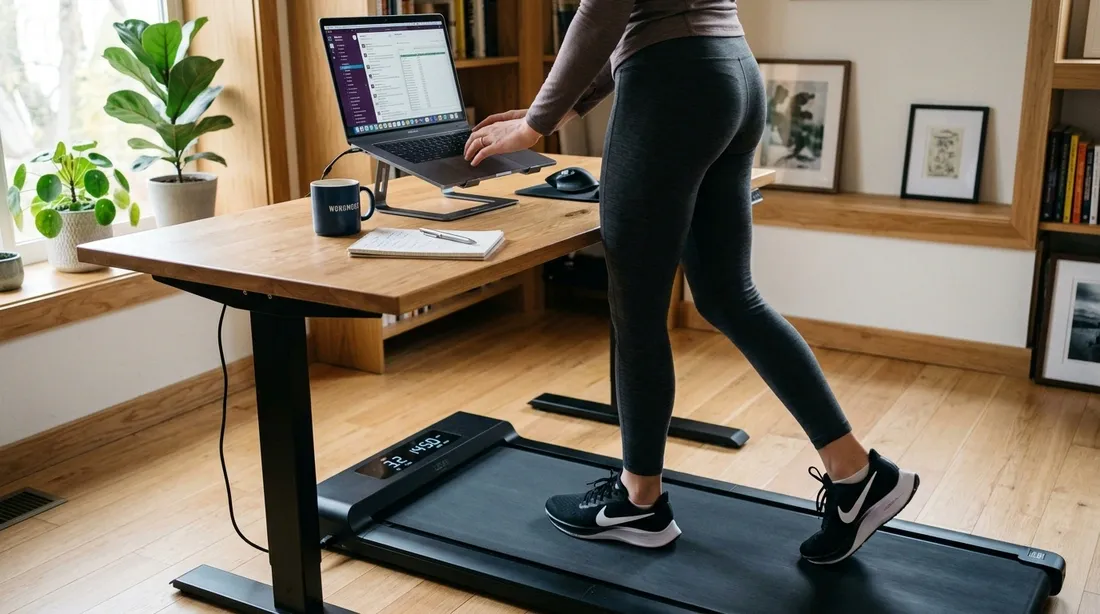
Abstract: Remote workspaces face a major challenge in metabolic rate decline.
Using a passive movement system can offset postural decay and keep your energy levels steady.
This audit compares the biomechanics of walking pads and under-desk cycles.
We analyze joint stress, focus capacity, and the leading equipment solutions for home office use.
1.0 Biomechanical Stress & Joints
Under-desk treadmills offer a low-speed walking pattern.
This involves weight-bearing movement, which helps keep bones strong.
However, it requires constant spinal stabilization during motor changes.
Under-desk cycles offer a non-weight-bearing pedaling motion.
This is highly protective of compromised knee and hip structures.
It maintains lower limb circulation without adding compression stress.
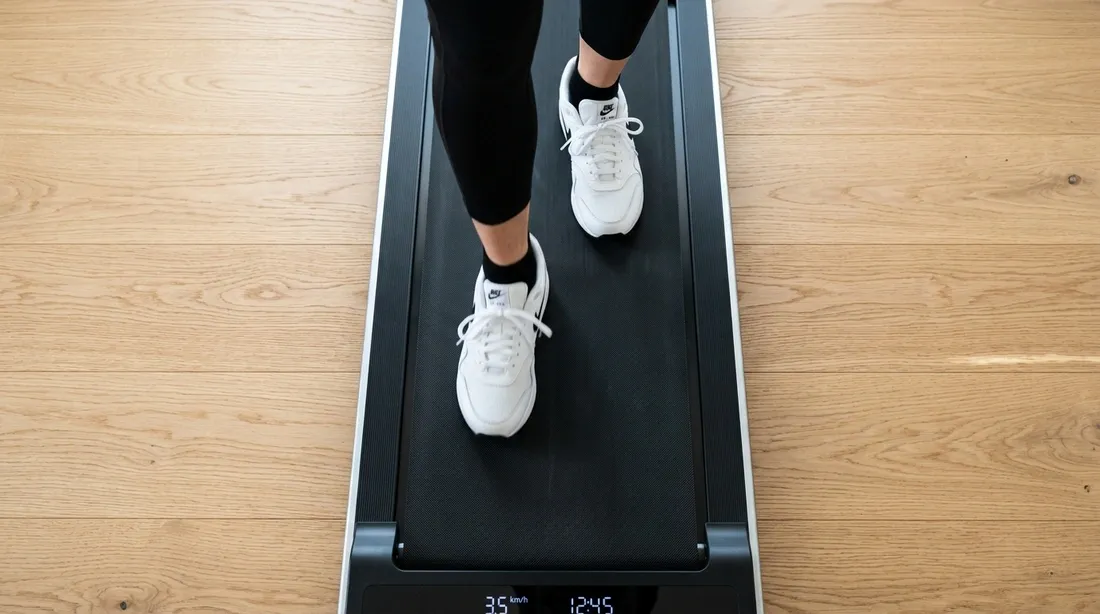
Walking pads are highly effective at burning calories during the workday.
They engage the entire posterior chain, including your glutes and calves.
2.0 Cognitive Loading and Task Interference
The choice between walking and cycling depends heavily on your daily tasks.
Walking requires active balance, making typing difficult at speeds above 2.0 MPH.
It is best used for passive tasks like attending video meetings or reading emails.
Cycles keep your upper body completely stable.
This allows for steady typing and deep concentration during complex work.

Under-desk cycles are quiet, smooth, and easily fit under standard-height desks.
They provide consistent blood flow with zero impact on your back or neck.
3.0 Technical Specification Comparison
| Performance Metric | Walking Pad Treadmill | Under-Desk Cycle |
|---|---|---|
| Primary Biomechanical Action | Weight-bearing gait | Circular rotational pedaling |
| Average Calorie Output | 180-250 kcal/hour | 100-170 kcal/hour |
| Noise Rating (Decibels) | 45-55 dB | 35-45 dB |
| Space Footprint Required | High (Needs standing desk) | Low (Fits standard desk) |
4.0 Target Profile Match Analysis
Choose a Walking Pad If:
- You already have a height-adjustable standing desk.
- Your main goal is weight loss and high daily step counts.
- You have storage space under a bed or sofa for a flat treadmill.
Choose an Under-Desk Cycle If:
- You work at a fixed-height standard office desk.
- You type constantly and need complete upper-body stability.
- You need a low-impact option to protect sensitive knees.
5.0 Daily Usage & Maintenance Tips
To ensure long-term mechanical reliability, both systems require basic care.
Walking pads require periodic silicone lubricant application under the belt to prevent motor strain.
For mini cycles, ensure you tighten the pedal bolts regularly to avoid structural squeaking.
6.0 Technical FAQ
Yes, but you may slide backward. Most cycles include tether straps or wheel casters to keep your chair locked in place.
Walking pads are thinner, lighter, and limited to lower speeds (typically 4.0 MPH max). Regular treadmills are larger and built for running.
The DeskCycle 2 uses silent magnetic resistance, registering under 40 decibels. Walking pads make a quiet whirring noise but are usually not picked up by noise-cancelling microphones.
