
In my years of working with complex electrical systems, I’ve learned one universal truth: if you don’t allow a system to cool down and reset, it eventually blows a fuse.
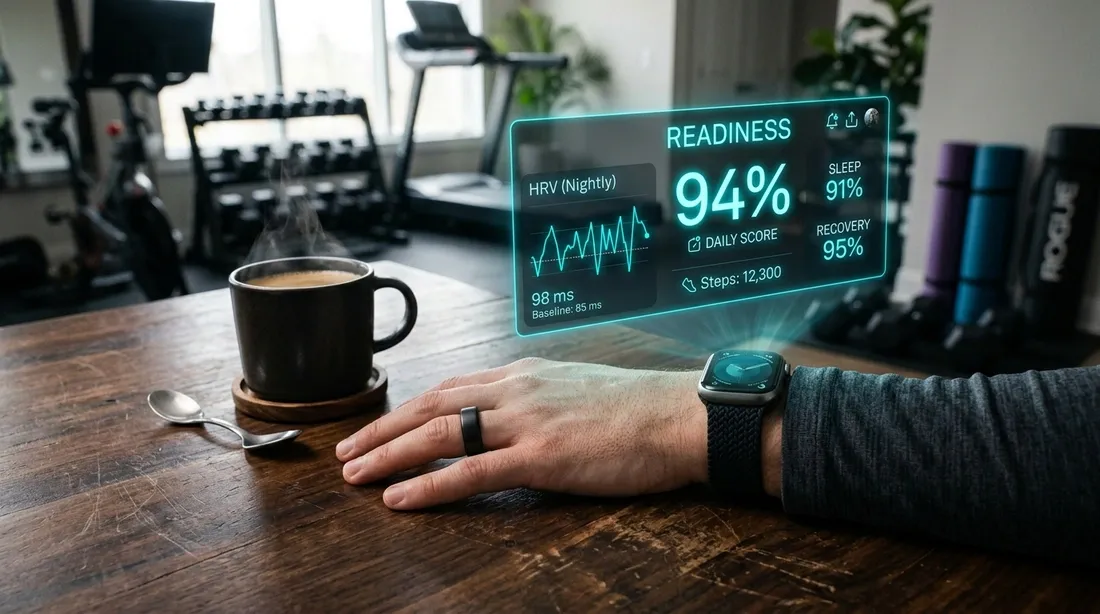
For the modern home athlete—whether you are a 40-year-old professional balancing a high-stress job or a senior focused on longevity—your “fuse” is your Central Nervous System.
If you only track your workouts but ignore your recovery, you are only seeing half the blueprint.
This is a core component of our Modern Guide to Tracking Fitness Progress.
In This Guide:
💡 What is a Fitness Readiness Score?
A Readiness Score is a calculated metric provided by premium wearables that combines Heart Rate Variability (HRV), Sleep Quality, and Previous Activity. It tells you how prepared your body is for physical stress on a scale of 0 to 100. For home fitness enthusiasts, tracking this score prevents injury and ensures that you only perform high-intensity workouts when your “Internal Hardware” is fully repaired and ready for the load.
🤖 Predictive Telemetry – The 24-Hour Head Start
Readiness tracking has evolved from ‘What happened yesterday?’ to ‘What is happening inside right now?’
- Illness Detection: A sudden drop in HRV (20% or more below baseline) combined with a 1-degree rise in skin temperature is a technical ‘Early Warning.’ Your system is diverting resources to fight an infection.
- Stress Ingestion: Premium wearables now categorize ‘Strain.’ They can distinguish between the physical load of your Exercise Bike and the ‘System Latency’ caused by a high-stress work meeting.
IndraP’s Advice: If your AI dashboard flags a ‘Critical Recovery’ state, it’s not a suggestion—it’s a fail-safe. Ignore it, and you’re scheduling an injury for next week.
HRV – The Internal Language of Your Heart

Most beginners think a steady, rhythmic heart rate is a good sign.
From a scientific standpoint, it’s the opposite.
Heart Rate Variability (HRV) measures the variation in time between each heartbeat.
- High HRV: Your nervous system is balanced and flexible (Ready to train).
- Low HRV: Your body is under stress, either from a previous session on your Home Exercise Bike or external life stress (Needs rest).
Understanding this is why Rest Days are Secretly Your Most Productive Workouts.
Without tracking HRV, you are just guessing if you are recovered.
✅ Why Professionals & Seniors Need Recovery Tracking
- Stress Management: Your body cannot distinguish between “Work Stress” and “Workout Stress.” Tracking prevents your home gym from adding to your burnout.
- Efficiency: Why spend an hour on an Indoor Rowing Machine if your body is too fatigued to burn fat effectively?
- Health Monitoring: Sudden drops in HRV or Readiness often predict a cold or flu 24 hours before you feel symptoms.
Sleep Tracking as a Performance Metric

Sleep is the “System Restore” phase of your day.
Modern trackers now use Breathing Analysis to determine if you are actually entering Deep and REM sleep stages.
If your tracker shows low REM sleep, your “Software” (cognitive function) is lagging.
If it shows low Deep sleep, your “Hardware” (muscles) is not repairing.
IndraP’s Technical Note – The HRV “Signal Path”

When I troubleshoot a circuit, I look for “jitter” in the signal.
HRV is essentially biological jitter—and in this case, jitter is a sign of a healthy, adaptive system.
🛠️ Technical Specialist’s Note: Diagnosing “Signal Noise”
“When I troubleshoot a circuit, I look for ‘Transient Spikes’—noise that shouldn’t be there. In biofeedback, your HRV signal is highly sensitive to ‘Environmental Noise.’ I often see beginners panic over a low Readiness Score that was actually caused by a ‘Process Error’:”
- The Alcohol Spike: Even one drink causes your heart rate to ‘Redline’ all night. It creates massive signal noise and tanks your HRV, meaning no repair is happening.
- Thermal Loading: If your sleeping environment is too hot, your ‘Cooling System’ (heart) has to work harder, leaving no power for Muscle Recovery.
- Digestive Latency: Eating a heavy meal within 3 hours of sleep forces blood to the gut instead of the muscles. Your ‘Readiness’ will be low because the system was ‘Busy’ elsewhere.”
— IndraP
The Best Premium Trackers for Recovery Data
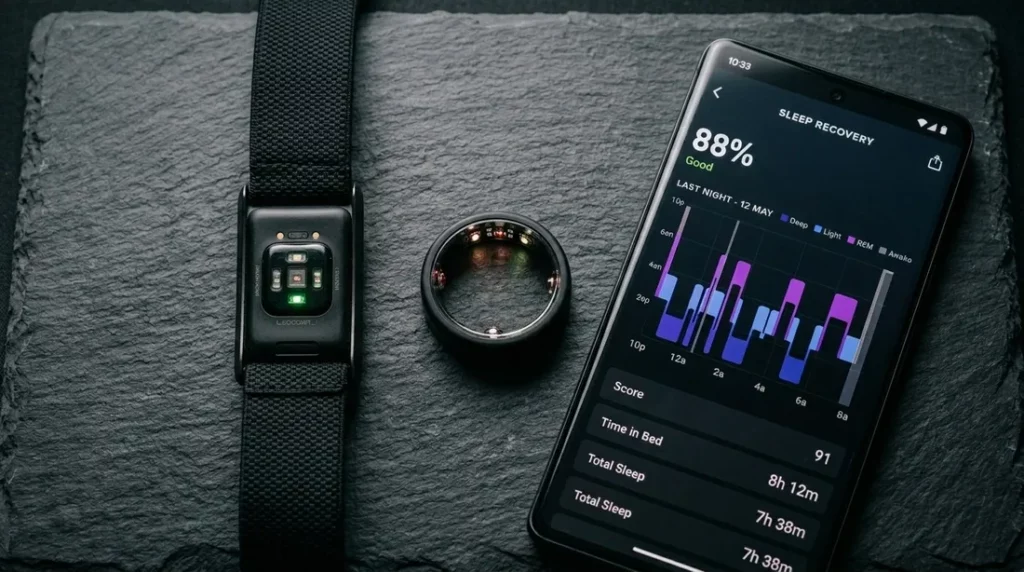
If you want to stop guessing and start measuring, these two devices are the industry leaders in quantifying “Readiness.”
🏆 The “Gold Standard” Ring – Oura Ring Gen 4
Why it matters: This is the most discreet way to track recovery. It focuses heavily on sleep and readiness scores, making it perfect for professionals who want the data without wearing a bulky sports watch to the office.
💎 The Athlete’s Choice – WHOOP 4.0 / 5.0
Why it matters: WHOOP doesn’t even have a screen. It is designed to be a 24/7 data collector that tells you exactly how much “Strain” you can handle today based on your recovery from yesterday.
Frequently Asked Questions
Q: Should I workout if my Readiness Score is low?
If your score is below 40, consider it a “Maintenance Day.” Skip the heavy Strength Training and opt for light stretching or walking. Pushing through a low score often leads to a “flat” performance and increased injury risk.
Q: How long does it take for my tracker to learn my baseline?
Most premium devices require 14 to 30 days of consistent wear (especially during sleep) to establish your unique baseline. During this “calibration phase,” your readiness scores may fluctuate as the AI learns your body’s specific stress response.
🚀 The Morning Diagnostic: Your Go/No-Go Protocol
- 🔳 Readiness 80-100 (Green Light): All systems nominal. This is the day for HIIT Sessions or testing your strength limits.
- 🔳 Readiness 50-79 (Yellow Light): System is functional but slightly taxed. Focus on ‘Maintenance Volume’—don’t try to set a Personal Best.
- 🔳 Readiness Below 50 (Red Light): Critical alert. Pivot to 15 minutes of Mindful Breathing or light mobility. Your goal is to move, not to train.
- 🔳 Weekly Drift Check: Is your 7-day HRV average trending up or down? If it’s down, your ‘Total System Load’ is too high for your ‘Repair Capacity.’
Conclusion – Listen to the Data
In a world that screams “No Days Off,” the most successful home athletes are those who know when to step back.
By tracking your recovery and using tools that monitor your HRV, you ensure that every minute you spend on your Interactive Fitness Equipment is actually moving the needle forward.
Once you have mastered your recovery data, the next logical step is to look at the other side of the coin: Body Composition.
Next Step: Beyond the Scale
Why Your Scale is Lying to You →
About IndraP
IndraP is the founder of Reliable Home Fitness and a Technical Equipment Specialist. Collaborating with industry leaders like FoliageField.com, he specializes in identifying top-tier training equipment.
With unique expertise in board-level repairs and upgrades, Indra looks beyond the marketing hype to test the internal mechanics of the machines he reviews. His mission is to help you invest in gear that is safe, durable, and reliable.