
You’ve been crushing your home workouts, but the scale isn’t moving, and you feel perpetually exhausted.
Most beginners make the same mistake: they treat recovery as an “optional” part of fitness.

In reality, muscle is built during rest, not during the workout.
Whether you are training in a small apartment or a dedicated garage gym, this guide will show you how to master the science of recovery.
If you are just starting out, be sure to check our Complete Guide to Home Workouts to pair your recovery with the right training plan.
💡 What is Workout Recovery?
Workout recovery is the physiological process where your body repairs muscle tissue damage, replenishes energy (glycogen) stores, and clears metabolic waste after exercise. For beginners working out at home, recovery is the “magic window” where actual fitness gains—like muscle growth and fat loss—occur. Effective home recovery focuses on four pillars: Sleep, Hydration, Nutrition, and Active Movement.
The 4 Essential Rules of Home Recovery
Before buying tools, you must master the mindset.
Recovery is an active process, not just “sitting on the couch.”
✅ Key Takeaways for Home Recovery
- The 48-Hour Rule: Avoid training the same muscle group two days in a row. For more on structuring your week, see our Guide to Building Muscle at Home.
- Hydration is Queen: According to research archived by the National Institutes of Health (NIH), dehydration directly impairs muscle protein metabolism. Even mild fluid loss can stall your body’s ability to repair tissue and clear metabolic waste.
- Movement Heals: A 10-minute “Active Recovery” walk flushes metabolic waste (like lactic acid) faster than sitting on a sofa.
- Breathe to Heal: Proper oxygenation is the fuel for tissue repair. Explore our specialized Breathing for Muscle Recovery techniques to lower your heart rate faster.

Explore the Recovery Hub
Select a guide below to master every aspect of your fitness journey:
01. The Science
Why Rest Days are Secretly Productive →
02. Movement
Active vs. Passive Recovery Guide →
03. Foundation
Sleep Strategies for Muscle Growth →
04. Flexibility
5-Minute Post-Workout Stretches →
05. The Tools
Foam Rollers vs. Massage Guns →
06. Fuel & Repair
Foods & Supplements for Muscle Repair →
07. Temperature
Ice vs. Heat Recovery Hacks →
08. Safety
Is it Soreness or an Injury? →
09. Hydration
Electrolytes for Muscle Fatigue →
The Home Recovery Toolkit (Budget vs. Pro)
You don’t need a professional training facility to recover like an athlete.
Here are our top-vetted Amazon recommendations for home users.
1. Myofascial Release (Muscle Knots)
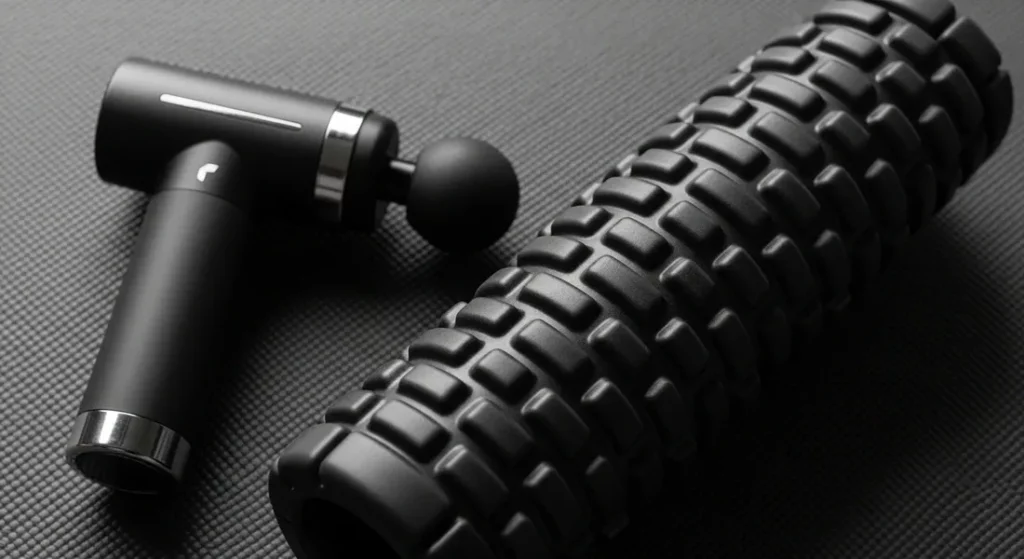
🏆 Best Value – TriggerPoint GRID Foam Roller
Why we picked it: It’s the gold standard for beginners. It’s compact for apartment storage and mimics a massage therapist’s hand. For more options, check out our review of the Best Foam Rollers for Home Use.
💎 Pro Investment – Theragun Relief
Why we picked it: If you have a dedicated garage gym or chronic stiffness, percussive therapy is a game changer. This model is whisper-quiet and reaches 60% deeper into the muscle than cheap vibration tools.
🛠️ Technical Specialist’s Note:
“When inspecting recovery gear like massage guns, I look at the stall force and amplitude. Many ‘budget’ guns use cheap brushed motors that stall the moment you apply pressure. As a specialist, I recommend choosing tools with brushless motors—they are quieter, more durable, and provide the consistent torque needed for real deep-tissue relief.” — IndraP
The Beginner’s Recovery Timeline
Use this table to structure your post-workout routine.
Pairing this with Nutrient-Rich Foods will maximize your results.
| Timeframe | Goal | Action |
|---|---|---|
| 0–30 Mins | Down-regulate | Static Stretching & Deep Breathing |
| 1–2 Hours | Refuel | High Protein Meal + Electrolytes |
| Evening | Muscle Prep | 5 Mins Foam Rolling + Epsom Salt Bath |
| Bedtime | Deep Repair | 7–9 Hours of quality sleep |

Frequently Asked Questions
Q: How many rest days do I need per week?
For beginners, 2 to 3 rest days per week are ideal. This prevents overtraining and allows your central nervous system (CNS) to recover along with your muscles.
Q: Is an Epsom salt bath better than a cold shower?
They serve different purposes. Epsom salts provide magnesium to relax muscles (great for evening), while cold showers reduce inflammation (great for morning recovery).
Conclusion – Your Recovery Journey Starts Now
Workout recovery isn’t a luxury; it’s a physiological requirement for results.
By combining the right tools with foundational habits like sleep and hydration, you transform your home into a high-performance recovery center.
Don’t stay sore. The first step to a better body is understanding why your rest days are actually your most productive time.
Up Next – The Science of Rest
Why Rest Days are Secretly Productive →
About IndraP
IndraP is the founder of Reliable Home Fitness and a Technical Equipment Specialist. Collaborating with industry leaders like FoliageField.com, he specializes in identifying top-tier training equipment.
With unique expertise in board-level repairs and upgrades, Indra looks beyond the marketing hype to test the internal mechanics of the machines he reviews. His mission is to help you invest in gear that is safe, durable, and reliable.