If you listen to the fitness industry, nutrients are constantly going in and out of style.
In the 90s, Fat was the enemy. In the 2010s, Carbs were the enemy.
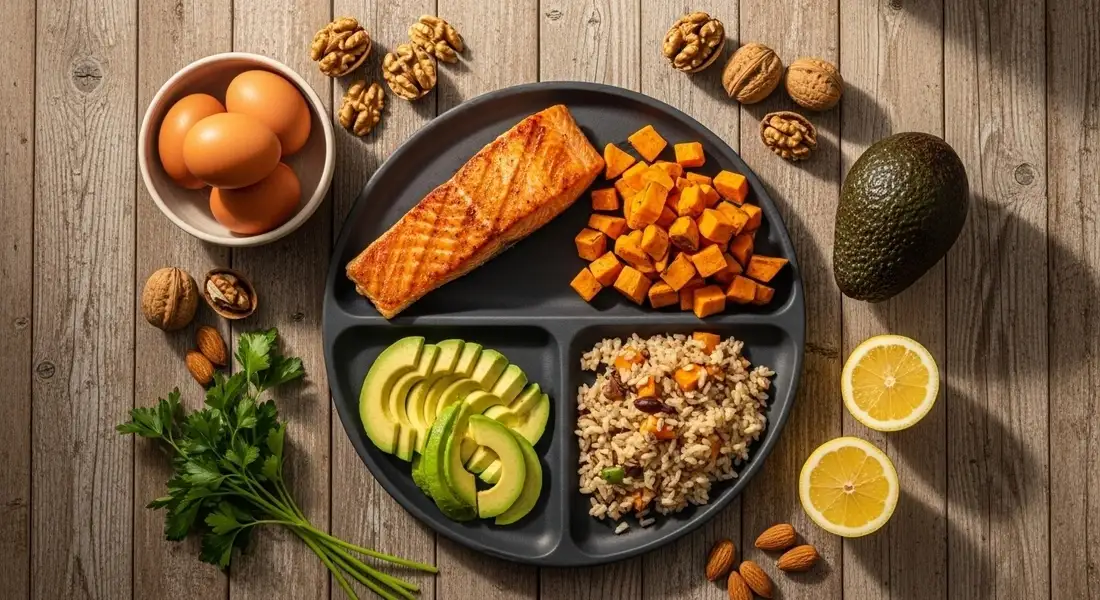
Today, everyone is obsessed with Protein.
It is exhausting. And it is confusing.
Here is the truth: Your body needs all three.
These “Big 3” nutrients are called Macronutrients (or “Macros”).
They are the building blocks of your food.
Understanding what they do is the difference between “just losing weight” (and looking frail) vs. Body Recomposition (looking athletic and toned).
In this guide, we strip away the chemistry jargon and use a simple analogy—Building a House—to explain exactly what you need to eat to fuel your home workouts.
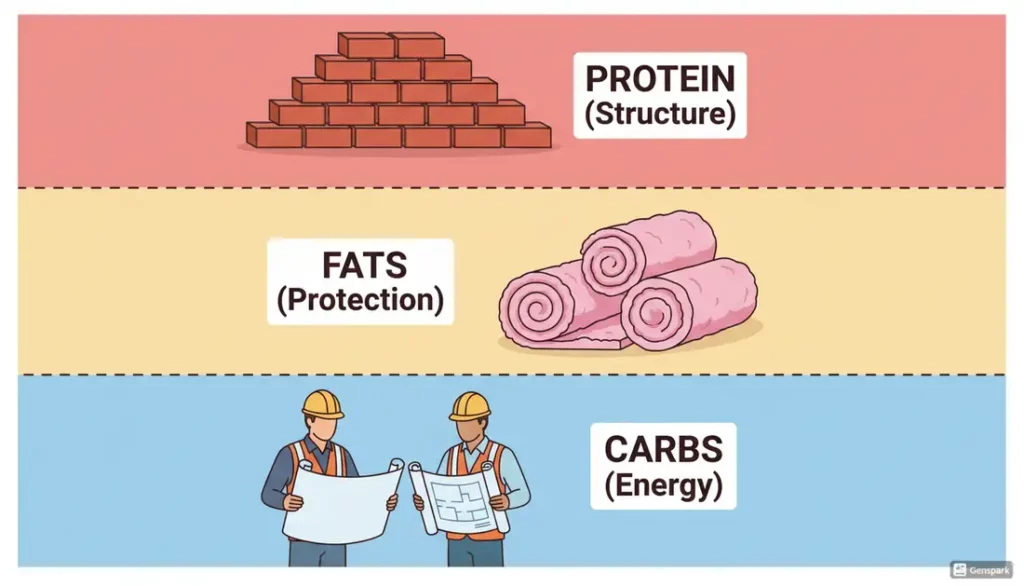
? The “House Building” Analogy
- Protein (The Bricks): You cannot build a house (muscle) without bricks. It repairs tissue.
- Fats (The Insulation): Essential for warmth (energy) and protecting the electrical wiring (hormones).
- Carbohydrates (The Workers): The energy source. The workers show up to lay the bricks. No carbs = lazy workers.
- The Golden Rule: Calories determine your weight; Macros determine how you look (muscle vs. fat).
1. Protein – The “Skinny Fat” Solution
Why is Protein Important for Beginners?
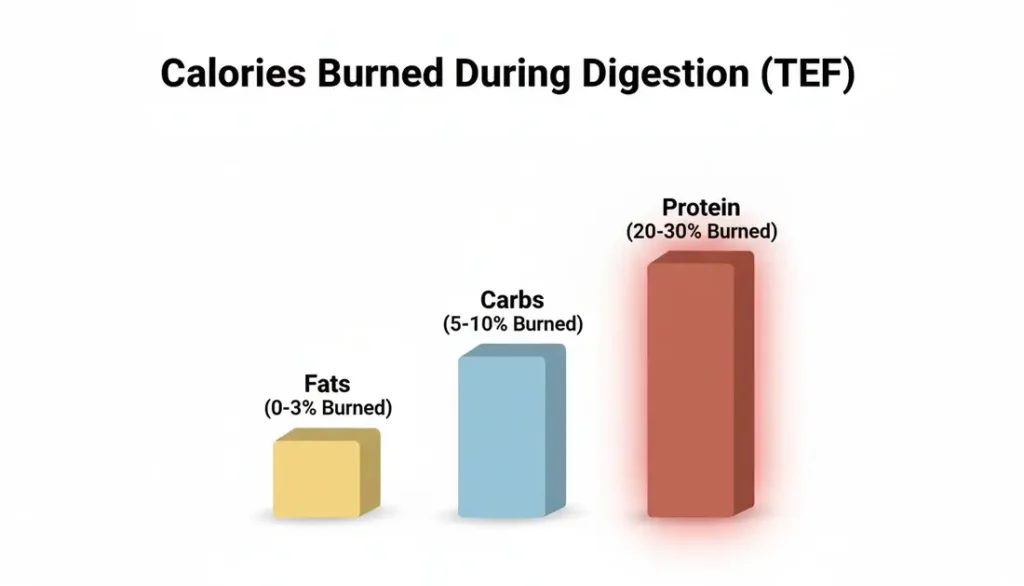
Protein is the most important macronutrient for body recomposition because it has the highest Thermic Effect of Food (TEF). Your body burns 20-30% of the protein calories just trying to digest them. Furthermore, adequate protein intake prevents muscle loss during weight loss, avoiding the “skinny fat” physique.
If you take only one thing from this guide, let it be this: Prioritize Protein.
When you are in a calorie deficit (eating less to lose weight), your body looks for energy.
It will happily eat your own muscle tissue for fuel.
High protein intake sends a chemical signal to your body: “Keep the muscle, burn the fat instead.”
How to get it
? Quick Protein Shopping List
- Meat: Chicken Breast, Lean Ground Turkey (93/7), Lean Beef.
- Dairy/Eggs: Greek Yogurt, Cottage Cheese, Whole Eggs & Egg Whites.
- Plant Based: Lentils, Edamame, Tofu (Extra Firm), Tempeh.
- Seafood: Tuna Packets, White Fish, Shrimp.
? The Convenience Hack: Struggle to eat enough? You don’t have to cook everything. A high-quality Protein Powder is a valid tool to hit your numbers.
Related Guide: The Beginner’s Supplement Stack – What You Actually Need
2. Dietary Fats – The Hormone Regulator
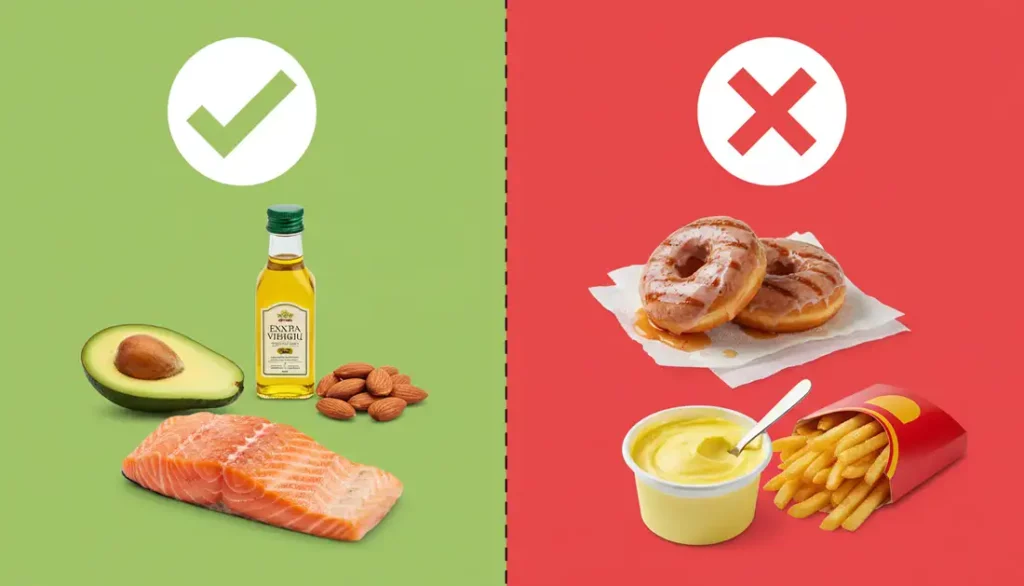
“Fat makes you fat” is the biggest lie in nutrition history. Excess calories make you fat.
Dietary fat is crucial for absorbing vitamins (A, D, E, K) and regulating hormones like testosterone.
If your fat intake drops too low, your libido crashes, your skin gets dry, and your energy plummets.
The “Good” Fats (Eat these)
- Avocados.
- Nuts & Seeds.
- Olive Oil.
- Fatty Fish (Salmon).
The “Limit” Fats
- Trans fats (Processed fried foods).
3. Carbohydrates – The High-Octane Fuel
Carbs are not the enemy. They are Energy.
If you are doing HIIT or heavy lifting, your body runs on Glycogen (stored carbs).
If you cut carbs to zero (Keto), your high-intensity performance will likely suffer.
The “Smart Carb” Strategy
- Complex Carbs (Slow Burn): Oats, Brown Rice, Sweet Potatoes. Eat these away from your workout to provide steady energy (no crash).
- Simple Carbs (Fast Burn): Fruit, White Rice, Sports Drinks. Eat these around your workout for immediate fuel (spikes insulin for recovery).
Putting It Together – The Balanced Plate
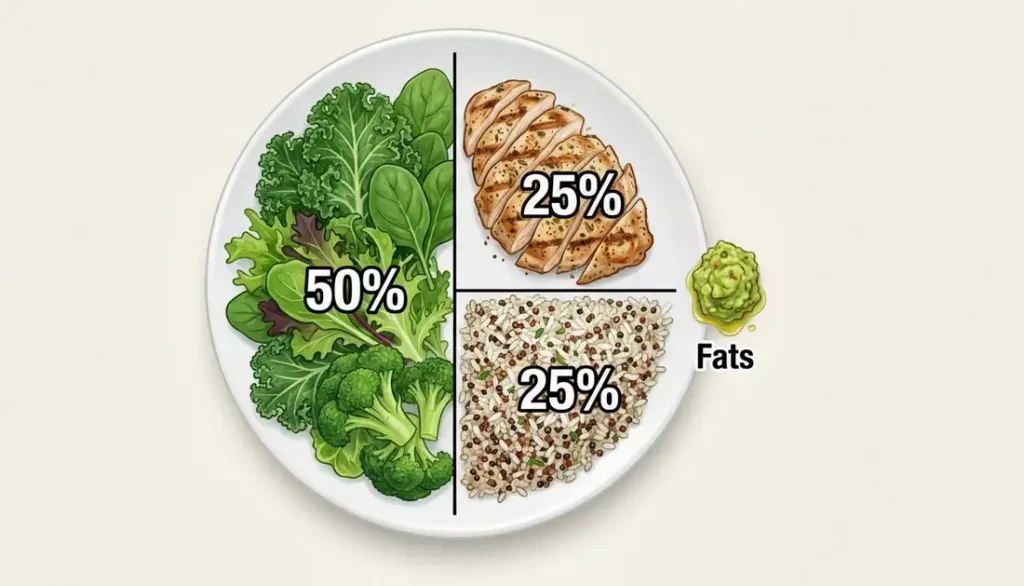
You don’t need a calculator to balance your macros. Just look at your plate.
| Portion of Plate | Macro | Goal Function |
|---|---|---|
| 1/4 (25%) | Lean Protein | Muscle Repair |
| 1/2 (50%) | Vegetables (Fiber) | Volume (Feeling Full) |
| 1/4 (25%) | Starchy Carbs | Workout Energy |
| Thumb Size | Healthy Fats | Hormone Health |
(This is known as the “Plate Method”—a fantastic alternative to counting calories).
Frequently Asked Questions
Q: Does sugar turn directly into fat?
No. Sugar turns into fat only if you are in a calorie surplus. However, sugar spikes your insulin and leaves you hungry again 30 minutes later, making it very easy to overeat. It is a behavioral risk, not a metabolic poison.
Q: Should I do Keto to lose weight fast?
Keto works by removing Carbs, which drops water weight quickly (the “whoosh”). However, for home workouts, carbs are performance fuel. We generally recommend a balanced approach so you have the energy to train hard.
Q: What if I struggle to eat enough protein?
This is the #1 struggle for beginners. Start by ensuring every single meal has a protein source. If you still fall short, a protein shake is a cheap, low-calorie way to bridge the gap.
Conclusion
Nutrition isn’t about eliminating food groups; it’s about balancing them.
- Protein keeps you strong.
- Fats keep you healthy.
- Carbs keep you moving.
Now that you know what to eat, the next logical question is “When?”
Should you eat right before your morning workout, or is it better to train on an empty stomach?
Step 4: Master Your Timing
Read Chapter 4: The Early Riser’s Guide →
About IndraP
IndraP is the founder of Reliable Home Fitness and a Technical Equipment Specialist. Collaborating with industry leaders like FoliageField.com, he specializes in identifying top-tier training equipment.
With unique expertise in board-level repairs and upgrades, Indra looks beyond the marketing hype to test the internal mechanics of the machines he reviews. His mission is to help you invest in gear that is safe, durable, and reliable.