
There is a common misconception in the home fitness world that “Bodyweight Training” implies doing hundreds of jumping jacks, explosive burpees, or high-knees running in place.
While those exercises are effective, they come with two major downsides:
- The Noise: If you live in an upstairs apartment, your neighbors will hate you.
- The Impact: Repetitive jumping on hard floors is a recipe for shin splints and knee inflammation.
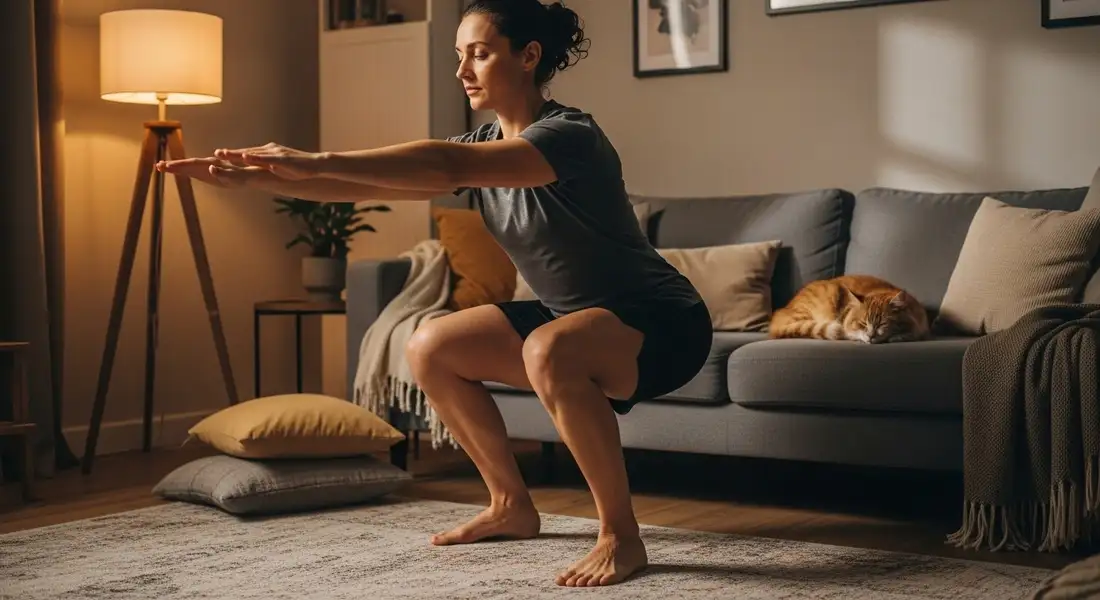
But here is the secret: Gravity works just as well when you move slowly.
You can build immense strength, tone your muscles, and elevate your heart rate without your feet ever leaving the floor.
In fact, by slowing down your movement—a technique called Time Under Tension (TUT)—you often force your muscles to work harder than they would with fast, jerky movements.
In this guide, we will teach you the “Silent Strategy” for home workouts. No equipment, no noise, and no joint pain.
? The “Silent” Strategy
- Gravity is Enough: You don’t need weights. Your body weight provides ample resistance if you control the angles.
- Control > Speed: Slowing down a squat makes it harder, not easier. This is called “Time Under Tension.”
- Apartment Friendly: These moves generate zero noise impact on the floor.
- Posterior Chain (back of the body): Low-impact moves are excellent for targeting the glutes and hamstrings (the back of your legs).
The “No-Jump” Philosophy
To make a workout effective without impact, we need to change how we create intensity.
Instead of using momentum (jumping), we use tension.
What is Time Under Tension (TUT)?
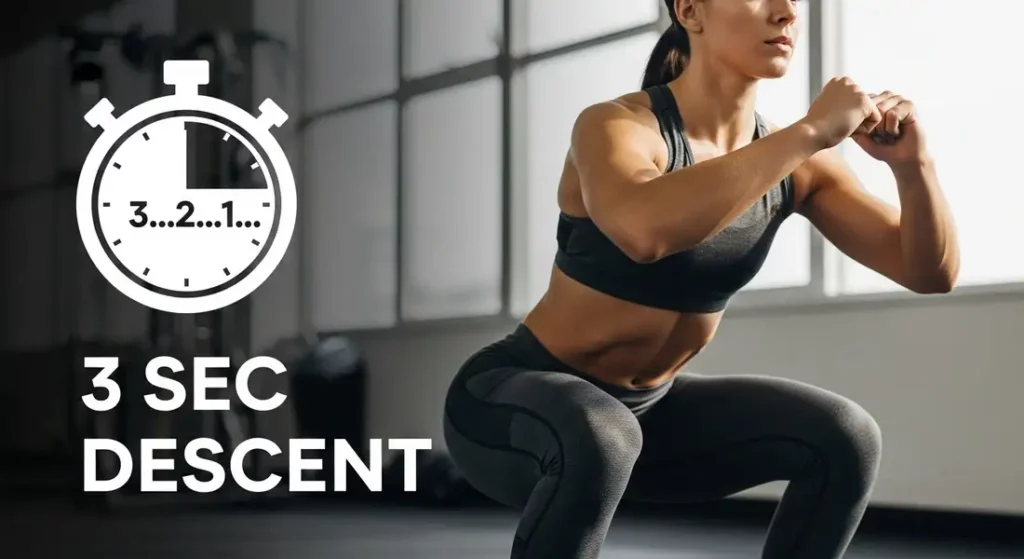
Time Under Tension (TUT) refers to the duration a muscle is held under strain during an exercise. In low-impact training, slowing down the “eccentric” (lowering) phase of a movement—like taking 3 seconds to lower into a squat—increases muscle fiber recruitment and metabolic burn without requiring explosive impact.
The “Silent 4” Routine
Here are four essential movements that cover your legs, core, and chest without a single jump.
1. The Reverse Lunge (Instead of Forward Lunges)
Silence Level: 10/10 (Zero Impact)
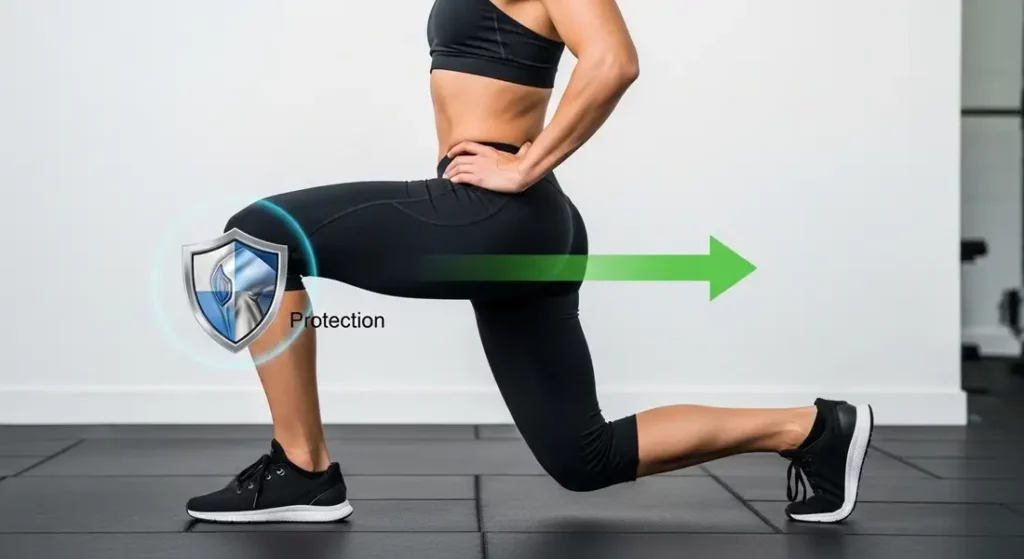
Forward lunges put significant shearing force on the knee because your momentum carries you forward.
- The Low-Impact Fix: Step backward. This keeps your front shin vertical and shifts the load to your glutes and hamstrings, protecting the knee joint.
2. The Glute Bridge
Silence Level: 10/10 (Zero Impact)
This is the ultimate floor exercise.
By lying on your back and driving your hips up, you engage your entire posterior chain with zero weight on your spine or knees.
3. The Walkout (The “Quiet Burpee”)
Silence Level: 9/10 (Soft hands required)
Hate burpees? So do your joints.
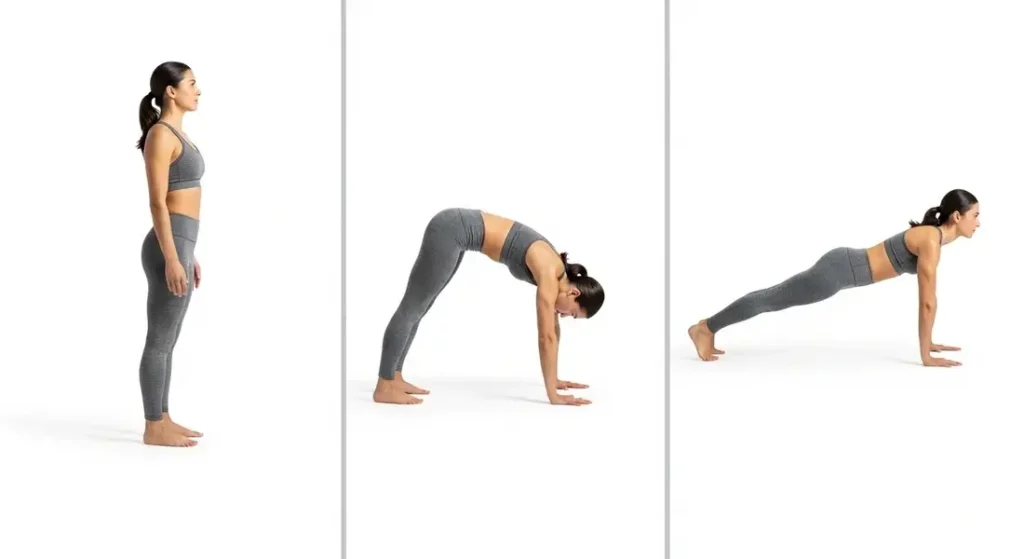
The Walkout (or Inchworm) achieves the same full-body engagement.
- How: Bend at the waist, place hands on floor, walk hands out to a plank, pause, and walk back.
4. The Wall Sit
Silence Level: 9/10 (Slow movement required)
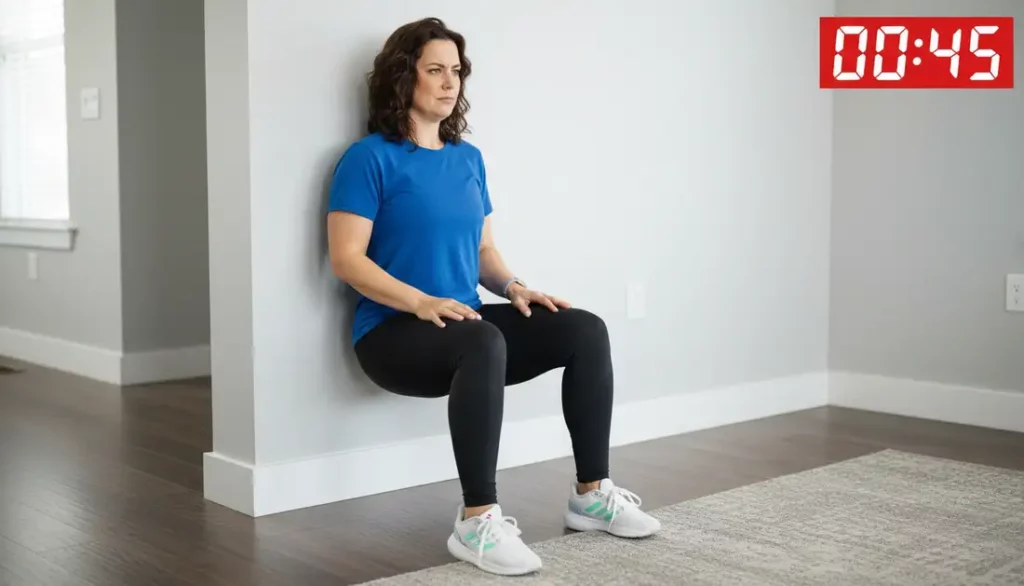
An isometric hold that burns calories and strengthens quads without moving a muscle.
The 20-Minute “Silent Home Circuit”
Here is a routine you can do in your living room right now.
- Want more variety? Check out our Ultimate Guide to Bodyweight Workouts at Home for advanced moves.
The “Swap List” – High Impact vs. Low Impact
If you are following a video workout that includes jumping, use this cheat sheet to modify the moves instantly.
| High Impact (Noisy) | Low Impact Swap (Quiet) | Why it Works |
|---|---|---|
| Jumping Jacks | Step-Out Jacks | Step one foot out rapidly while raising arms. |
| Box Jumps | Step-Ups | Use a sturdy chair or sofa. Drive through the heel. |
| Burpees | Incline Pushups | Use a couch armrest to elevate hands. Less wrist strain. |
Equipment Upgrade – The Floor Matters
? Safety Hack: Slipping on hardwood floors? Don’t train barefoot if your feet are dry. Grab a pair of Non-Slip Yoga Socks. They give you the grip of a sneaker with the silence of a sock.
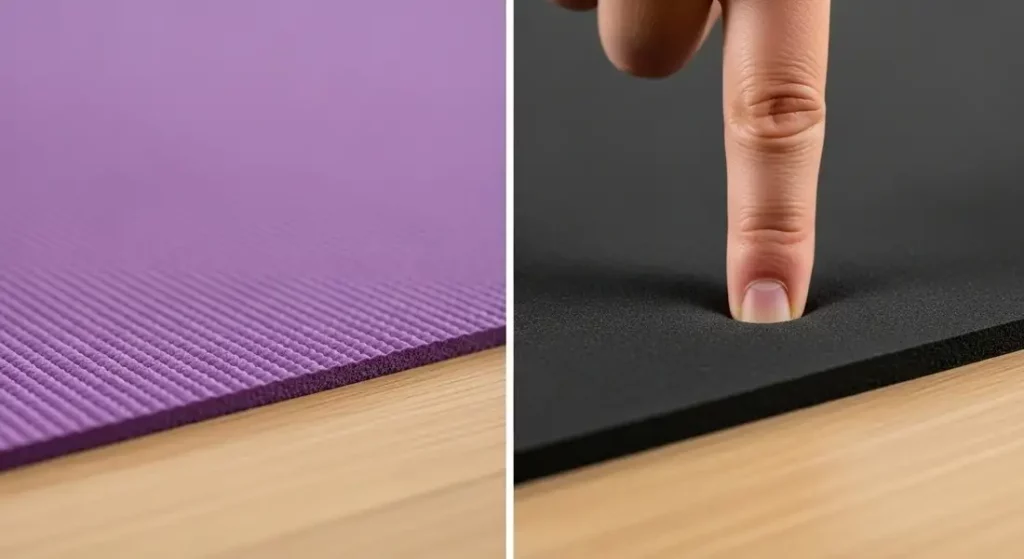
Even though you aren’t jumping, your knees will touch the ground during lunges, and your hands will be on the floor during planks.
? Essential Gear Tip
Standard yoga mats are too thin (1/8 inch) for bodyweight circuits. They are designed for standing balance, not kneeling. We recommend upgrading to a High-Density Mat (1/2 inch thick). This provides a “memory foam” effect for your knees during reverse lunges.
Frequently Asked Questions
Q: Will I build muscle without heavy weights?
Yes, especially as a beginner. Your body reacts to tension. If you perform movements slowly (Time Under Tension) and do enough repetitions to reach fatigue, you will stimulate muscle growth.
Q: How do I make the workout harder without jumping?
Reduce your rest times. Instead of resting 60 seconds between sets, rest 30 seconds. Or, perform the lowering phase of the squat for 5 full seconds. This dramatically increases intensity.
Q: Can I do this workout every day?
Because it is low impact, your joints can handle high frequency. However, your muscles still need recovery. We recommend doing this routine 3-4 times per week, alternating with walking days.
Conclusion
You do not need a gym membership or a noisy treadmill to get in shape.
By mastering your own body weight and focusing on controlled tension, you can build a physique that is strong, capable, and pain-free.
But what if you simply want to walk?
Can walking around your house really count as exercise?
Next: Transform your daily walk.
Read Chapter 4: Walking Workouts Guide →
About IndraP
IndraP is the founder of Reliable Home Fitness and a Technical Equipment Specialist. Collaborating with industry leaders like FoliageField.com, he specializes in identifying top-tier training equipment.
With unique expertise in board-level repairs and upgrades, Indra looks beyond the marketing hype to test the internal mechanics of the machines he reviews. His mission is to help you invest in gear that is safe, durable, and reliable.