Two of the most common reasons beginners quit HIIT before they even really start are:
- “My knees/back hurt.” (The physiological barrier).
- “I can’t jump around because I live in an upstairs apartment.” (The environmental barrier).
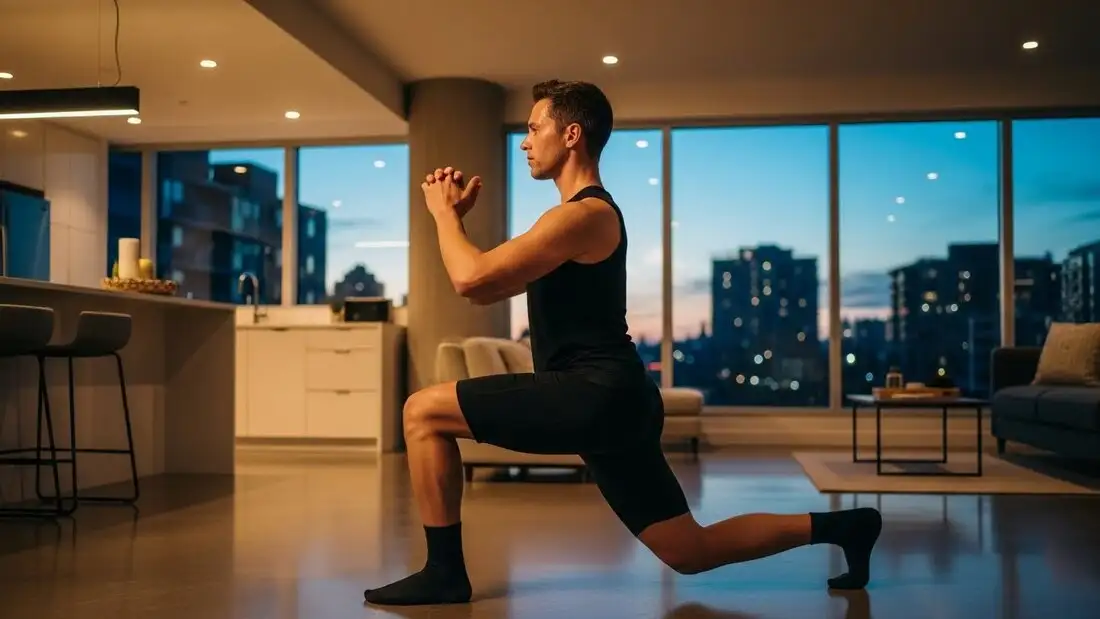
There is a misconception that for a workout to be “High Intensity,” it must also be “High Impact.”
We assume that if we aren’t slamming our feet into the floor with box jumps or sprinting, we aren’t working hard enough.
This is false.
Intensity is about your heart rate, not gravity.
You can reach a breathless, fat-burning state without your feet ever leaving the ground.
In this guide, we will teach you the art of Low Impact HIIT.
Whether you are protecting old injuries, trying not to wake a sleeping baby, or trying to avoid an eviction notice from your landlord, this strategy is for you.
? Key Takeaways – Quiet & Safe
- Intensity ≠ Impact: You can spike your heart rate by increasing speed or range of motion—you do not need to jump to burn fat.
- Joint Preservation: Low impact reduces the compressive forces on knees and spine, allowing you to train comfortably for years, not just weeks.
- Apartment Friendly: “Silent” training relies on strict muscle control, which often increases the “muscle burn” more than sloppy jumping ever could.
The “Silent” Strategy – How to Increase Intensity Without Jumping
? The “Silent Landing” Rule
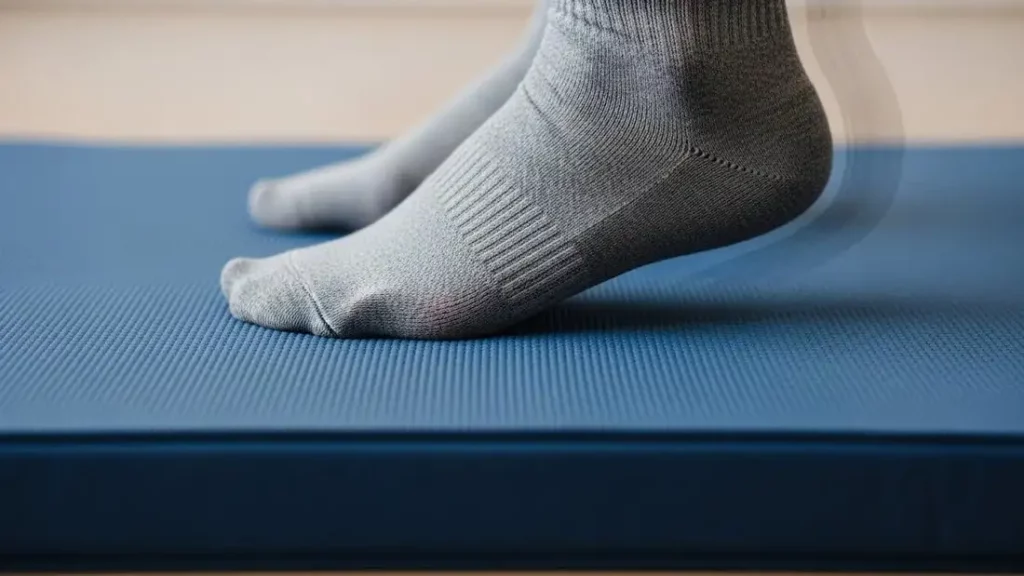
If you make a sound when you land, you are landing too hard. Land like a ninja. Absorbing the impact with your muscles (toe-to-heel) not only keeps your neighbors happy but forces your calves and glutes to work 2x harder.
If we take away jumping, how do we make the workout hard?
We use three specific levers:
1. Speed (Cadence)
Instead of jumping high, move fast.
- Example: In a bodyweight squat, lower yourself under control, but stand up explosively (without your feet leaving the floor).
2. Range of Motion (ROM)
Going deeper requires more energy.
- Example: A shallow lunge is easy. A lunge where your back knee hovers an inch off the ground recruits significantly more glute and hamstring fibers, driving your heart rate up.
3. Compound Movements
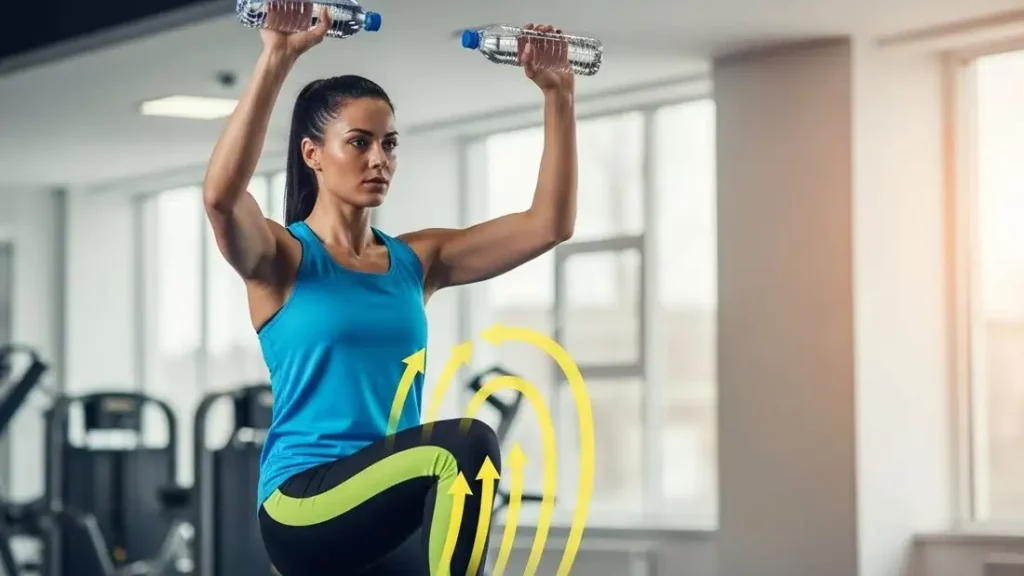
The more muscles you move at once, the more oxygen your body needs.
- Example: Don’t just march in place. March while pressing a pair of dumbbells (or water bottles) overhead. The blood has to travel from your legs to your arms, taxing your cardiovascular system.
The “Swap List” – Modifications for Common Exercises
You don’t need a special “Low Impact” program; you just need to know how to modify standard moves.
| High Impact (Noisy/Painful) | Low Impact Swap (Quiet/Safe) | Why it Works |
|---|---|---|
| Jump Squats | Speed Squats | Perform the squat quickly. Squeeze glutes hard at the top. |
| Jumping Jacks | Step-Out Jacks | Step one foot out at a time while raising arms. Move fast! |
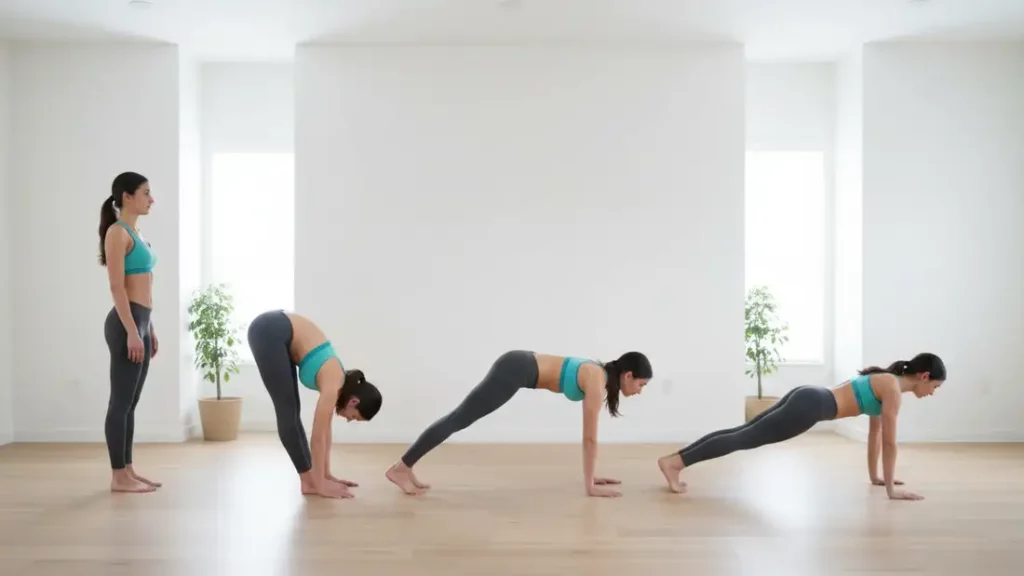
| Burpees | Walkouts (Inchworms) | Bend down, walk hands out to plank, walk back. No slam. |
| High Knees (Run) | High Knee March | Drive knee to chest with force, engaging core. |
| Mountain Climbers | Slow Spiderman Planks | Bring knee to elbow slowly. Increases core tension. |
Essential Gear for Low Impact HIIT
While bodyweight is fine, a few cheap tools can drastically increase the intensity without adding impact.
1. Core Sliders (Gliders)

These small discs sit under your feet (or hands) and allow you to slide across carpet or hardwood.
- Why: They force you to use constant tension. A “Sliding Mountain Climber” is silent but brutal on the abs.
- Top Pick: The Synergee Core Sliders. They are dual-sided (one side for carpet, one for hardwood) and cost less than lunch.
2. Resistance Bands
Bands add resistance that increases as you stretch them, which is easier on the joints than dead weight.
- Why: You can do “Banded Thrusters” (Squat + Overhead Press) to skyrocket your heart rate with zero impact.
- Top Pick: A simple set of Resistance Loop Bands or similar loop bands are perfect for placing around your thighs to force your glutes to work harder during squats.
3. The “Silencer” (Thick Mat)
If you do slip up and land hard, you want soundproofing.
- Top Pick: We’ve mentioned it before, but the BalanceFrom GoYoga All-Purpose Mat is essential here. Its density absorbs the sound of footsteps, keeping your neighbors happy.
Equipment-Based Low Impact Options
If you have a bit more space, certain machines are designed specifically for this problem.
- Ellipticals: The ultimate low-impact tool. It mimics running motion without the strike.
- Rowing Machines: Seated, zero impact, but uses 86% of your muscle mass.
- Sandbags: You don’t jump with a sandbag; you lift it. The “Sandbag Clean and Press” will get you breathless faster than a treadmill sprint.
Sample “Apartment Friendly” HIIT Workout
Time: 12 Minutes
Ratio: 40 Seconds Work / 20 Seconds Rest
Equipment: None (Optional: Water bottles for weight)
- Walkouts (Inchworms): Stand tall, hinge forward, walk hands out to plank, walk back. Stand up.
- Reverse Lunges: Step back (don’t slam knee), lower hips, step forward. Alternate legs.
- Shadow Boxing: Stand with feet wide. Punch the air rapidly at eye level. (Focus on speed/rotation).
- Glute Bridges: Lie on back, drive hips up. (Active recovery for breath, high tension for glutes).
Repeat the cycle 3 times.
Common Questions About Quiet HIIT
Q: Will I still lose weight without jumping?
Yes. Weight loss comes from heart rate intensity and calorie deficit. If you perform “Speed Squats” fast enough to get breathless, you burn fat just as effectively as jumping.
Q: Do I need shoes for apartment HIIT?
We actually recommend doing low-impact HIIT barefoot or in socks (on a non-slip mat). This forces you to land softly and strengthens the small muscles in your feet.
Conclusion
Don’t let bad knees or thin walls be your excuse.
“Low Impact” does not mean “Low Results.”
In fact, by slowing down and focusing on range of motion, many beginners find they build more strength than they would with high-impact jumping.
You now have the knowledge, the safety protocols, the equipment list, and the modifications.
The only thing left is to start.
Return to the Hub: The Ultimate Beginner’s Guide to HIIT at Home