If you have been browsing fitness advice online, you have almost certainly encountered the acronym HIIT.
It is often marketed with high-octane images of athletes sprinting on tracks, flipping heavy tires, or jumping onto high boxes until they collapse.

For a beginner—especially one who might be returning to fitness after a long break, managing joint pain, or simply looking to lose weight at home—these images can be intimidating.
You might ask: “Is this safe for me? Will I get injured?”
These are valid questions.
?️ Safety First: The Essentials
- Intensity is Relative: “High Intensity” means 85% of your max, not an Olympic sprinter’s max.
- Surface Matters: Never jump on concrete. Use a high-density mat to absorb shock.
- The Talk Test: If you can sing, you aren’t working hard enough. If you can’t speak at all, you are pushing too hard.
- Recovery: Do not do HIIT daily. Your joints and CNS need 48 hours to recover.
The good news is that HIIT is not about performing dangerous stunts.
It is about heart rate management.
In this guide, we will strip away the hype and explain exactly what HIIT is, how it affects your physiology, and how to perform it safely at home without a personal trainer.
The Simple Definition
HIIT stands for High-Intensity Interval Training.
It is a training protocol where you alternate between two states:
- High Intensity: A short burst of effort where your heart rate rises significantly.
- Low Intensity (Recovery): A period of rest or slow movement to let your heart rate recover.
The Traffic Analogy
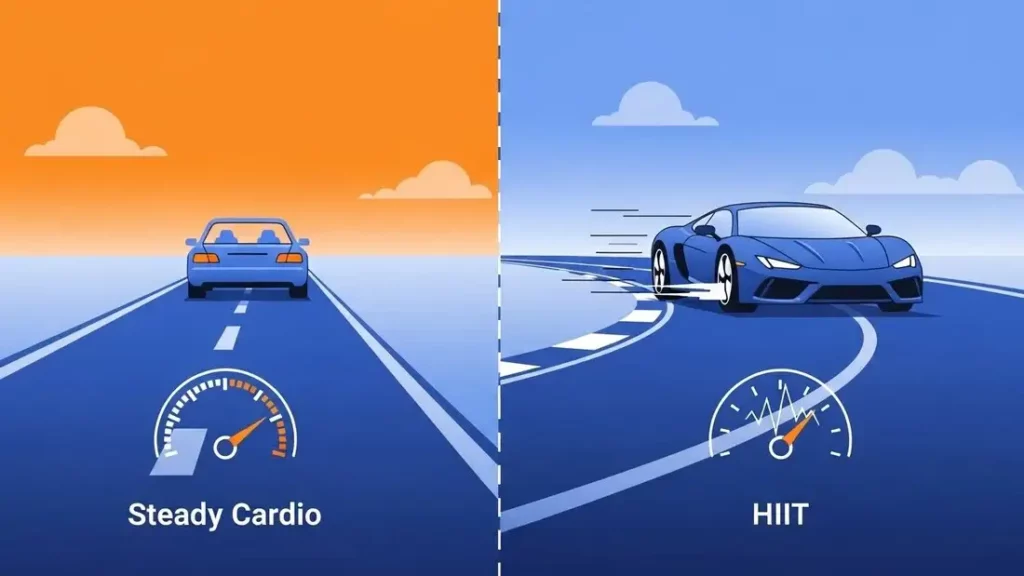
Think of your body like a car and your workout like a drive.
- Steady-State Cardio (Walking/Jogging): This is like driving on the highway at 60mph using cruise control. It is efficient, but it takes a long time to drain the gas tank (burn calories).
- HIIT: This is like stop-and-go city driving with a heavy foot on the gas. You accelerate hard, then stop, then accelerate again. You burn through fuel (calories) much faster in less distance.
Is HIIT Safe for Beginners?
Yes, research suggests HIIT is safe for most populations, provided it is scaled correctly.
According to the American College of Sports Medicine (ACSM), HIIT has been shown to improve aerobic and anaerobic fitness, blood pressure, and insulin sensitivity.
However, they note that a base level of fitness is helpful before trying the most intense forms.
External Reference: Read the ACSM’s official statement on High-Intensity Interval Training Safety and Benefits.
The danger usually comes from Ego, not the exercise itself.
To keep it safe, follow these three rules:
Rule 1 – High Intensity is Relative
“High Intensity” does not mean sprinting at Olympic speeds.
It means working at 80-95% of YOUR maximum effort.
- For an athlete, this might be a 15mph sprint.
- For a beginner, this might be walking briskly up a steep hill or marching in place with high knees.
If you are gasping for air and cannot hold a conversation, you are doing it right—regardless of your speed.
Rule 2 – Protect Your Joints (The Surface Matters)
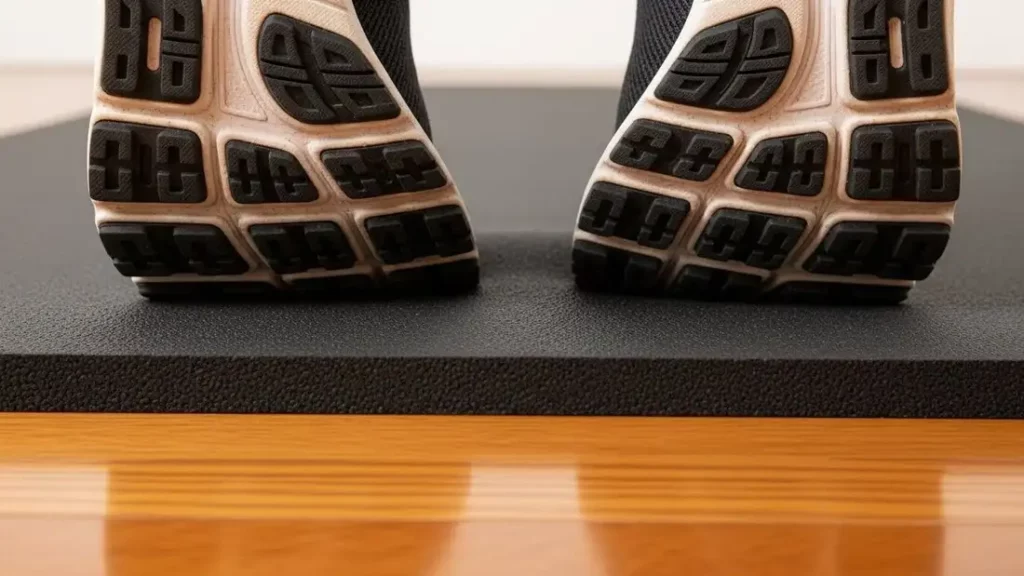
One of the biggest mistakes home exercisers make is doing HIIT on concrete floors, tile, or thin carpet.
This sends shockwaves through your knees, ankles, and lower back.
Solution: Create a dedicated “landing zone.” A standard yoga mat is often too thin for high-impact movements. We recommend a high-density, extra-thick mat.
- Product Recommendation: The BalanceFrom GoYoga All-Purpose Mat or the Gorilla Mats Large Exercise Mat offer extra cushioning (1/2 inch or more) to absorb impact during stepping or lunging movements, protecting your joints.
Rule 3 – Start with Low Impact
You do not need to jump to raise your heart rate.
You can achieve a HIIT effect using machines that support your weight.
- Ellipticals & Bikes: These are safer for beginners than treadmills because there is zero impact on the knees.
How to Measure Intensity – The “Talk Test” vs. Technology
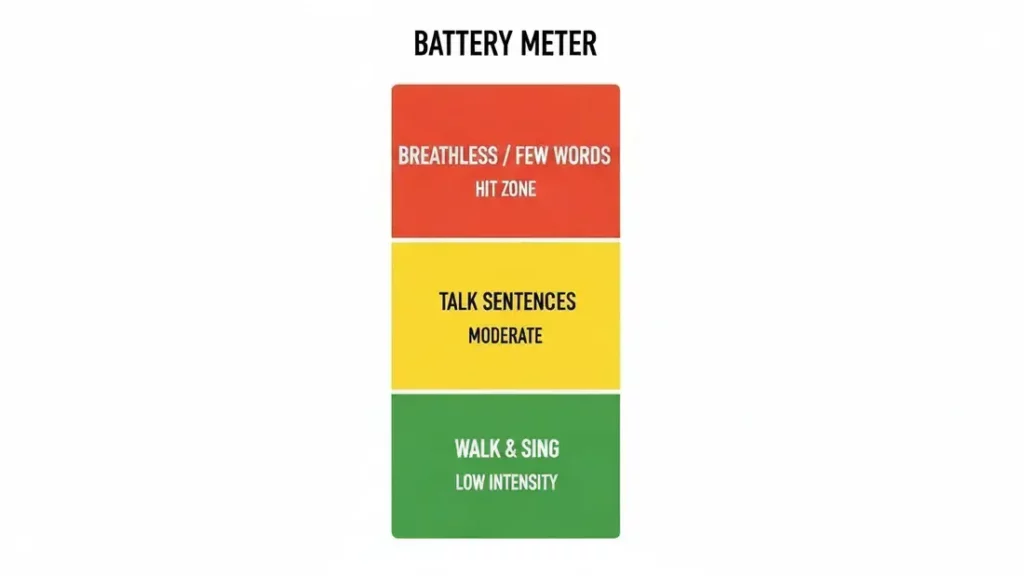
How do you know if you are pushing hard enough? Or too hard?
The “Talk Test” (Free Method)
| Zone | Can you speak? | Intensity |
|---|---|---|
| Low | “I can sing a song.” | Warm Up |
| Moderate | “I can hold a conversation.” | Steady Cardio |
| High (HIIT) | “I can only say… a few words.” | Fat Burning Zone |
The Tech Method (Precise)
For a scientific approach, using a heart rate monitor ensures you aren’t guessing.
It prevents you from “cheating” the workout, but also prevents you from over-exerting yourself into a dangerous zone.
- Product Recommendation: The Polar H10 Heart Rate Sensor is widely considered the gold standard for chest straps. It connects to your phone and shows your heart rate in real-time, letting you see exactly when you hit that 85-90% zone.
The RPE Scale
If you don’t have a monitor, use the Rate of Perceived Exertion (RPE) scale from 1 to 10.
| Zone | RPE Level | Feeling | Activity Example |
| Rest | 1-3 | Comfortable, breathing easy. | Walking to the fridge. |
| Warm Up | 4-6 | Slight sweat, breathing deeper. | Fast walking. |
| HIIT Work | 7-9 | Uncomfortable, heavy breathing. | Sprinting / Burpees. |
| Max Effort | 10 | Gasping, dizziness. | Avoid (Unsafe). |
⚠️ Crucial Safety Check
Stop immediately if you feel dizzy, lightheaded, or experience sharp chest pain. HIIT is designed to be uncomfortable, but it should never be painful.
Pro Tip: Never stop moving completely during your rest interval. Walking slowly helps pump blood back to your heart and prevents fainting.
Recovery – The Missing Link

Safety isn’t just about what you do during the workout; it’s about what you do after.
HIIT stresses the Central Nervous System (CNS).
If you do not recover, your cortisol (stress hormone) levels can rise, which may actually hinder weight loss.
- Breathing: During your rest intervals, focus on deep nasal breathing to bring your heart rate down.
- Muscle Care: Post-workout stiffness is common. Using percussive therapy or rollers can aid blood flow.
Conclusion
HIIT is a tool.
Like any tool—a hammer, a saw, or a car—it is effective when used correctly and dangerous when used recklessly.
By respecting your current fitness level, using the right protective gear (mats), and listening to your heart rate, you can unlock the most efficient fat-burning method available.
Now that you understand the “What” and the “How,” it’s time to look at the “Why.”
Why is HIIT so effective at burning fat even after the workout is over?
Next Step: Read our deep dive on