If you ask a beginner what their main goal is, 90% will say: “I want a flat stomach” or “I want abs.”
And typically, they drop to the floor and start doing hundreds of crunches.
A week later, their neck hurts, their lower back aches, and their stomach looks exactly the same.
In our Ultimate Guide to Bodyweight Workouts at Home, we focus on functional strength.
The problem with traditional sit-ups is that they aren’t very functional.
In real life, you rarely curl your chest to your knees repeatedly.
Instead, your core acts as a Shield—it braces to protect your spine while you lift, carry, or squat.
The Core Truth
- The Myth: Sit-ups are the best way to get a six-pack. (False, and they often hurt your neck).
- The Reality: Your core is designed to resist movement (stability), not just curl up.
- The Secret: “Anti-Extension” exercises (like planks and rollouts) build a stronger, flatter stomach.
- The Bonus: A strong core is the best insurance against lower back pain.
In this guide, we are going to throw out the outdated sit-ups and teach you the Bodyweight Core Exercises that actually work.
Why Sit-Ups Are Overrated
Traditional crunches place significant spinal flexion loads on your back.
If you have a desk job and already spend 8 hours a day hunched over, crunches simply reinforce that bad posture.
We want to do the opposite.
We want to lengthen and stabilize.
Level 1 – The “Dead Bug” (Coordination)

This is the absolute best exercise to learn how to engage your deep abs without hurting your back.
- Lie on your back with arms extended to the ceiling and legs in the air (knees bent at 90 degrees).
- The Cue: Crush your lower back into the floor. Imagine there is a grape under your spine—crush it.
- Slowly lower your Right Arm behind your head and extend your Left Leg straight out.
- Return to center and switch sides.
- Why it works: If your back arches, you lost the rep. It teaches you to brace hard.
Level 2 – The Plank (Endurance)
We covered the standard Plank in our Master the Basics guide.
Now, let’s upgrade it.
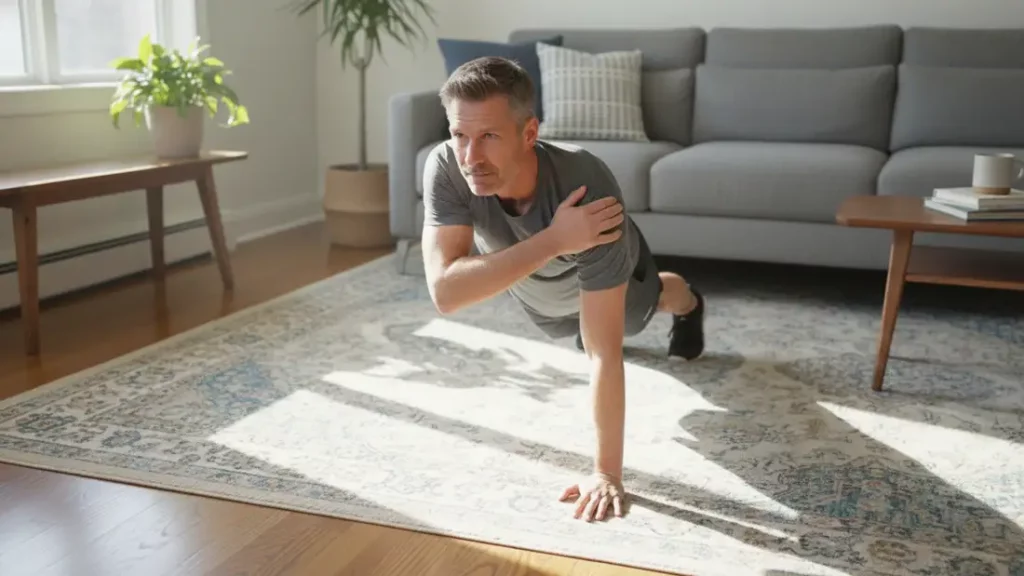
The Shoulder Tap Plank:
- Get into a push-up position (High Plank).
- Feet wide for balance.
- Tap your left shoulder with your right hand. Then switch.
- The Goal: Do not let your hips wiggle! Imagine there is a glass of water on your back—don’t spill it. This is “Anti-Rotation.”
Level 3 – The Leg Raise (Lower Abs)

To hit the lower part of the abdominals, we need to move the legs, not the torso.
- Lie flat on your back, hands by your sides (or under your glutes for support).
- Keep legs straight and lift them until they point at the ceiling.
- The Hard Part: Lower them slowly. Stop just inches off the floor.
- Safety Tip: If your back arches off the floor, don’t lower your legs as far. Keep the tension in your abs, not your spine.
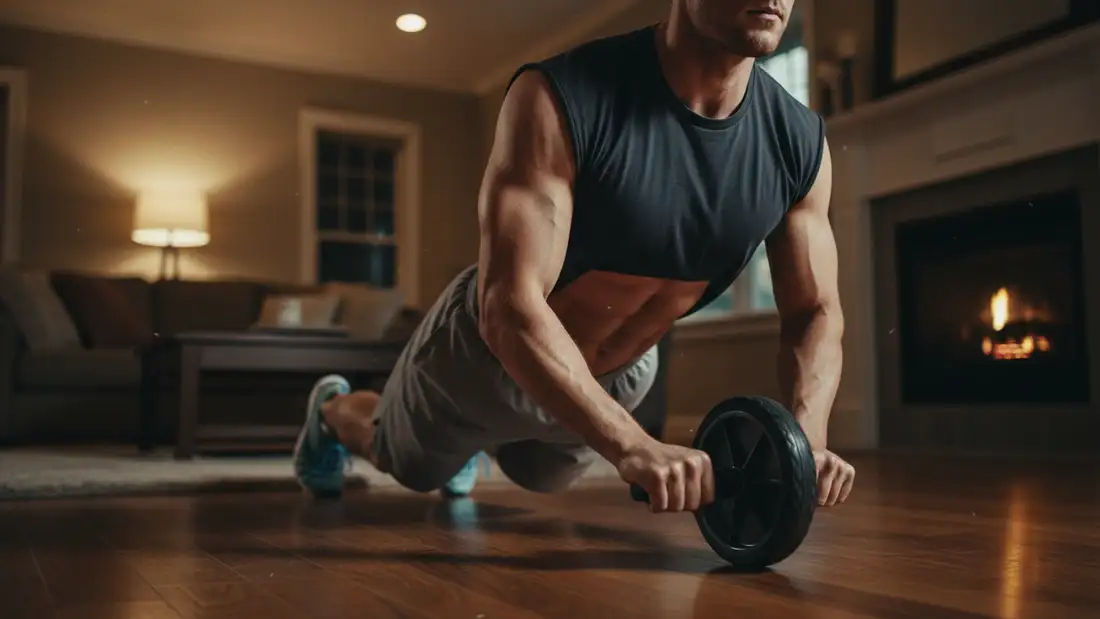
Level 4 – The $15 Game Changer (The Ab Wheel)

If you master the exercises above, you are ready for the king of all core exercises.
The Ab Wheel Rollout.
For the price of a lunch, an Ab Wheel Roller provides a workout harder than most $2,000 gym machines.
- How to do it: Kneel on a mat. Hold the wheel. Roll forward as far as you can while keeping your back straight, then roll back.
- Why it works: It forces your core to prevent your body from collapsing (Anti-Extension). It creates immense tension and builds a rock-solid midsection.
- Warning: Start with small ranges of motion. Going too far too soon can strain your back.
The “Six Pack” Reality Check
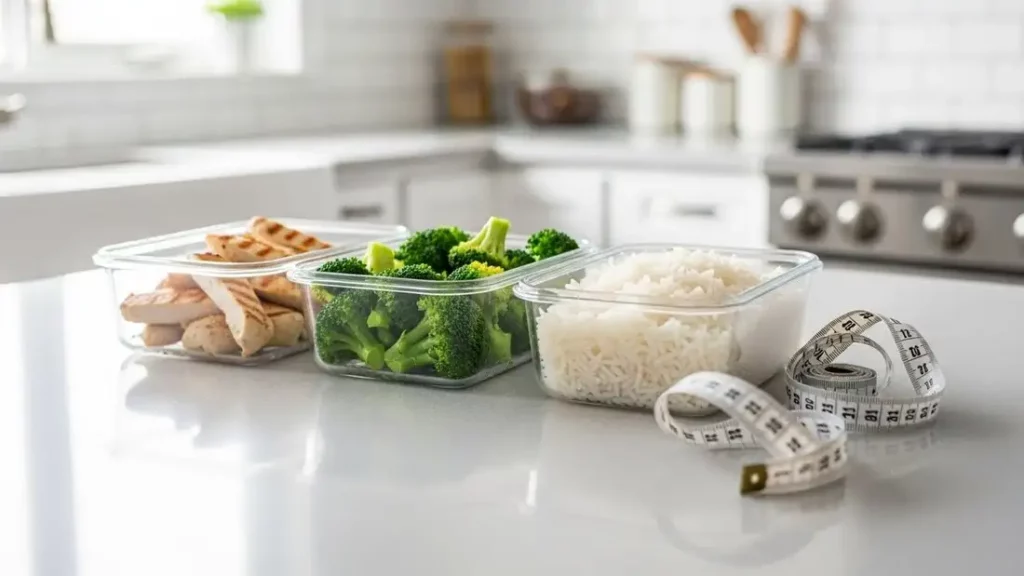
We have to be honest with you: You cannot spot-reduce fat.
Doing 1,000 leg raises will build strong muscle underneath your fat, but it won’t burn the fat off your belly specifically.
To reveal your abs, you need a combination of:
- Strength Training: (To build the muscle).
- Calorie Deficit: (To burn the fat).
- Consistency.
- Essential Read: The Ultimate Beginner’s Guide to Weight Loss at Home.
Frequently Asked Questions
- Can I do ab workouts every day?
Abs are a muscle just like any other. They need recovery. We recommend training them 3–4 times a week (e.g., at the end of your circuit) rather than every single day. - Will planks give me a six-pack?
Planks will make your stomach flat and tight (transverse abdominis), but “blocky” six-pack abs usually require flexion exercises or heavy resistance (like the Ab Wheel) combined with low body fat. - Why does my lower back hurt when I do leg raises?
This means your core is too weak to keep your spine flat, and your hip flexors are taking over. Try bending your knees (tucked leg raises) or putting your hands under your butt to tilt your pelvis into a safer position. - Is an Ab Wheel worth it?
Yes. In terms of “bang for your buck,” it is arguably the best piece of home fitness equipment you can buy. It is cheap, durable, and incredibly effective.
Conclusion – Strong Core, Healthy Back
Don’t train your abs just for the mirror.
Train them because they are the bridge connecting your upper and lower body.
A strong core makes your Squats better, your Push-ups easier, and your posture prouder.
The Full Picture
You now have every tool you need.
- Legs & Chest (The Basics)
- Back & Posture (The Missing Link)
- Core & Abs (The Shield)
You have the knowledge. The only thing left to do is start the timer.
Return to the Hub: The Ultimate Guide to Bodyweight Workouts at Home.
(Disclaimer: This content is for informational purposes only. Consult a physician before starting any new exercise program.)