There is a persistent myth in the fitness world that refuses to die.
It goes like this:
“Weights are for building muscle. Bodyweight is just for endurance or toning.”

If you are a beginner looking to get in shape at home, this myth is discouraging.
You might feel like you are wasting your time doing push-ups if your goal is a defined, athletic physique.
Here is the honest truth: This myth is false.
Your body does not know if you are holding a metallic dumbbell or pushing against the floor.
It only understands one thing: Tension.
In this guide, the final chapter of our Ultimate Guide to Bodyweight Workouts at Home, we will break down the science of muscle growth and show you exactly how to get “ripped” using nothing but gravity.
Key Takeaways
- The Science: Studies show high-rep bodyweight training builds muscle just as well as heavy weights, if you train close to failure.
- The Driver: “Progressive Overload” is the key. You must make the exercise harder over time.
- The Limit: Eventually, you will need to add resistance (bands or vests) to keep growing.
- Nutrition: You cannot out-train a bad diet. Protein is essential.
The Science – How Hypertrophy Actually Works
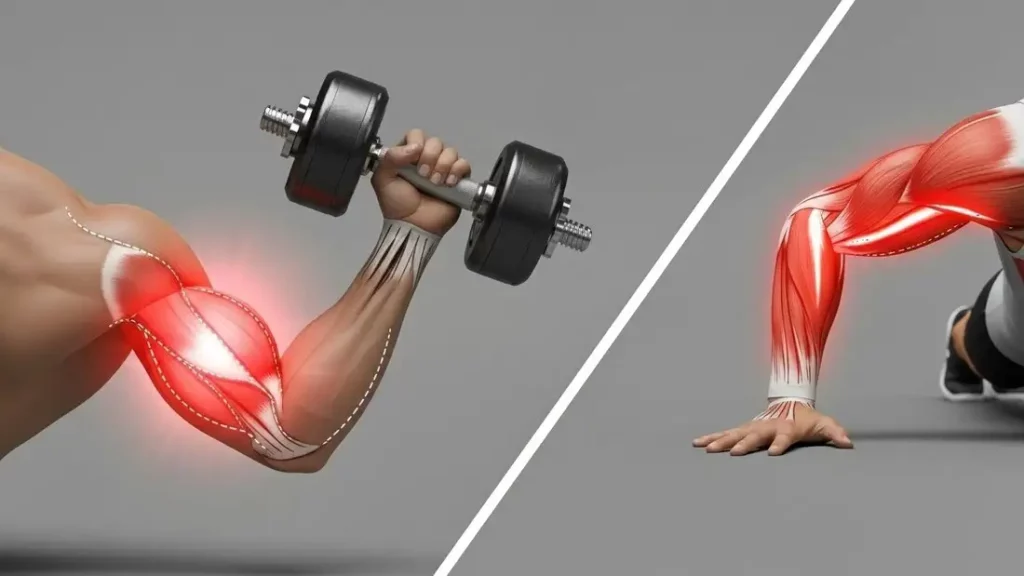
Muscle growth (Hypertrophy) happens when you stress muscle fibers, causing microscopic tears.
The body repairs these tears to be stronger and larger.
Traditionally, bodybuilders use the “8–12 Rep Range” with heavy weights to do this.
But science has evolved.
A landmark study published in the National Institutes of Health (NIH) compared two groups:
- High Load: Lifted heavy weights (low reps).
- Low Load: Lifted light weights/bodyweight (high reps).
The Result: Both groups achieved similar muscle growth, provided they both trained to failure (until they couldn’t do another rep).
What this means for you: You don’t need a heavy bench press. You just need to do enough push-ups to make your chest burn and reach that point of fatigue.
How to Trigger Growth Without Weights
Since you can’t just “add 5 lbs” to the bar, you have to use different levers to trigger growth.
1. Increase the Reps (Volume)
Instead of 10 reps, aim for 15, 20, or 25.
High-rep training flushes the muscle with blood (metabolic stress), which is a powerful driver for growth.
2. Decrease the Rest (Density)
If you usually rest 90 seconds between sets, cut it to 45.
This forces your muscles to work while still fatigued, recruiting more muscle fibers.
3. Slow Down the Tempo (Tension)
We covered this in our [Troubleshooting Guide], but it bears repeating.
1 push-up that takes 5 seconds is worth more than 3 push-ups done quickly.
The “Ceiling” (And How to Break Through)
There is one catch.
Eventually, you will get too strong.
If you can do 50 push-ups easily, doing 50 more won’t build muscle—it just builds endurance.
You have hit the “Bodyweight Ceiling.” To keep building muscle, you must re-introduce resistance.
The Solution – Cheap External Load
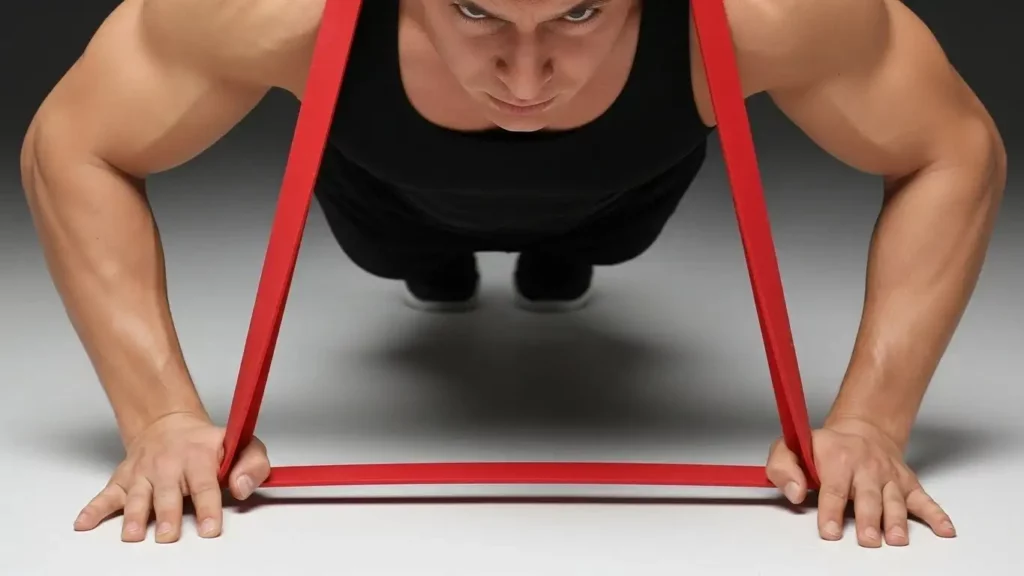
You don’t need a gym membership. You just need to make your body heavier.
- Resistance Bands: Wrapping a Heavy Loop Band around your back during push-ups mimics a bench press. It’s the cheapest “gym” you can buy.
- Weighted Vests: A Weighted Vest is the gold standard for calisthenics. It adds 20+ lbs to your frame, instantly making squats and pull-ups effective for muscle building again.
- Recommended Read: Best Home Equipment for Building Muscle (Free Weights, Bands & Accessories).
Don’t Forget the Fuel
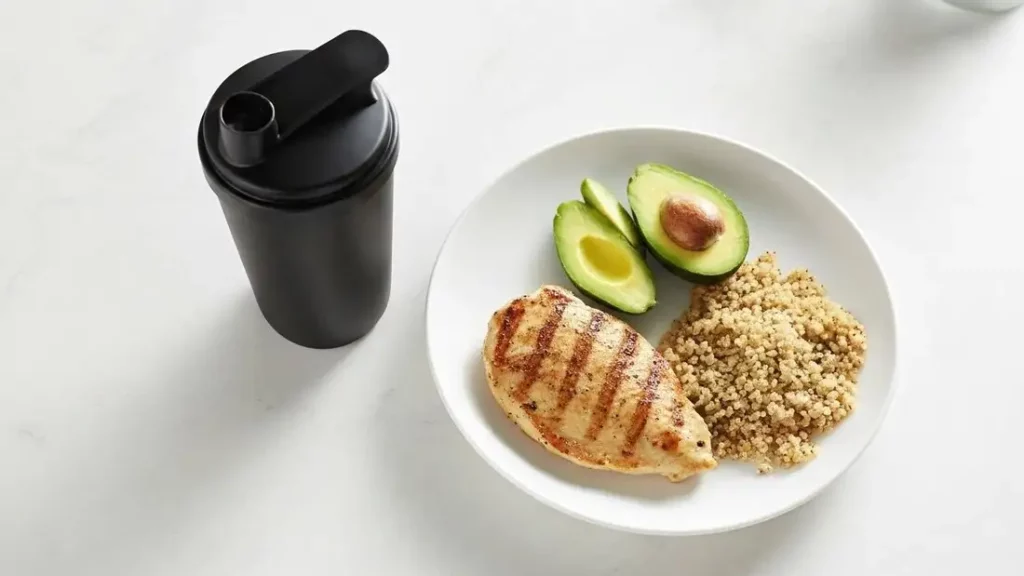
You can do the perfect workout, but if you don’t eat, you won’t grow.
Muscle is expensive tissue—your body won’t build it if you are starving.
- Protein: The building blocks of muscle. Aim for a protein source at every meal.
- Calories: You need a slight surplus of energy to build size.
- Learn More: The Role of Strength Training in Weight Loss for Beginners (Explains how muscle burns fat).
Frequently Asked Questions
- How long does it take to see results?
You will likely feel stronger within 2 weeks. Visual changes (muscle definition) usually take 6–8 weeks of consistent training and proper nutrition. - Will I get “bulky” from bodyweight exercises?
No. Getting “bulky” requires massive calorie intake and years of heavy lifting. Bodyweight training tends to produce a lean, athletic “gymnast” look. - Can I combine bodyweight with weights?
Absolutely. This is called “Hybrid Training.” Many people use bodyweight for their warm-ups or burnout sets and use weights for their heavy compound lifts. It is a fantastic way to train.
Conclusion – Consistency is the Magic Pill

Yes, you can build an impressive, athletic physique with bodyweight training.
It might take a few more reps than using heavy iron, but the results are just as real.
The secret isn’t the equipment. It’s the effort.
Where to start?
If you haven’t started yet, go back to the beginning.
Master the moves, build the habit, and watch your body transform.
Back to Step 1: The Ultimate Guide to Bodyweight Workouts at Home.
(Disclaimer: This content is for informational purposes only. Consult a physician before starting any new exercise program.)