
There’s the joy of the run—the rhythm, the freedom, the finish line.
And then there’s the aftermath: the nagging ache in your knee, the familiar tightness in your calves, and the stiff hips that make sitting down a chore.

Running is a high-impact, repetitive sport, and over time, it can lead to a host of common ailments like runner’s knee, shin splints, and IT band syndrome.
But what if you could spend just 10 minutes a day on a simple routine to keep yourself running pain-free?
Enter the foam roller: a runner’s best friend for injury prevention, recovery, and longevity.
This guide provides a 6-move routine specifically designed to target the muscles runners punish the most.
For a full introduction to the basics, start with our Ultimate Beginner’s Guide to Foam Rolling.
Why Runners NEED to Foam Roll
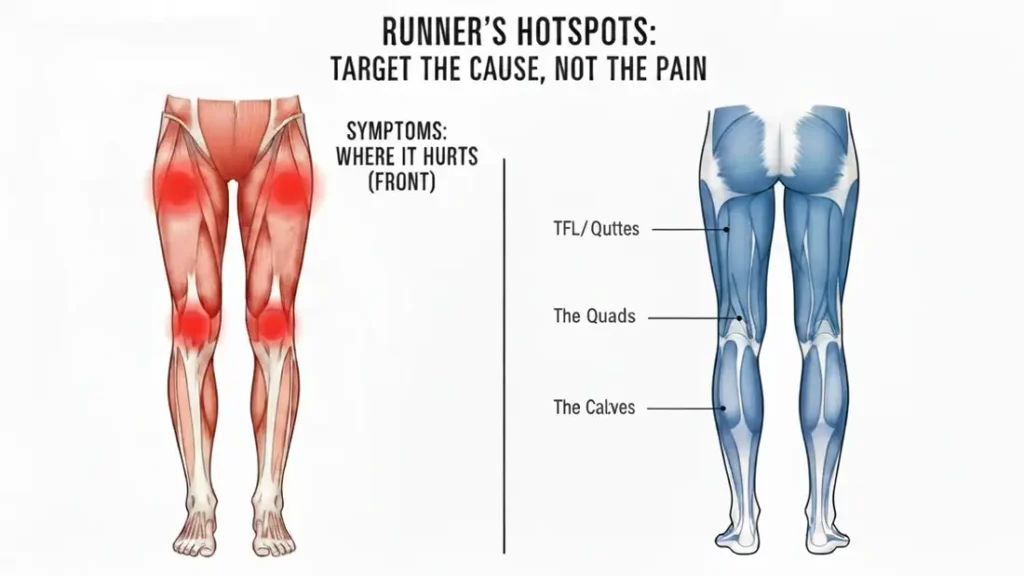
Every stride you take creates impact.
Over thousands of strides, this leads to micro-trauma and inflammation in your muscles and connective tissues.
Without proper recovery, this builds up into painful knots and adhesions that restrict movement and lead to injury.
It’s no surprise that major running publications like Runner’s World consider foam rolling an essential tool for injury prevention and maintaining healthy muscle tissue.
Foam rolling is a proactive strategy that directly addresses these issues by:
- Increasing Blood Flow: Delivers fresh oxygen to your muscles to speed up repair.
- Releasing Trigger Points: Breaks up the painful muscle knots that cause most running-related aches.
- Improving Flexibility: Restores your range of motion, particularly in the hips, for a more efficient stride.
Pairing this routine with a good stretching regimen, like these Hip Flexor Stretches For Runners, is a powerful combination for staying healthy.
The 6-Move Foam Rolling Routine for Runners
Perform this routine after your runs or on your rest days.
Spend 1-2 minutes on each movement per leg, focusing on slow, controlled pressure.
1. The Calf Roll
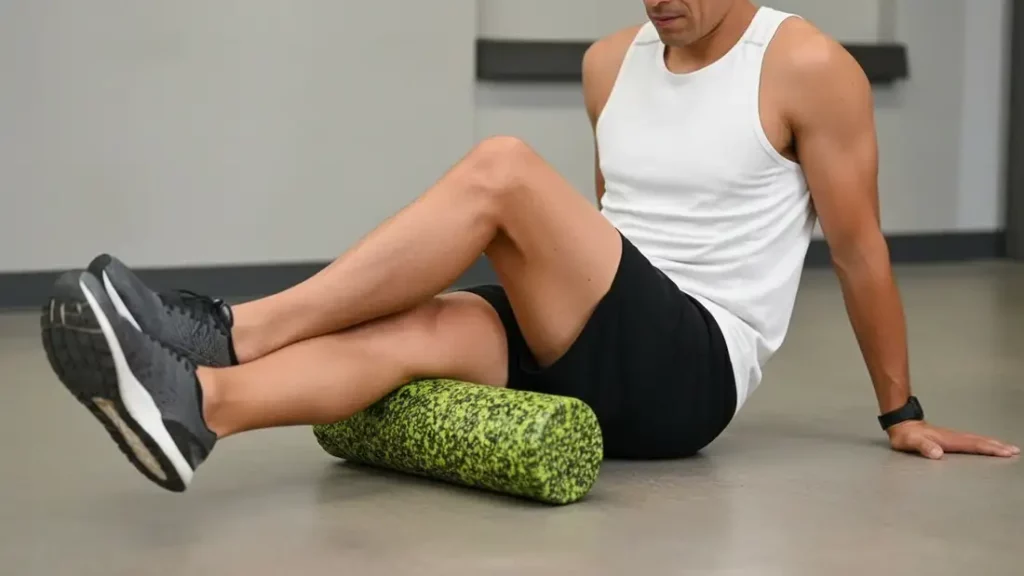
- Why it’s crucial for runners: Your calves are shock absorbers. Tightness here can lead to shin splints, plantar fasciitis, and Achilles tendonitis.
- How to Do It:
- Sit on the floor and place the roller under one calf. Rest your other foot on the floor or cross it over the working leg for more pressure.
- Use your hands to support your weight and lift your hips.
- Roll slowly from your ankle to just below the knee. Rotate your leg in and out to hit the inner and outer parts of the muscle.
2. The Quadriceps Roll

- Why it’s crucial for runners: Your quads work hard to lift your knees and stabilize them upon landing. Tightness here is a primary contributor to “runner’s knee” (patellofemoral pain syndrome).
- How to Do It:
- Lie face down with the roller under the front of your thighs.
- Support yourself on your elbows and roll from the top of your knee to the base of your hip.
- Keep your core engaged to protect your lower back.
3. The Hamstring Roll
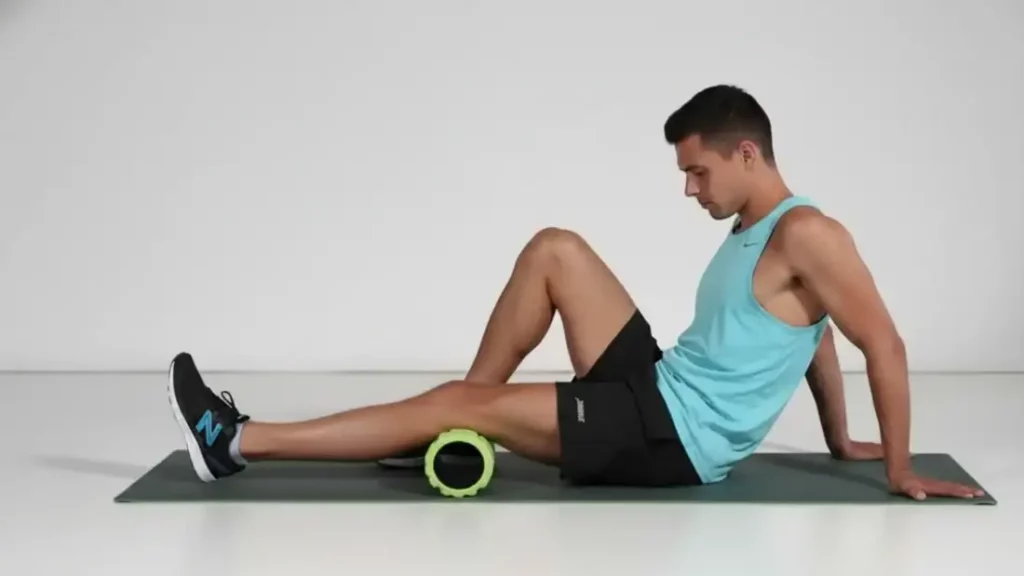
- Why it’s crucial for runners: Your hamstrings are essential for propulsion. If they’re tight, they can tilt your pelvis and contribute to lower back pain during long runs.
- How to Do It:
- Sit with the roller under one thigh and your hands on the floor behind you.
- Lift your hips and roll from just above the knee to the base of your glute.
- Rolling one leg at a time provides more effective pressure.
4. The Glute & Piriformis Roll
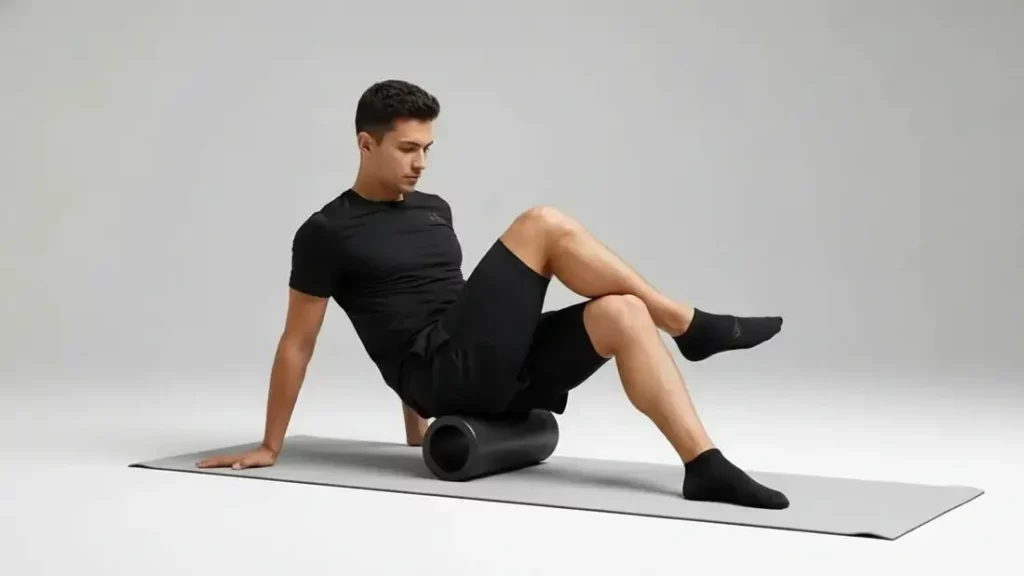
- Why it’s crucial for runners: Your glutes are your powerhouse. When they don’t fire properly due to tightness, other muscles have to compensate, leading to a chain reaction of potential injuries.
- How to Do It:
- Sit on the roller and shift your weight to one side.
- Cross the ankle of that same side over your opposite knee (a “figure-four” position).
- Roll slowly over the glute, searching for tender spots. This move targets the deep piriformis muscle.
5. The TFL / Hip Flexor Roll (IT Band Relief)
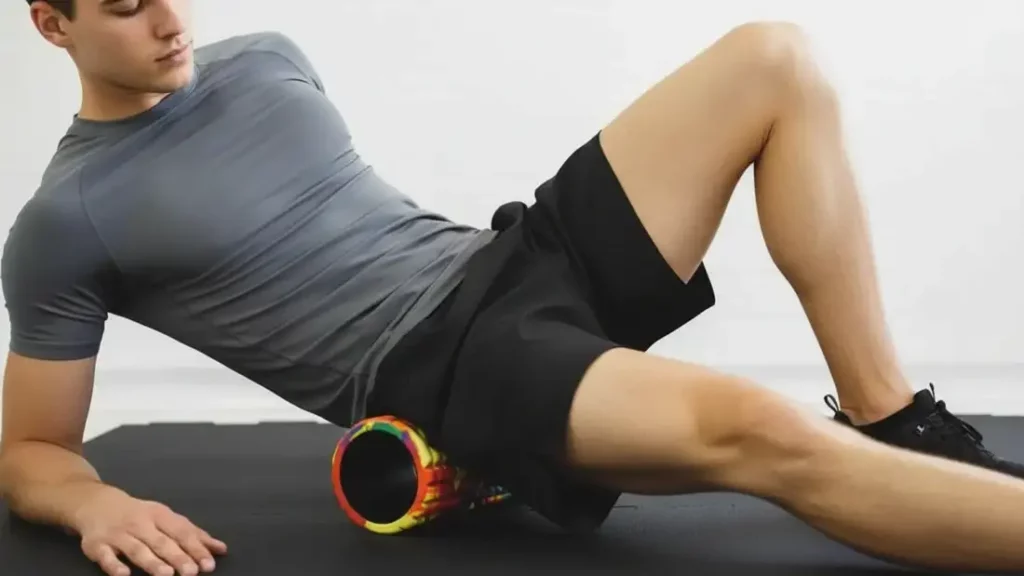
- Why it’s crucial for runners: This is the key to managing IT band syndrome. The pain is felt on the side of the knee, but the problem almost always starts with tightness in the Tensor Fasciae Latae (TFL) muscle at your hip.
- How to Do It:
- Lie on your side and place the roller on the front corner of your hip, just below your hip bone (think of where your front pocket would be).
- Use tiny, precise rolls in this area. Do not roll down the side of your thigh.
- For more general information on these movements, see our 8 Essential Foam Rolling Exercises guide.
6. The Adductor (Inner Thigh) Roll
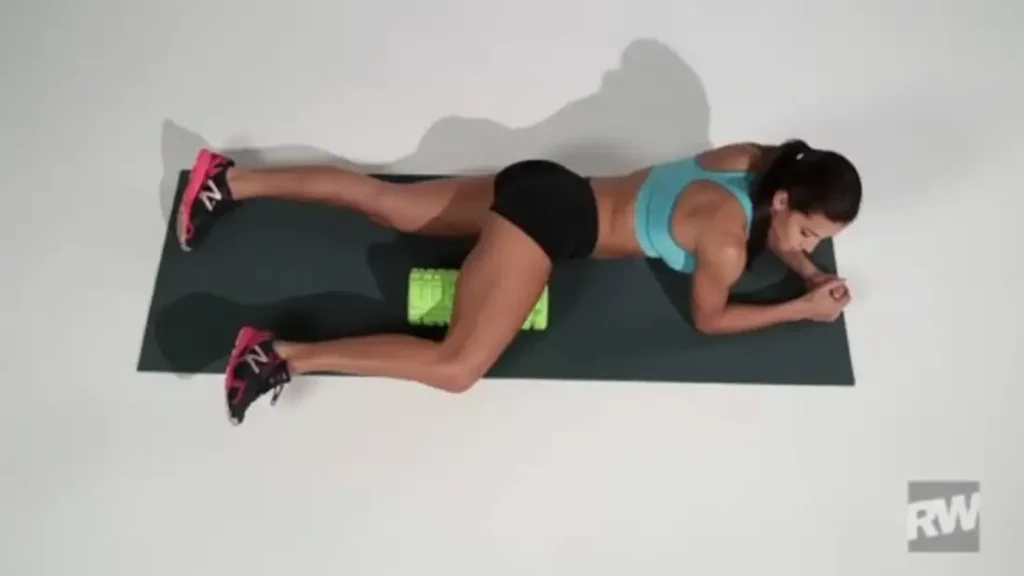
- Why it’s crucial for runners: These muscles stabilize your pelvis with every step. Neglecting them can lead to groin strain and instability.
- How to Do It:
- Lie face down and prop yourself on your elbows.
- Extend one leg straight out to the side, bent at a 90-degree angle.
- Place the roller under your inner thigh and roll slowly from your knee up toward your groin.
Key Takeaways – Runner’s Quick Reference Guide
| Common Runner’s Problem | Key Muscles to Roll |
| Runner’s Knee / IT Band Pain | Quads, Glutes, and especially the TFL/Hip Flexor |
| Shin Splints / Achilles Pain | Calves (all angles) |
| Lower Back Pain During Runs | Hamstrings and Glutes |
| General Tightness & Prevention | Full 6-Move Routine |
Frequently Asked Questions (FAQ)
Q: Should I foam roll before or after a run?
A: Both are beneficial, but they have different goals. A light, quick roll before a run for 2-3 minutes can help warm up the muscles. A longer, more deliberate session after your run for 10-15 minutes is crucial for recovery and releasing the knots that formed during the activity.
Q: Can foam rolling fix runner’s knee?
A: Foam rolling can be a highly effective tool for managing runner’s knee (IT band syndrome) by addressing the root cause: tightness in the hips (TFL) and quads. However, it should be part of a complete strategy that may also include strengthening and stretching. If pain persists, consult a physical therapist.
Q: How often should runners foam roll?
A: For best results, runners should aim to foam roll after every run, even if it’s just for 5 minutes. On rest days, a longer, 10-15 minute session can help work out deeper adhesions. Consistency is key to injury prevention.
Conclusion – A Smart Investment in Your Running Longevity
Think of foam rolling not as a chore, but as an essential part of your training.
Ten minutes of focused rolling can be the difference between setting a new personal best and being sidelined by a preventable injury.
By incorporating this simple 6-move routine into your schedule, you are making a proactive investment in your body’s recovery, resilience, and your long-term ability to enjoy the sport you love.
Explore More Ways to Enhance Your Recovery
You’ve learned how to use one of the most effective tools for runners.
Now, discover other techniques and equipment that can take your recovery to the next level.
- Dive into our complete library of Muscle Recovery Guides to find more strategies for staying healthy and strong.
